 Akmal Azhar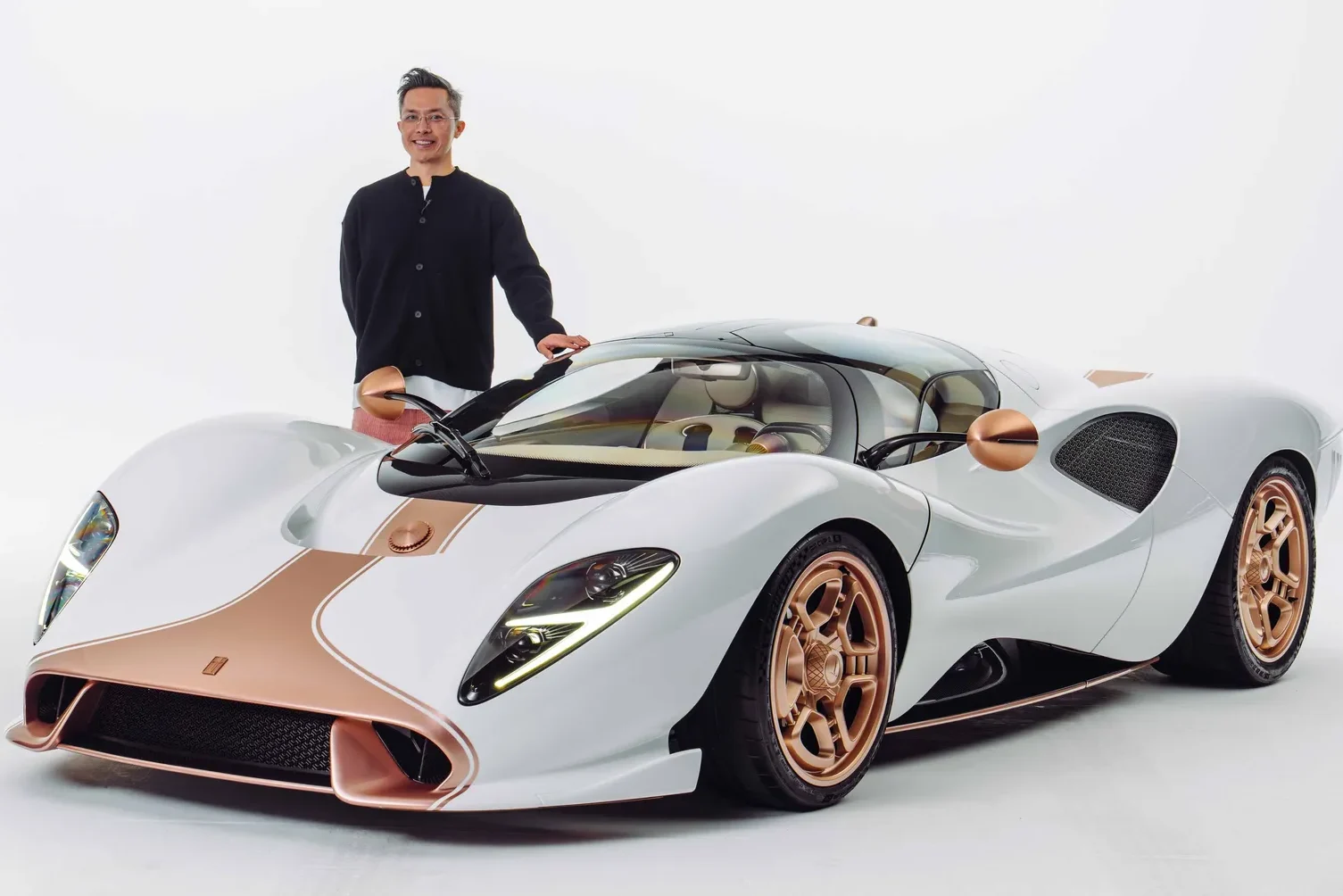
After years of skepticism surrounding its production, the De Tomaso P72 has emerged as a finished, road-ready supercar. First unveiled in 2019, the car is finally moving from concept to reality, with customer deliveries set to begin before Christmas 2025.
The P72’s Turbulent Journey to Production
When De Tomaso first introduced the P72, many doubted its future. The company lacked a production facility, an engine supplier, and a manufacturing timeline. But six years later, the brand has defied expectations. The P72 is complete, homologated for the road, and production is underway.
Design That Stands the Test of Time
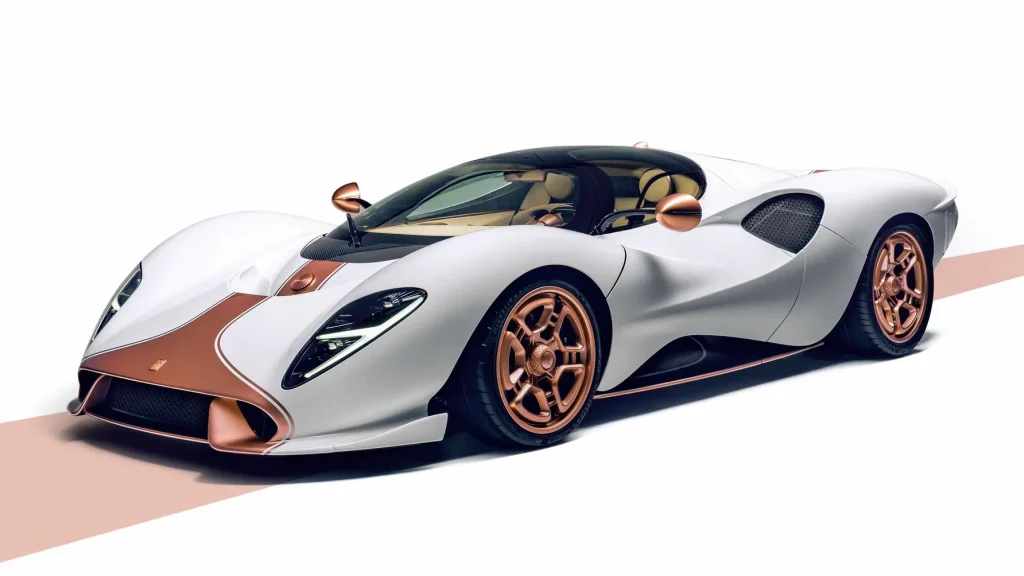
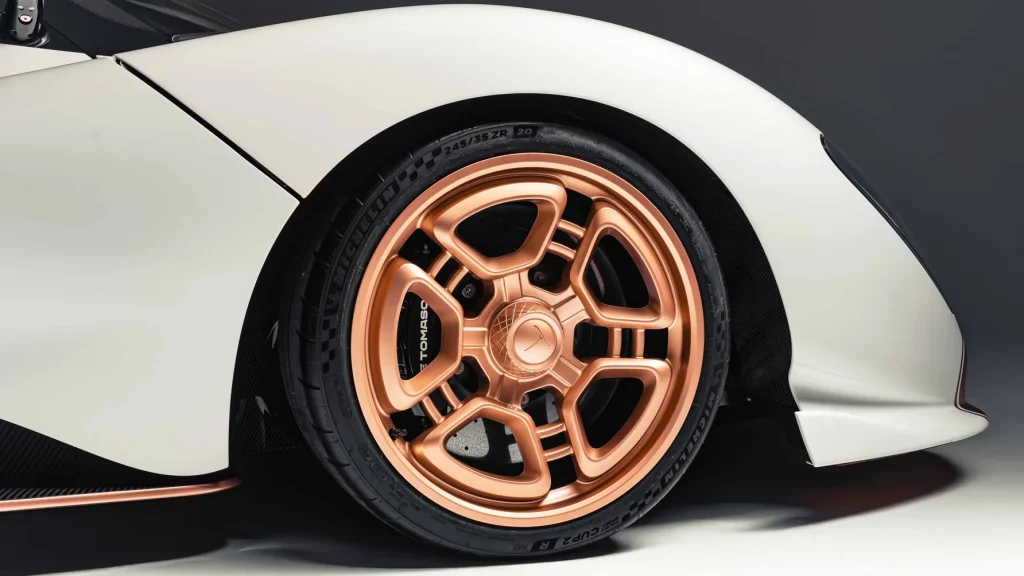
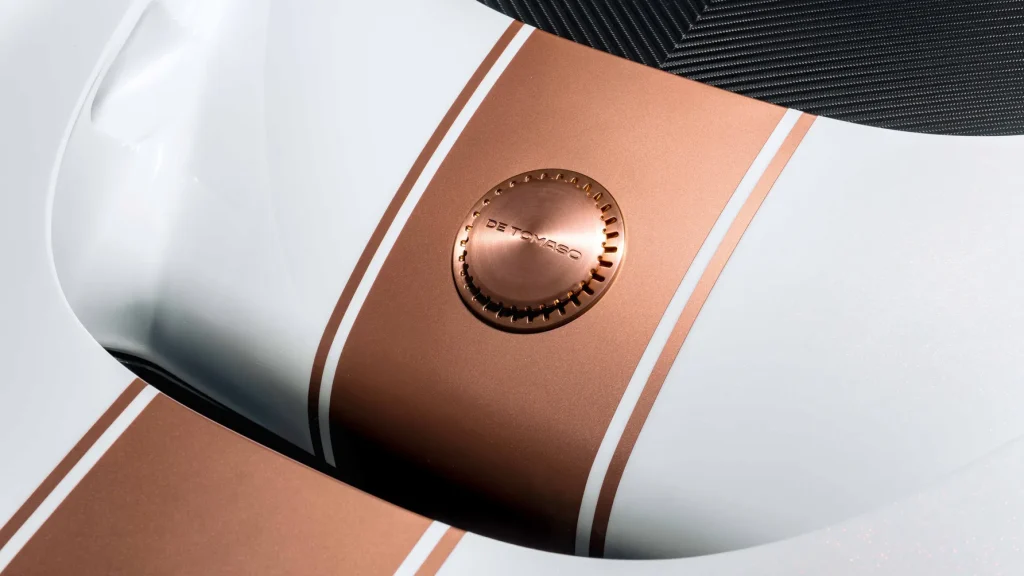
Top Gear recently had the chance to view the finished car at a private event near Stuttgart. The exterior remains strikingly faithful to the original 2019 concept, penned by former McLaren designer Jowyn Wong. The only visible exterior change is a redesigned rear diffuser that now hides twin cooling radiators. The overall shape still channels 1960s endurance racers such as the Ferrari P3/4 and Lola T70 MkIII. Officially, however, the sole inspiration was the rare De Tomaso P70—a failed 1965 collaboration with Carroll Shelby.
Raw Power with a Nostalgic Heart
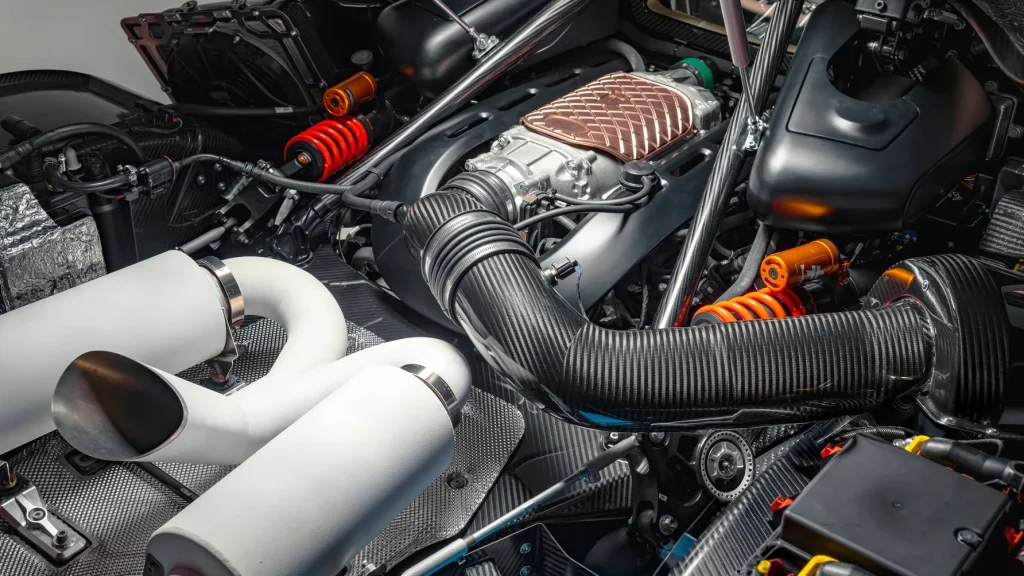
At its core, the P72 houses a 5.0-litre Ford–Roush Coyote V8 engine, supercharged for extra punch. It delivers roughly 700 horsepower and 825 Nm of torque, all sent to the rear wheels. The engine was chosen not only for performance but for its character—it produces a deep, mechanical roar without relying on excessive supercharger whine. The P72 weighs just 1,400 kg, offering purists a truly mechanical driving experience.
A Manual Transmission for Maximum Engagement
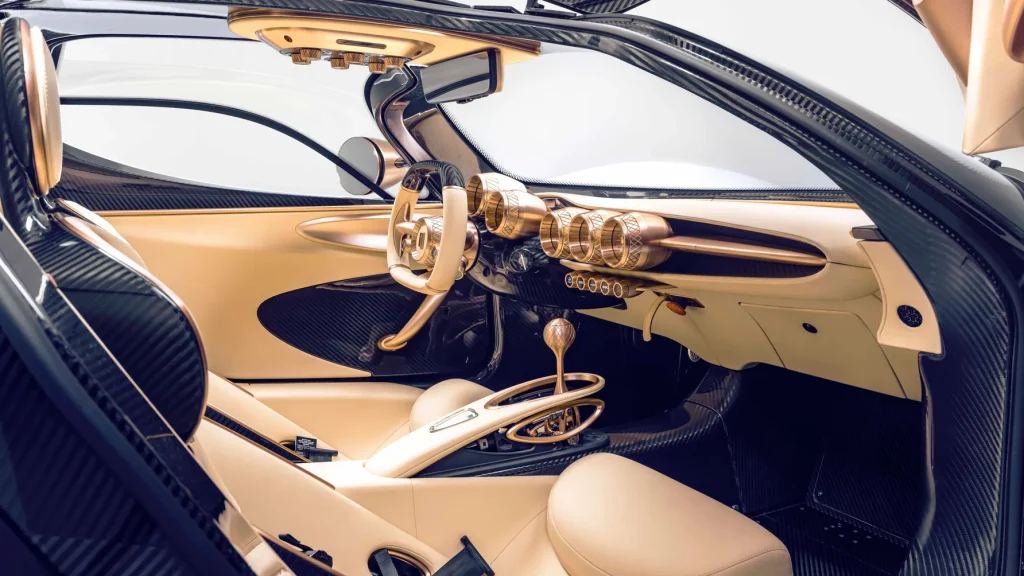
The P72 trades modern convenience for old-school driving purity with its six-speed H-pattern manual gearbox. This gearbox is exclusive to the production version; the prototype used a sequential transmission. The exposed shift linkage becomes a centerpiece of the interior, which is exquisitely detailed with 179 milled aluminum components.
A Cabin Crafted Like a Mechanical Jewel
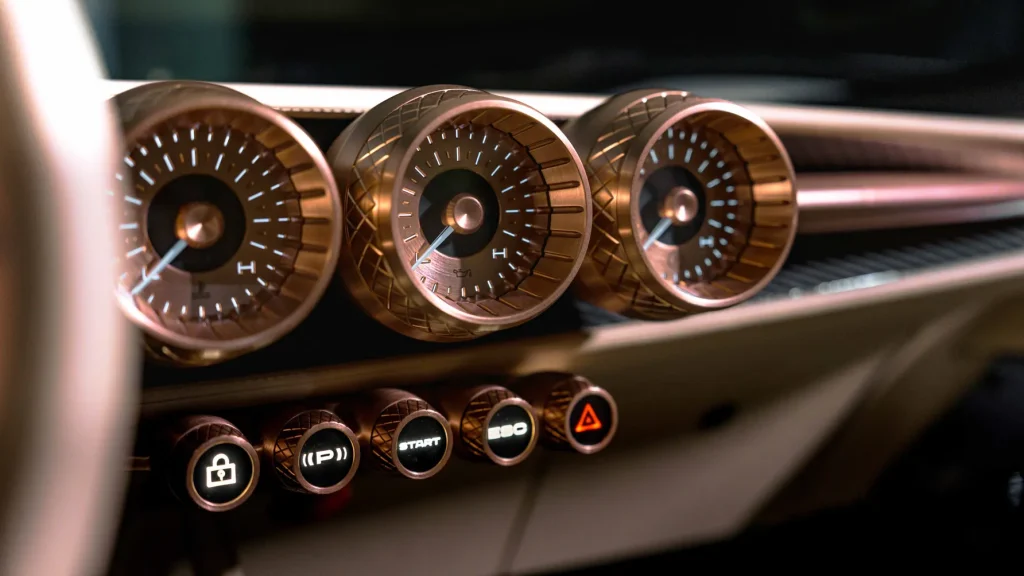
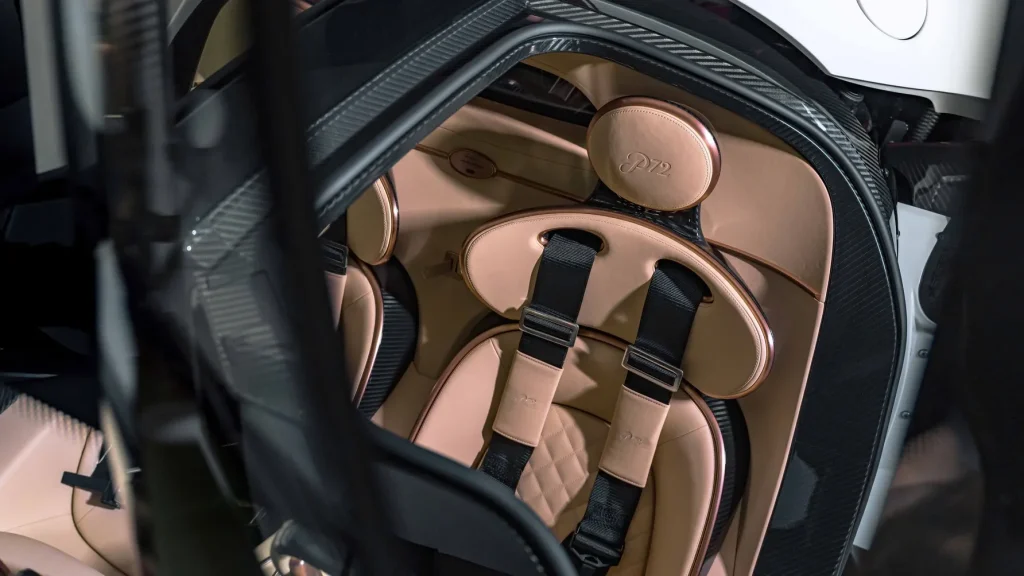
Inside, every surface speaks of craftsmanship. There are no screens, no touch panels, and no modern distractions. Instead, the cabin is filled with tactile switches, rotary dials, and even a rev counter that climbs in Roman numerals to “IX”. Finishes vary from brushed to polished to matte metal, sourced from the same supplier behind Bugatti’s Tourbillon hypercar.
Driver-Centric Without Compromises
Though the seats are fixed directly to the carbon monocoque, the steering wheel and pedal box are adjustable to fit various driver sizes. The side windows are glass-topped, letting in natural light and improving visibility. The sill height was also reduced to make entry and exit easier, without compromising rigidity.
A Grand Tourer with Just Enough Practicality
The P72 was not built to chase Nürburgring lap times. It’s a grand tourer at heart. The 100-litre fuel tank supports long-distance driving, and the luggage compartment can hold two helmets and a weekend’s worth of clothing. This balance of comfort and beauty defines De Tomaso’s vision for the car.
Tuned for the Road, Not the Track
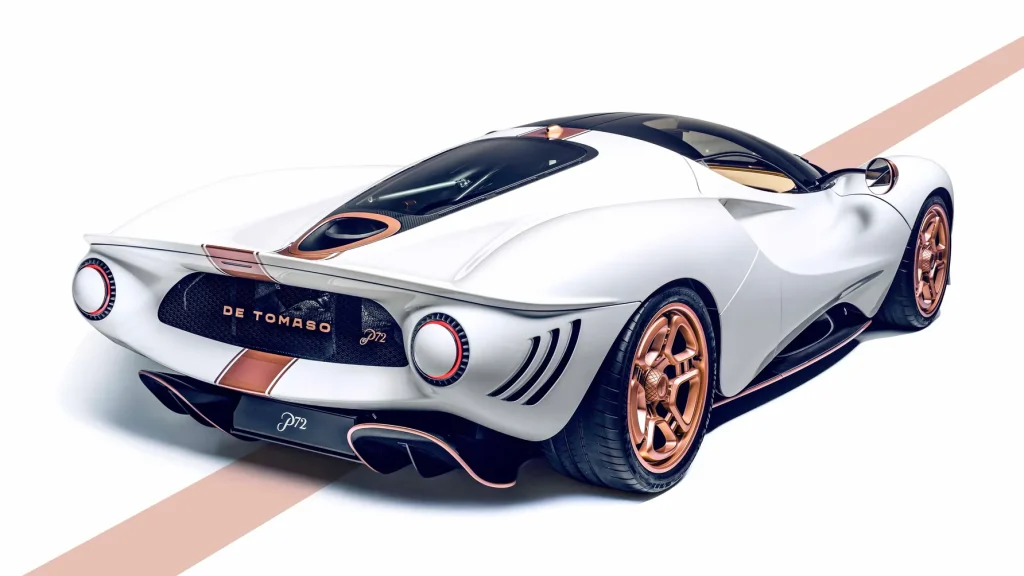
Modern regulations shaped the P72 more than many might expect. Active aerodynamic rules and strict EU noise restrictions forced design tweaks. For example, the exhaust note was capped at 63 dB during tests—whisper-quiet by supercar standards. Optional louder systems may be offered to buyers wanting more drama.
Exclusivity Ensured by Limited Production
All 72 units have been sold, many reserved since 2019. Tragically, one of the earliest buyers passed away before the car was completed. A waiting list over 20 times longer than the actual production run now exists, reinforcing just how sought-after this car has become.
Built in Germany with AMG Heritage
Despite its Italian nameplate, the P72 is being built by HWA in Affalterbach, Germany—the engineering firm behind many of AMG’s legendary cars. The choice underscores De Tomaso’s commitment to quality and engineering precision, even if it means defying its Italian roots.
A Time Capsule of Analog Driving Joy
De Tomaso boss Norman Choi is clear: the P72 was never about numbers. It’s about emotion, experience, and timeless design. The car was never meant to be the fastest or the most high-tech. It was built to be something rare—a true time capsule of what made 1960s GT cars magical.


 Zakirin