 Akmal Azhar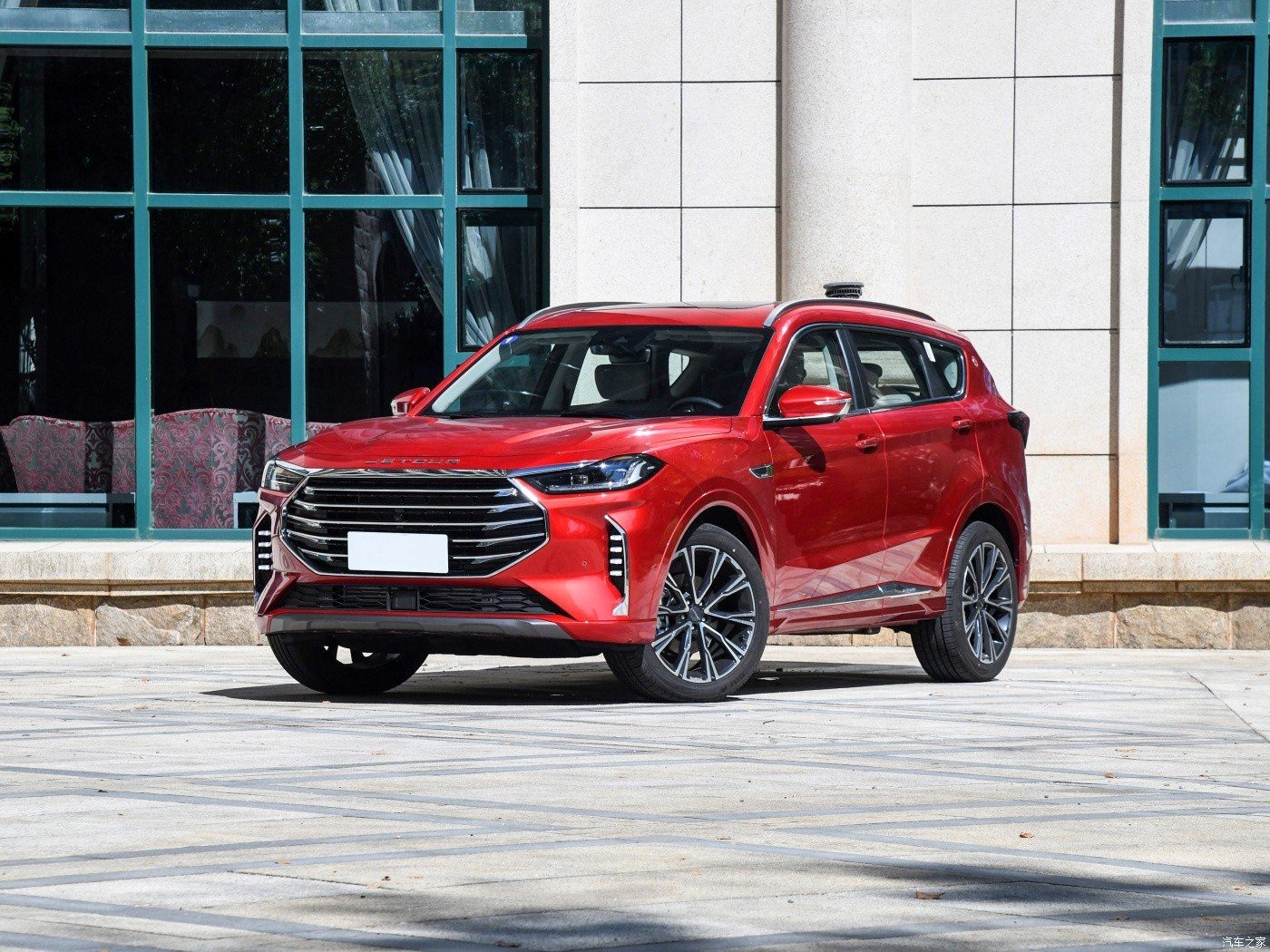
The Jetour VT9 has officially made its debut in Malaysia at the Malaysia Autoshow 2025, marking a significant entry into the competitive D-segment SUV market. As a locally assembled vehicle, the VT9 offers a compelling combination of modern design, advanced features, and family-oriented practicality.
Design and Dimensions
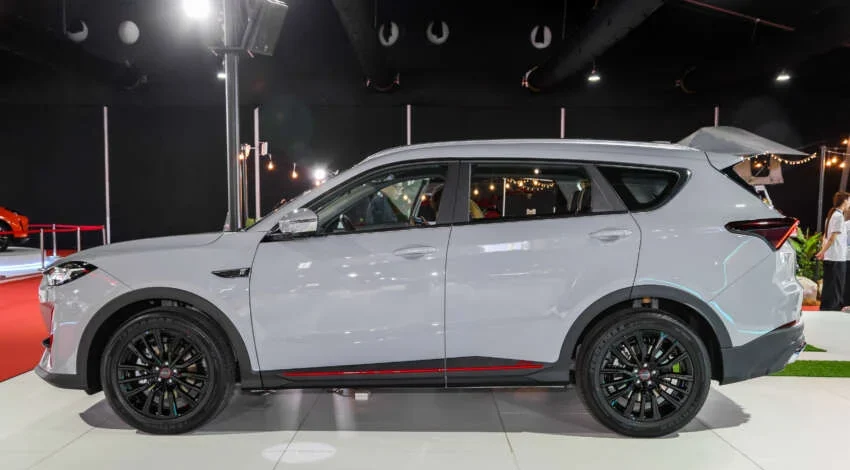
The Jetour VT9 presents a bold and dynamic exterior, characterized by a V-shaped front grille inspired by 3D feather motifs, full-width LED taillights with a 3D floating effect, and dual twin tailpipes that enhance its sporty appeal. Measuring 4,724 mm in length, 1,900 mm in width, and 1,720 mm in height, with a wheelbase of 2,720 mm and a ground clearance of 144 mm, the VT9 offers substantial road presence and interior space, catering to the needs of Malaysian families.
Powertrain and Performance
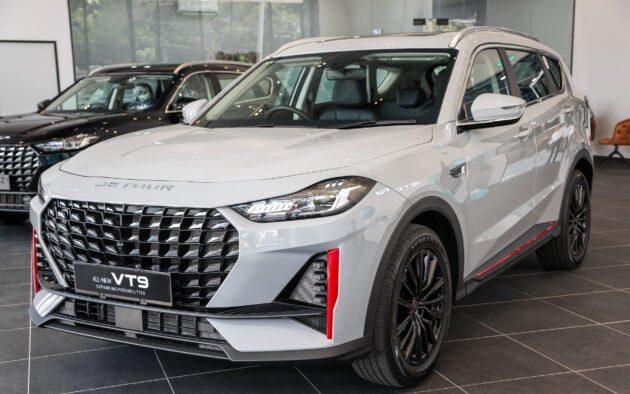
Under the hood, the VT9 is powered by a 1.5-liter turbocharged four-cylinder engine, delivering 156 PS and 230 Nm of torque. This engine is paired with a 6-speed wet dual-clutch transmission (DCT), driving the front wheels. The powertrain setup, shared with the Chery Omoda 5, ensures a balance of performance and efficiency suitable for both city driving and highway cruising.
Interior and Comfort
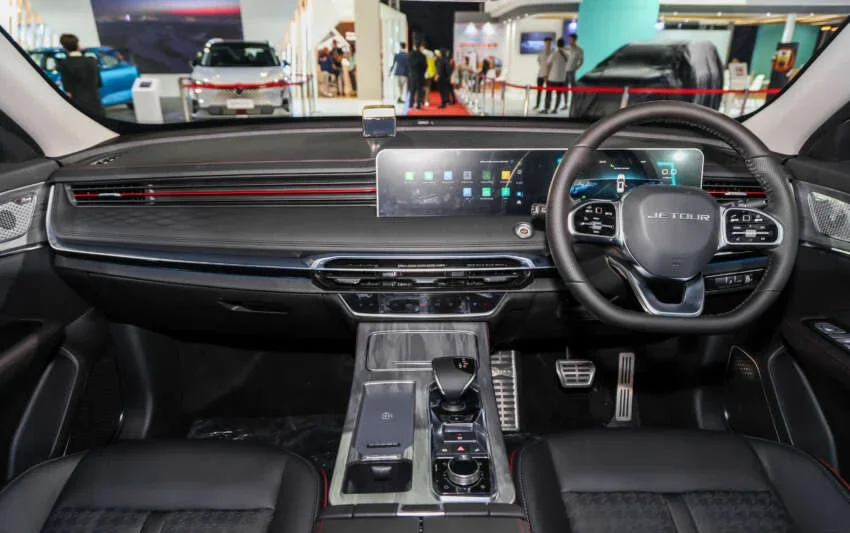
Inside, the VT9 boasts a spacious 7-seater layout, with the second and third-row seats foldable to create up to 1,680 liters of cargo space. The cabin features twin 10.25-inch displays for the instrument cluster and infotainment system, supporting Apple CarPlay and Android Auto. Additional amenities include a 50W wireless smartphone charger, six-way powered driver’s seat, and a power tailgate, enhancing convenience and comfort for all occupants.
Variants and Features
The Jetour VT9 is available in two variants: Comfort and Prime.
The Comfort variant, priced at RM118,800, comes equipped with features such as cruise control, a 360-degree camera system, tire pressure monitoring system (TPMS), four airbags, and a four-speaker audio system.
The Prime variant, priced at RM123,800, adds premium enhancements including a panoramic sunroof, six airbags, blind spot monitoring, rear cross-traffic alert, lane change warning, door opening warning, driver’s seat memory function, and an upgraded six-speaker audio system.
Safety and Driver Assistance
Safety is a paramount consideration in the VT9, with both variants offering a suite of advanced features. These include anti-lock braking system (ABS), electronic brakeforce distribution (EBD), vehicle stability control, traction control, crash sensors, and a 360-degree camera system. The Prime variant further enhances safety with additional driver assistance technologies, such as blind spot monitoring and lane departure warning systems.
Warranty and After-Sales Support
Jetour demonstrates strong confidence in the VT9’s reliability by offering an industry-leading warranty package: a 7-year or 150,000 km vehicle warranty, a 10-year or 1,000,000 km engine warranty, and a complimentary five-time free service package. This warranty coverage is among the best in the segment and is likely to attract value-conscious buyers.
Market Positioning and Competition
Positioned above the five-seater Jetour Dashing, the VT9 targets families seeking a spacious and feature-rich SUV. It competes with established models like the Proton X90, Mazda CX-8, and Nissan X-Trail, offering a compelling alternative with its combination of modern design, advanced features, and competitive pricing.
Political and Strategic Implications
Jetour’s entry into Malaysia with a locally assembled model also reflects broader strategic and political dimensions. China’s automotive push into Southeast Asia is part of a larger effort to expand its soft power and economic footprint in the region. By choosing Malaysia as a production hub, Jetour benefits from favorable trade policies under the ASEAN Free Trade Area (AFTA), as well as Malaysia’s strategic ambition to become a regional EV and automotive manufacturing leader.
The assembly of Jetour vehicles under the established Go Auto group in Kedah supports local employment and contributes to national economic goals. It also aligns with Malaysia’s National Automotive Policy (NAP 2020), which encourages investments in energy-efficient vehicles and advanced manufacturing.
Additionally, with increasing scrutiny on Chinese brands in Western markets, Southeast Asia offers a politically stable and receptive environment for growth. This positioning may help Jetour not only gain a stronghold in the region but also provide an export base for nearby markets such as Indonesia, Thailand, and the Philippines.
Conclusion
The Jetour VT9 emerges as a strong contender in Malaysia’s 7-seater SUV segment, blending modern aesthetics, advanced technology, and family-friendly practicality. With its competitive pricing, extensive features, and robust warranty package, the VT9 is poised to appeal to Malaysian consumers seeking a reliable and stylish family vehicle. Beyond the consumer appeal, Jetour’s presence in Malaysia represents a significant milestone in China’s growing automotive influence in Southeast Asia—economically and politically.

 Zakirin