 Akmal Azhar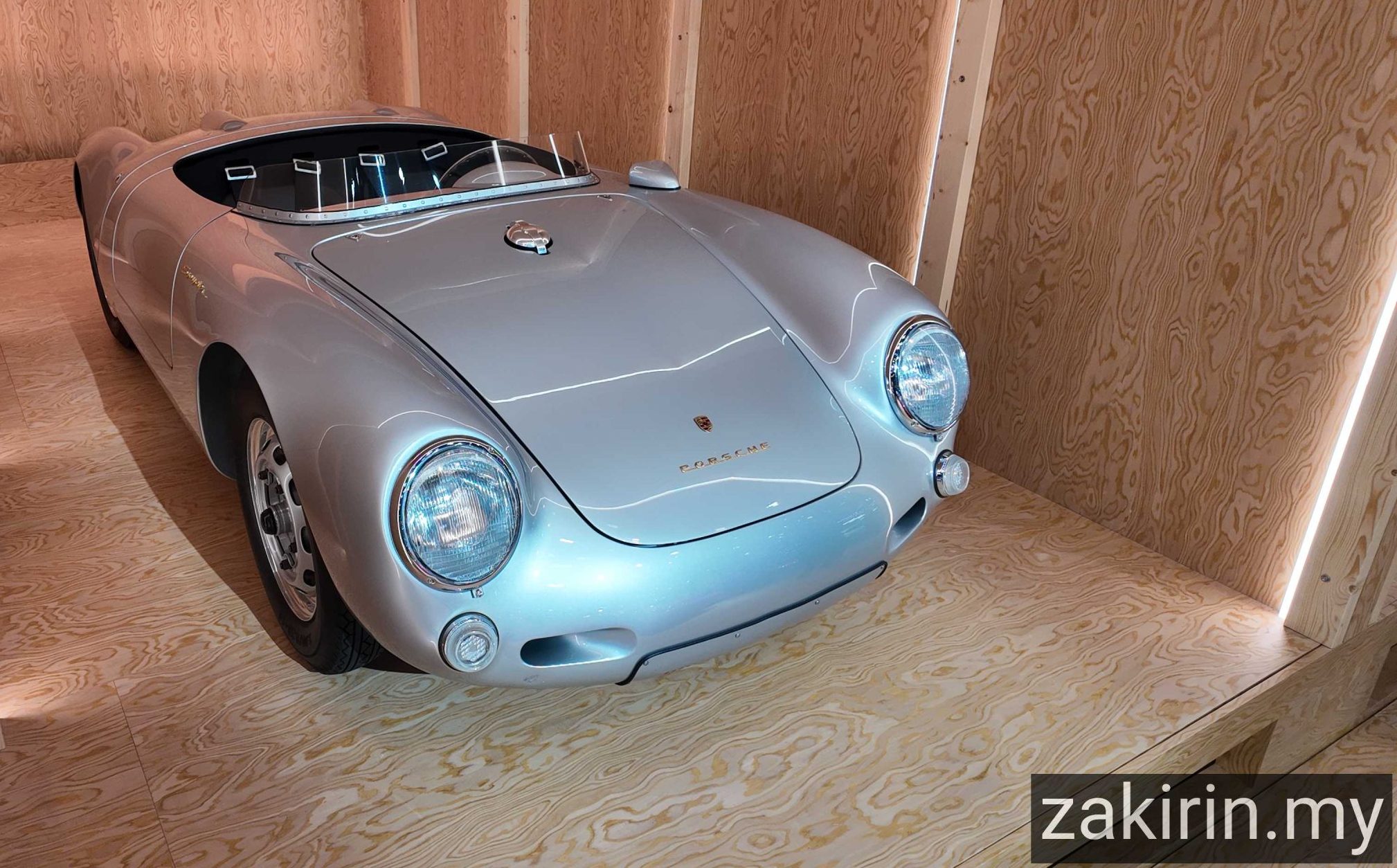
The 1956 Porsche 550 Spyder isn’t just a vintage sports car; it’s a living embodiment of post-war ambition, engineering excellence, and cultural legacy. With its featherlight frame, spirited engine, and deep ties to motorsport and Hollywood lore, the 550 Spyder holds a permanent place in automotive history. This article explores the car’s key features, design, performance, cultural relevance, and even its subtle connections to the political and industrial mood of the 1950s.
Design Philosophy
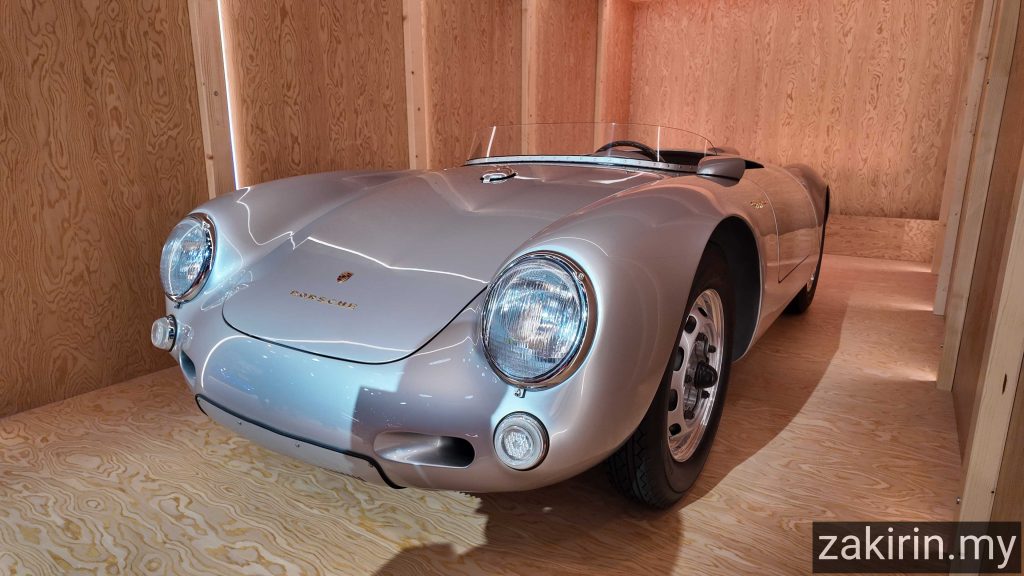
The Porsche 550 Spyder’s design is the textbook definition of “form follows function.” Built primarily for motorsport, the Spyder’s low-profile body — just under a meter high — was optimized for aerodynamics. Its smooth, rounded curves reduced drag, while the open-top cockpit provided weight savings and a visceral driving experience.
Constructed with a lightweight tubular steel frame and clad in hand-formed aluminum panels, the Spyder’s compact silhouette evokes simplicity and purpose. Its visual identity is closely tied to racing — no chrome excess, no luxury flourishes. Just sleek curves, exposed wheels, and purposeful proportions.
Performance and Engineering
At the heart of the 550 Spyder is a 1.5L DOHC air-cooled flat-four engine, known as the Type 547 or the Fuhrmann engine. This powerplant produced approximately 110 horsepower and was mated to a 4-speed manual transmission. The car weighed around 550 kg, thanks to its tubular steel chassis and aluminum body, and featured a mid-engine, rear-wheel drive layout with independent front and rear suspension. The Spyder could reach a top speed of around 140 mph and accelerate from 0 to 60 mph in roughly 7 seconds.
These features weren’t just impressive for the 1950s — they laid the foundation for what would become Porsche’s engineering ethos: balance, agility, and the perfect harmony between driver and machine.
Track Legacy
Despite modest horsepower, the Spyder’s extraordinary power-to-weight ratio made it a giant slayer on the racetrack. It could outmaneuver and outlast much larger, more powerful cars. The mid-engine layout gave the 550 exceptional balance and cornering stability — revolutionary for its time.
The engine, nicknamed the “giant killer,” was hand-built and highly advanced, with dual overhead camshafts, roller bearings, and dry-sump lubrication. It was demanding to maintain but produced an unmistakable wail at high RPMs. Driving a 550 Spyder is raw and direct. With no driver aids, you feel every nuance of the road, every shift, every turn — pure, analog connection.
Racing Achievements
The 550 Spyder was Porsche’s first purpose-built race car, and it proved its worth early. Its debut in 1953 at the Nürburgring saw it win its class. It later claimed victories at the 24 Hours of Le Mans, the Mille Miglia, and most famously, the Carrera Panamericana — a treacherous endurance race in Mexico.
This success wasn’t accidental. Porsche had engineered the 550 for endurance, with reliability prioritized alongside speed. Its low profile allowed it to slip through wind and stay planted through sweeping corners. Its small engine meant better fuel efficiency and fewer pit stops in long-distance events. These were competitive advantages that helped it punch far above its weight.
The car’s success in the Carrera Panamericana was so influential that Porsche later named one of its most famous models — the Carrera — in its honor.
Political and Industrial Context
To understand the 550 Spyder fully, one must place it in the broader context of post-World War II Europe, especially Germany. The 1950s marked a period of reconstruction and rebirth for German industry. With the shadow of war still looming, German manufacturers were eager to prove themselves on the world stage, not through militarism, but through engineering and technology.
Porsche, founded by Ferdinand Porsche (who had designed the VW Beetle), was emblematic of this transformation. The 550 Spyder was a symbol of Germany’s new identity — nimble, efficient, and high-performing. It served as soft diplomacy, showcasing German skill and innovation during a time of deep political scrutiny and tension.
Moreover, in Cold War geopolitics, the triumph of Western-aligned West Germany’s industries was critical. Cars like the 550 Spyder became subtle political tools, proving that German craftsmanship could thrive in a capitalist democracy. It was a triumph of innovation over past destruction.
Even culturally, the 550 was a part of a larger shift — a rejection of bloated, overpowered American cars and a celebration of European minimalism and precision.
Cultural Legacy
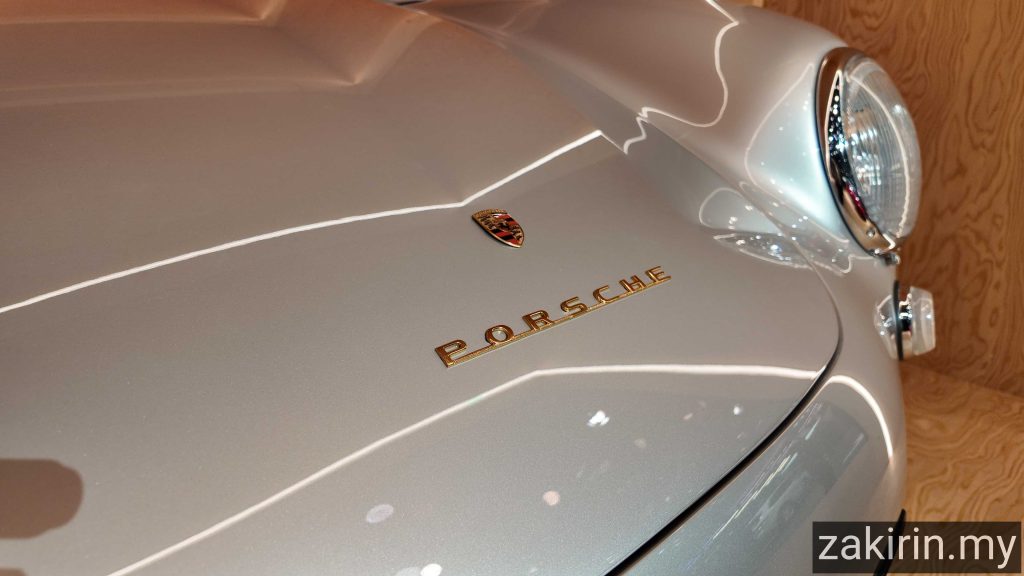
No review of the 550 Spyder is complete without addressing its tragic celebrity connection. In 1955, actor James Dean purchased a silver 550 Spyder and nicknamed it the “Little Bastard.” On September 30th of that year, he was killed in a collision while driving it to a race event. He was just 24.
The tragedy immortalized the car in Hollywood lore. Some even claim the vehicle was cursed, as parts from Dean’s Spyder allegedly caused accidents in other vehicles. Whether truth or myth, this story cemented the 550’s status as a cultural icon — forever tied to rebellion, youth, and the fleeting nature of life.
Driving Experience
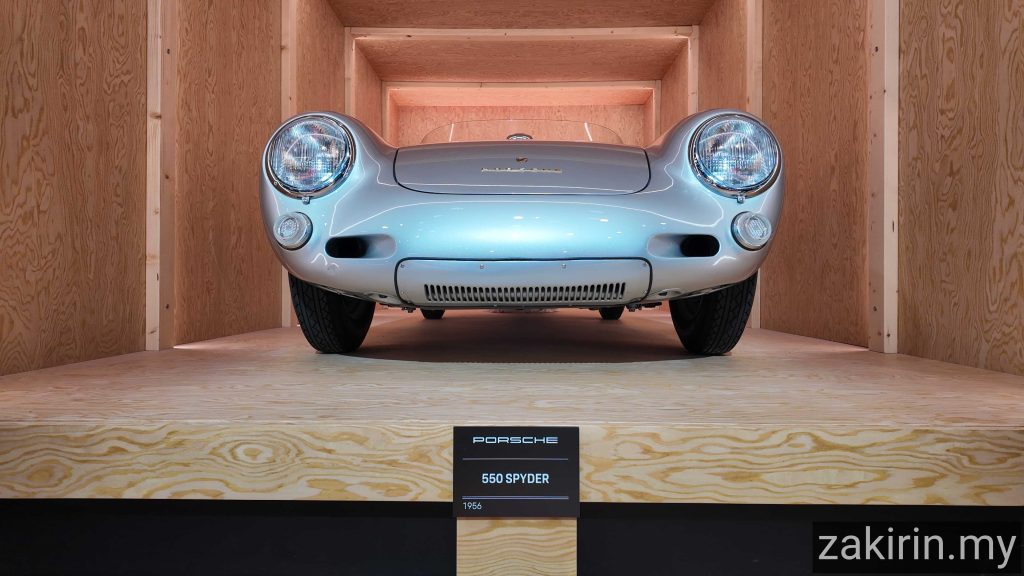
Modern cars, with their layers of electronic insulation, simply cannot replicate the 550’s raw, tactile nature. There’s no power steering, no anti-lock brakes, no automatic transmission. Everything is mechanical and immediate. You feel the shift gate click, the clutch bite, the tires grip or slip.
With the engine mounted mid-ship, the weight distribution makes the car feel incredibly responsive. It rotates with a precision that’s still enviable. The ride is firm, the controls are direct, and the wind roars through the open cockpit. It’s a race car in its purest, most unfiltered form.
Driving a 550 Spyder isn’t just a ride — it’s a time machine, a connection to the golden age of motorsport.
Market Value and Legacy
Today, the 1956 Porsche 550 Spyder is among the most coveted vintage cars in the world. Authentic models can sell for over $5 million, with pristine or historically significant examples demanding even more. Its legacy continues in Porsche’s modern lineup, influencing the Boxster, Cayman, and even the 911’s mid-engine balance philosophy.
More than just a car, the 550 Spyder represents a turning point — for Porsche, for post-war Europe, and for the culture of motorsport. It’s both a machine and a message: that greatness doesn’t require excess — only purpose, precision, and passion.
Conclusion
The 1956 Porsche 550 Spyder is an extraordinary blend of engineering genius, cultural impact, and racing success. It’s a car that demanded skill, respect, and courage — and it gave its drivers a transcendent experience in return. Light, fast, and unfiltered, the Spyder didn’t just change Porsche’s destiny; it helped redefine what a sports car could be.
In every sense, the 550 Spyder is magic — a mechanical symphony from a time when machines had soul, and every curve of metal told a story.

 Zakirin