 Akmal Azhar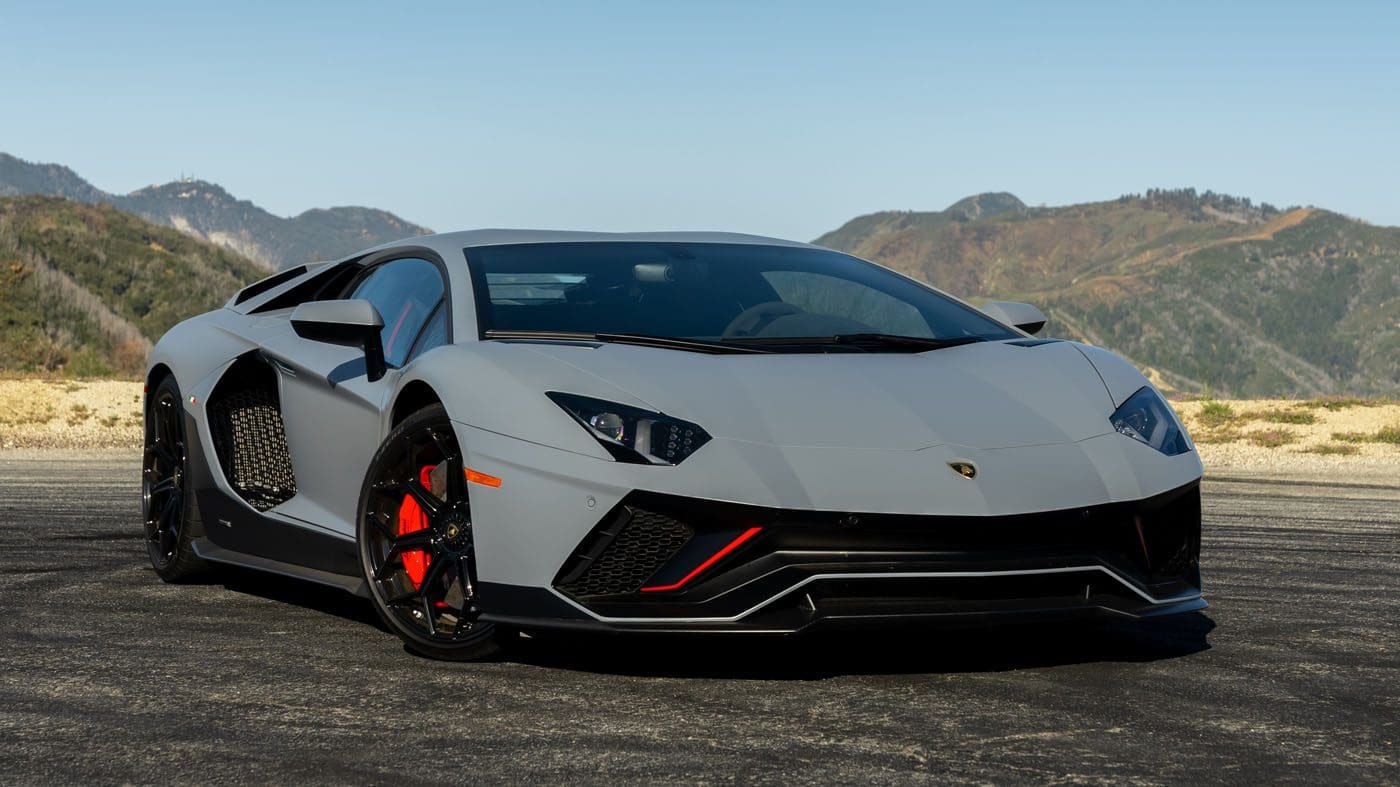
A Statement on Wheels
Some automobiles merely occupy lanes on a highway, while others, like the Lamborghini Aventador, seem to carve their own canyons into the asphalt. A monument to engineering excess and Italian audacity, the Aventador is less a car than a rolling manifesto of defiance against utilitarian conformity. From its inception, it wasn’t designed to blend in—it was made to erupt onto the scene with a V12 scream and a silhouette that defies the wind itself.
Birth of a Beast

Launched in 2011 as a successor to the Murciélago, the Aventador marked a decisive evolution in Lamborghini’s identity. It introduced a carbon fiber monocoque chassis—a structural innovation that dramatically increased rigidity while reducing weight—and a new 6.5-liter naturally aspirated V12 engine.
This engine, which generated 690 horsepower in the LP 700-4 model, wasn’t merely powerful; it was theatrical. Over the next decade, enhancements to the powertrain led to even more visceral variants, culminating in the SVJ trim with over 770 horsepower. Coupled with Lamborghini’s Independent Shifting Rod (ISR) transmission system, the Aventador delivers gear changes with lightning speed and mechanical aggression.
Design as Dominance

Physically, the Aventador’s dimensions are a study in dominance. At over 4.8 meters in length and nearly 2.3 meters wide (with mirrors), it commands the road with a low stance of just 1.1 meters. The geometry is angular and predatory, every contour sharpened for aerodynamic intent. While the design may appear ostentatious, it is governed by function as much as by flair. Airflow is managed with precision to optimize downforce and cooling, especially in performance variants where thermodynamics can make or break a lap time.
A Countercurrent in the Electric Tide
In an era increasingly driven by sustainability and electrification, the Aventador represents a fascinating countercurrent. Though Lamborghini did eventually introduce limited electrified variants, the core identity of the Aventador remained staunchly analog—a commitment to mechanical purity in the face of legislative and cultural pressure.
This defiance invites critique; some see the Aventador as a relic of irresponsible engineering, a fuel-thirsty anachronism. Yet for enthusiasts, that is precisely its allure. It exists to celebrate sensation over regulation, to prioritize an emotional driving experience over a pragmatic one.
Ideology on Four Wheels

The Aventador’s political significance lies in its refusal to compromise. It is a vehicle that, by its very design, contests the homogenization of mobility. While electric crossovers multiply, the Aventador endures as a sculpture of internal combustion—an unapologetic, operatic machine that celebrates excess as a form of artistry. This ideological positioning places it in a unique cultural space, where it is both admired and admonished, often in equal measure.
The Theater Within
But beyond its specifications and its philosophical posture, the Aventador’s real magic lies in its eccentricities—the idiosyncratic elements that distinguish it from any other supercar. Step into the cabin and you are greeted not merely with luxury but with a theatrical setting. The scissor doors evoke a sense of ceremony, while the center console, with its missile-launcher-style ignition switch, dramatizes even the simplest act of starting the engine. The digital instrument cluster morphs with driving modes, evoking the interface of a fighter jet.
An Emotional Interface

These design choices are more than aesthetic; they alter the driver’s psychological state. Piloting the Aventador feels like assuming a role rather than completing a task. The car does not integrate seamlessly into daily life—it demands accommodation, respect, and in return, it provides a level of engagement that is increasingly rare in modern vehicles.
The Price of Drama
However, this theatricality comes with tangible drawbacks. The turning radius is comically wide, rendering urban maneuverability a challenge. The ISR transmission, while exceptional under aggressive driving conditions, lacks refinement at low speeds and can feel jarring in traffic.
Visibility from the driver’s seat is minimal, relegating parking to an act of trust in sensors and rear-view cameras. The infotainment system, borrowed from an older Audi architecture, feels dated and incongruent with the otherwise futuristic design.
Rituals of Engagement
The Aventador is not user-friendly—and that’s precisely the point. It is not built for convenience but for immersion. Operating it involves rituals: lifting the front axle before entering a driveway, warming the engine before spirited driving, toggling through modes to tailor response and traction. These elements transform driving from a passive activity into an intentional experience.
A Symphony of Sensations
Even the sensory output is curated to provoke. After an enthusiastic session, the cabin often retains the scent of heated clutch and overworked tires—a byproduct of performance that signifies the car has been pushed as intended. It is a multisensory engagement: the V12’s harmonic crescendo, the shudder of gear changes, the tactile feedback from the steering and suspension. The Aventador communicates through sensation.
Aerodynamics with Intent

Aerodynamics play a pivotal role in this experience. Active systems adjust in real time to maintain optimal balance and grip. The rear wing, for example, deploys and retracts based on speed and driving mode, dynamically altering the vehicle’s handling characteristics. The car does not merely respond to the road—it interacts with it, modifies itself in response to the driver’s behavior.
Soul Over Science
And yet, for all its technological sophistication, the Aventador is not a tool of precision in the way that a McLaren or Ferrari might be. It is brutish, emphatic, and emotionally charged. It overwhelms rather than finesses. The driver is not so much in control as in collaboration with the machine. This relational dynamic—part adversarial, part romantic—is what defines the Aventador’s unique driving ethos.
A Roaring Goodbye
With the sun setting on naturally aspirated V12s, the Aventador’s legacy is bound to deepen. It is among the last of its kind, a high-decibel epilogue to an era of visceral motoring. As the automotive industry pivots toward electrification and autonomy, the Aventador stands as a monument to what once was—a time when emotion could trump efficiency, and performance was measured in soul as much as in speed.
Mechanical Poetry in Motion
More than a car, the Aventador is a cultural artifact. It challenges conventions, invokes strong responses, and invites discussion about the future of mobility. Its imperfections are not flaws but signatures, evidence of its commitment to a driving experience that is raw, imperfect, and entirely human. For those who understand it, the Aventador is not merely a machine—it is a declaration.
It leaves behind not just exhaust fumes but a narrative—one of resistance, celebration, and mechanical poetry. And for anyone fortunate enough to sit behind its wheel, even briefly, the memory will outlast the journey. Because cars like this don’t simply go from A to B. They transport you to an entirely different dimension.


 Yusri Ng
 Zakirin