 Akmal Azhar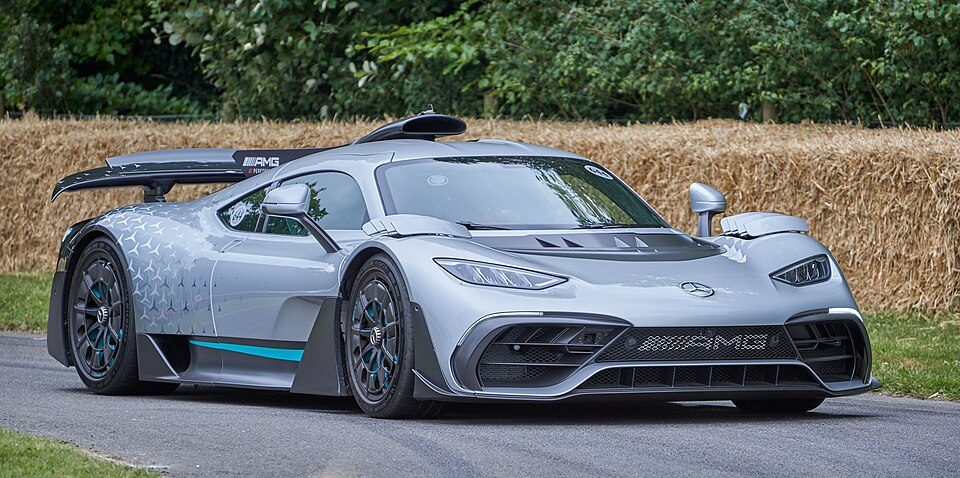
The Impossible Promise That Almost Broke AMG
When Mercedes-AMG announced in 2017 that it would put a Formula 1 engine in a road car, the automotive world erupted in equal parts excitement and skepticism. Engineers at Affalterbach knew the truth: this wasn’t just ambitious—it was borderline delusional. Formula 1 power units are fragile, high-strung creatures that require armies of technicians to keep alive, yet here was AMG promising one that could survive school runs and grocery trips. The resulting Mercedes-AMG One became a six-year odyssey of妥协, innovation, and outright stubbornness, a car that whispers “screw practicality” even as it idles in traffic.
A Beast Born from Rulebook Loopholes
The heart of the AMG One is its 1.6-liter turbocharged V6, a direct descendant of Lewis Hamilton’s 2015 championship-winning engine, detuned to a mere 1,049 horsepower for mortal consumption. Unlike the sanitized hybrids from Ferrari or McLaren,
This powerplant retains its F1 soul: the pistons are made from a proprietary aluminum alloy so secret that AMG engineers refer to it only as “Material X,” and the turbocharger runs at a mind-bending 100,000 rpm—five times faster than a Boeing 747’s turbines. The hybrid system, with its four electric motors, isn’t there for virtue signaling; it exists solely to fill the torque gaps when the combustion engine takes a breath between its 11,000-rpm shrieks.
The Politics of a Street-Legal Race Car
In an era where governments wage war on internal combustion, the AMG One is a middle finger wrapped in carbon fiber. Getting it homologated for road use required 2,000 hours of dyno testing and a software patch that made the engine run richer at low revs—a crude but necessary fix to meet emissions laws.
Environmentalists scoff at its 8.7 mpg fuel economy under full throttle, but AMG counters that the One’s hybrid system can silently slink through urban zones in EV mode, a concession that feels as sincere as a vegan at a steakhouse. For owners, the car is a badge of defiance, a statement that performance still matters in an age of sanitized speed.
Dimensions That Defy Logic
At 4,756 mm long and 1,210 mm tall, the AMG One is nearly as low as a Lamborghini Huracán but wears its proportions like a tailored tuxedo. The rear wing, an active aerodynamic element borrowed from Mercedes’ F1 W07, adjusts its angle 50 times per second, generating enough downforce to theoretically drive upside down in a tunnel at 150 mph.
Yet for all its track-focused aggression, the car retains surprising civility: the front axle lifts at the touch of a button to clear speed bumps, and the dihedral doors open with theatrical slowness, as if to remind onlookers that this is no ordinary hypercar.
The Quirks That Separate Millionaires from Billionaires
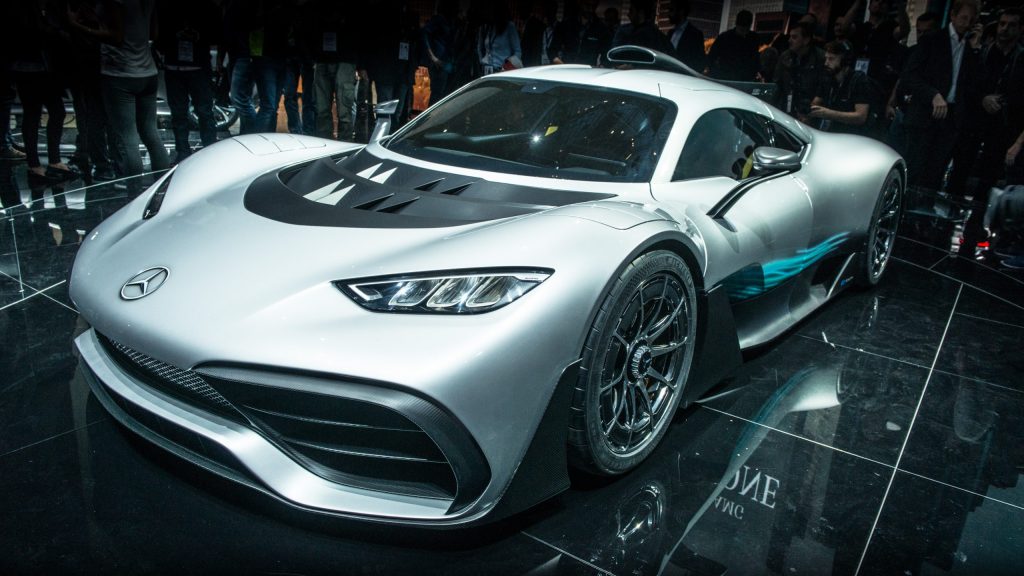
Owners quickly discover that the AMG One is less a car and more a temperamental mechanical ballet dancer. The engine requires a “pre-heat” cycle before cold starts, a 12-minute ritual where electric motors gently circulate fluids to avoid thermal shock—skip it, and you risk a repair bill that could fund a small hospital. The steering wheel, a carbon-fiber replica of Hamilton’s 2016 unit, has no buttons for the infotainment system; AMG assumes you’ll use voice commands or the central screen, because taking hands off the wheel in this car is considered sacrilege.
Then there’s the “Quali Mode,” a setting that unleashes the full 1,049 hp but disables the hybrid system after eight minutes to prevent overheating—a nod to F1’s sprint-race mentality. The car even has a built-in “Party Trick” function: hold the right paddle shifter for three seconds, and the V6 blips the throttle in a perfect 7,200-rpm rhythm, producing a noise that’s equal parts symphony and air raid siren.
The Hidden Cost of F1 Fantasies
For all its brilliance, the AMG One has a dirty secret: it’s a diva. The engine requires rebuilds every 31,000 miles, a service that involves shipping the power unit back to Affalterbach and costs more than a Porsche 911 GT3. The lithium-ion battery, mounted perilously close to the exhaust, needs replacement every five years regardless of use—a $250,000 “subscription fee” for the privilege of F1 tech. And woe betide the owner who parks it outside in winter; the magnesium alloy wheels are so temperature-sensitive that AMG recommends storing them in climate-controlled rooms when not in use.
Why This Car Matters Beyond the Spec Sheet

The AMG One isn’t just a hypercar; it’s a cultural artifact. In a world racing toward autonomy and electrification, it represents perhaps the last time a major manufacturer will pour this much insanity into a road car. Driving it feels less like piloting a vehicle and more like hosting a Formula 1 engine in your living room—it’s loud, demanding, and occasionally terrifying, but undeniably alive. When the V6 hits its 11,000-rpm crescendo, you’re not just hearing mechanical fury; you’re hearing the dying gasps of an era.
Practical Takeaways for the (Very) Lucky Few
- The “Garage Queen” Paradox: This car hates being babied. AMG recommends driving it hard at least once a month to prevent seals from drying out.
- The Ultimate Flex: The One’s key fob is milled from titanium and contains a sliver of carbon from Hamilton’s 2017 title-winning car.
- Resale Roulette: Early examples are already trading at $5 million—double their sticker price—proving that insanity is a sound investment.
The Final Word
The Mercedes-AMG One shouldn’t exist. It’s too complex, too expensive, and too impractical for a world obsessed with efficiency. Yet here it is, a rolling monument to petrolheaded stubbornness that makes no apologies for its excesses. In 20 years, when our roads are silent and our cars drive themselves, the One will stand as a reminder that sometimes, the best machines aren’t those that make sense—they’re those that make noise.
Epilogue: The Owner’s Whisper
Rumor has it that if you input a specific code into the AMG One’s dash (a sequence known only to buyers), the car unlocks a hidden data screen showing real-time telemetry from Hamilton’s 2016 Monaco GP pole lap. It’s a fitting Easter egg for a car that blurs the line between road and race—and proof that even in the digital age, the best secrets are still mechanical.

 Zakirin