 Zakirin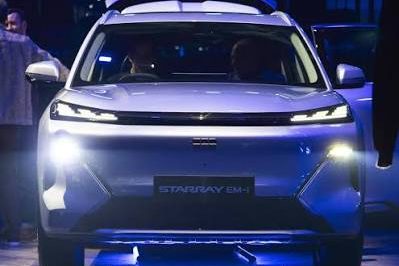
Geely is gearing up to introduce a new powertrain variant for its Starray SUV, which has just been teased for the Thai market wearing an “EM-R” badge. According to news out of Thailand, the Geely Starray EM-R is set to make its global debut on August 13, 2026.
Thailand will be the first market globally to receive this new range-extended electric vehicle (REEV), which will join the Geely EX2 and EX5 EVs in the country’s lineup.
What is the Starray EM-R?
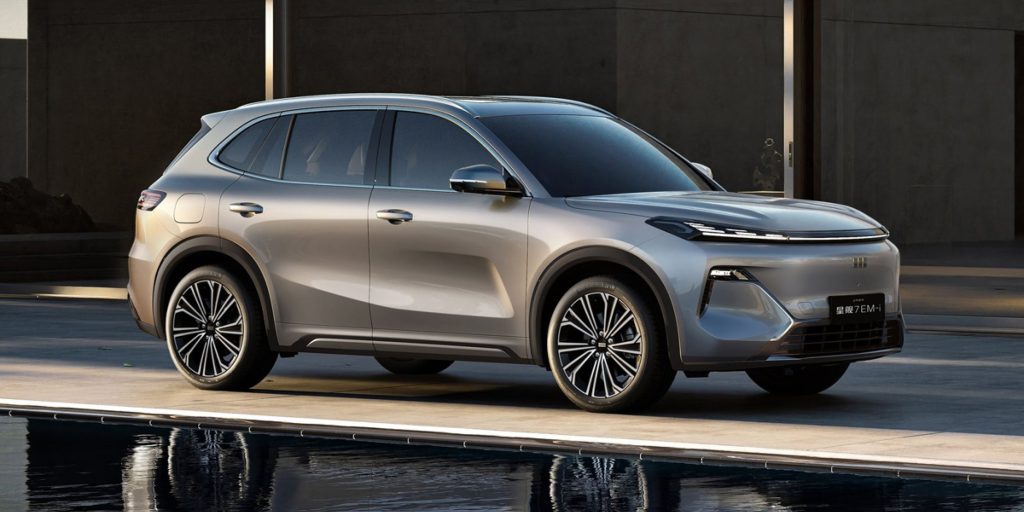
The Geely Starray EM-R shares its platform with the Starray EM-i plug-in hybrid (PHEV). To Malaysian buyers, the EM-i model is better known as the recently launched Proton e.MAS 7 PHEV, while in China, it is sold as the Geely Galaxy Starship 7 EM-i.
While official details for the Thai market have yet to be fully revealed, the EM-R is expected to be mechanically similar to the Starray EM-i, but with a crucial difference in how the engine operates:
- The PHEV Setup (EM-i): The current plug-in hybrid model uses a 218 PS (160 kW) and 262 Nm electric motor for most of its propulsion, paired with a 99 PS and 125 Nm 1.5-litre naturally-aspirated four-cylinder engine. This engine acts as a generator but can physically clutch in to drive the wheels at higher, more efficient cruising speeds via a single-speed dedicated hybrid transmission (DHT).
- The REEV Setup (EM-R): To convert this system into a pure REEV, Geely simply needs to remove the mechanical clutch. This severs the physical connection to the wheels, meaning the 1.5-litre petrol engine will strictly function as an onboard electrical generator to charge the battery.
As a reference, the EM-i is available with two battery options: an 18.4 kWh CATL LFP battery yielding a total combined range of 943 km, and a larger 29.8 kWh Aegis short blade pack offering a 996 km total range. The EM-R is expected to feature slightly lower total range figures since it cannot use the combustion engine to directly drive the wheels.
Exploiting Thai EV Policies
The decision to debut the Starray EM-R in Thailand rather than China boils down to the country’s unique automotive taxation policies.
Thailand’s EV policy classifies vehicles driven purely by electricity as EVs, even if they feature a combustion engine generating that electricity. As a result, REEVs benefit from a significantly lower 20 percent import tax rate. In contrast, internal combustion engine (ICE) vehicles—including standard PHEVs like the Starray EM-i—are slapped with a hefty 80 percent import tax.
Could Malaysia Get a Proton e.MAS 7 REEV?
While the idea of a Proton e.MAS 7 REEV sounds appealing, it is highly unlikely to happen.
Malaysia does not offer the same tax advantages or loopholes for REEVs that Thailand does. Without those regulatory incentives, Proton has no real upside to developing and selling a strictly range-extended version of the e.MAS 7 locally, especially when the PHEV model already handles those duties efficiently. Furthermore, the Thai-market EM-R will likely be sourced from outside Malaysia, as the locally-assembled (CKD) e.MAS 7 PHEV does not currently meet the required local content threshold for tax-free ASEAN exports.