
 Akmal Azhar
Malaysia has found itself in the spotlight of global geopolitics, courted by both China and the United States. With its prime location, growing economy, and influential voice in ASEAN, Malaysia is more than just another Southeast Asian nation—it is a pivotal player in shaping the future of the Indo-Pacific.
Strategic Location Along the Strait of Malacca
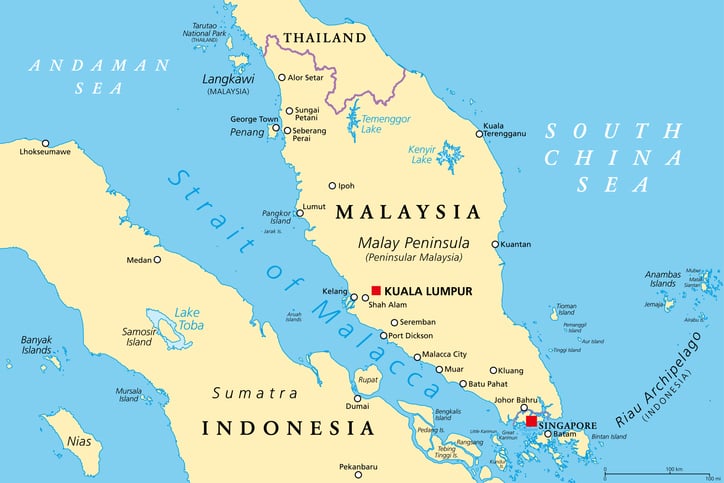
One of Malaysia’s greatest assets is its geography. Straddling the Strait of Malacca, one of the world’s busiest and most important maritime chokepoints, Malaysia sits along a route through which nearly a third of global trade flows. Control or influence over this passage means significant leverage in global commerce and energy supply chains. For both Beijing and Washington, Malaysia’s position is too strategic to ignore.
Economic Opportunities and Trade Relations

Malaysia’s economy is both diverse and resilient, boasting strong industries in electronics manufacturing, palm oil production, liquefied natural gas, and high-tech sectors. For China, Malaysia plays a critical role in the Belt and Road Initiative (BRI), serving as a gateway for infrastructure and trade routes across Asia. For the United States, Malaysia is a vital partner in efforts to diversify global supply chains, particularly to reduce dependence on Chinese manufacturing while expanding access to Southeast Asian markets.
A Balancing Force in the Indo-Pacific
Malaysia’s non-aligned foreign policy allows it to act as a bridge between the U.S. and ASEAN. For Washington, Malaysia’s cooperation fits neatly into its Indo-Pacific Strategy, aimed at countering China’s expanding influence. For Beijing, strengthening ties with Malaysia helps ensure the country remains receptive to Chinese investment and diplomatic outreach, while avoiding an outright shift toward U.S. security partnerships.
Technology and Semiconductor Advantage

In the era of technological competition, Malaysia’s semiconductor sector has gained international attention. The U.S. views Malaysia as an important link in creating secure and diversified chip supply chains, reducing vulnerabilities to Chinese-controlled production. China, meanwhile, sees Malaysia as a way to bolster its own technology network and mitigate the impact of Western export restrictions.
Influence Through ASEAN
As one of the more influential members of ASEAN, Malaysia’s stance on trade, security, and diplomacy can sway broader regional decisions. Partnering with Malaysia offers both China and the U.S. a voice in shaping the region’s collective policies.
Security and Defense Cooperation
The United States values Malaysia as a partner in joint military exercises, maritime patrols, and counterterrorism operations. China, on the other hand, benefits from a cordial relationship that helps ease tensions over South China Sea disputes and creates opportunities for naval diplomacy.
A Neutral Power With Strategic Leverage
Ultimately, Malaysia’s importance lies in its unique ability to maintain neutrality while engaging deeply with both sides. For China, it is a partner that secures trade routes and integrates into its economic vision. For the United States, it is a counterbalance to China’s rise and a crucial node in maintaining Indo-Pacific stability.


 Zakirin