 Zakirin
The cobblestone courtyards of Italy’s Lake Como erupted in applause this weekend as BMW unveiled its audacious Skytop concept roadster at the Concorso d’Eleganza Villa d’Este, an event synonymous with automotive opulence and historical reverence. More than just a design exercise, the Skytop’s dramatic debut has reignited debates about the soul of modern luxury vehicles: Can a brand steeped in tradition balance its legacy with the demands of a rapidly evolving industry? BMW’s answer, it seems, is a thunderous “yes” — wrapped in leather, polished bronze, and a whisper of rebellion.
Design Alchemy: Where Zeitgeist Collides with Zeitgeist
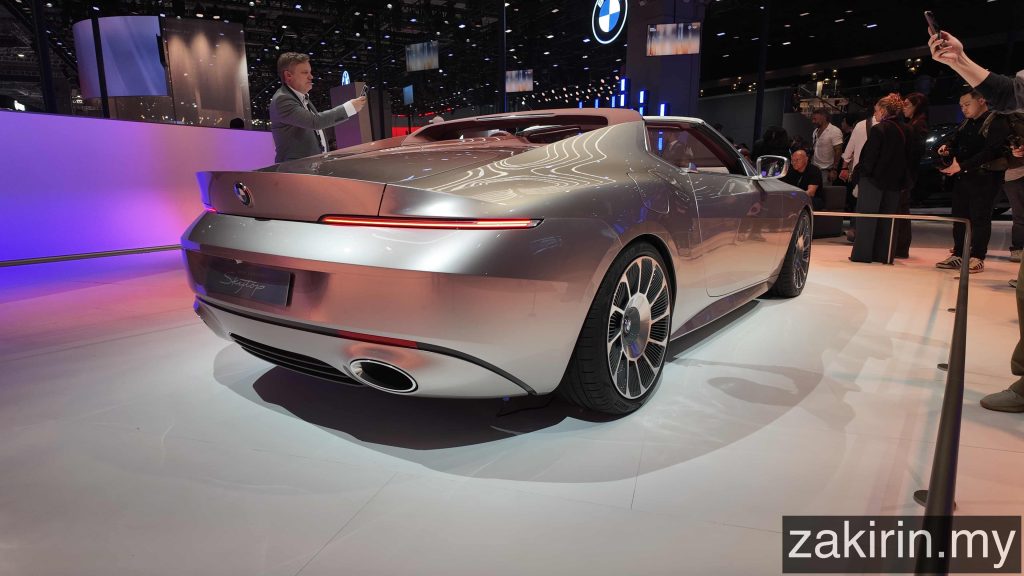
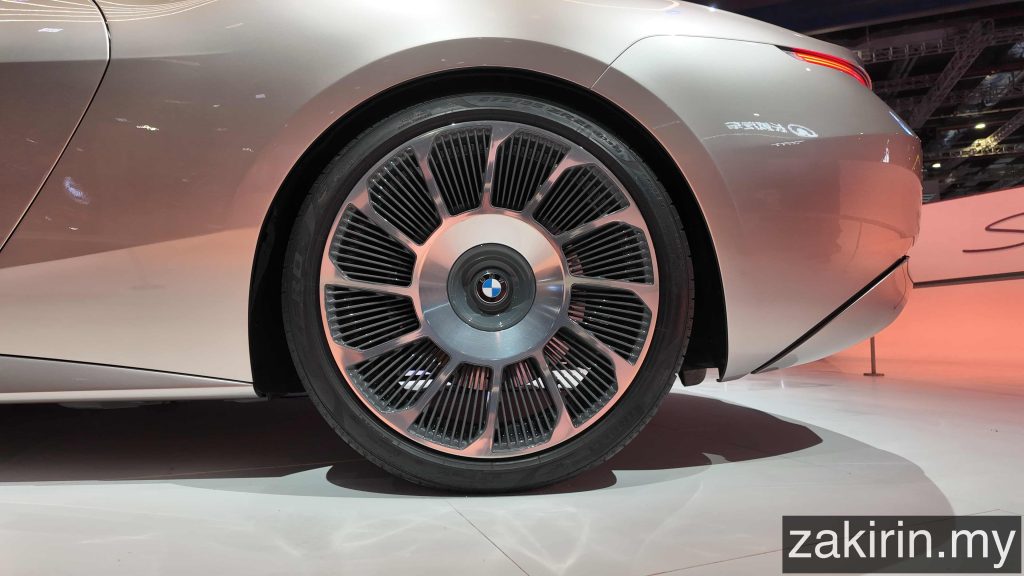
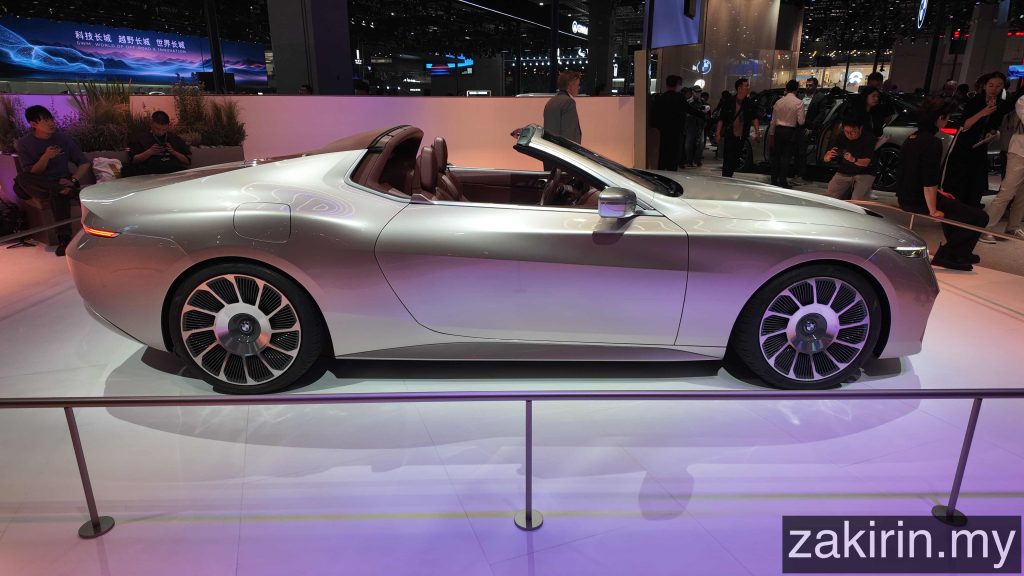
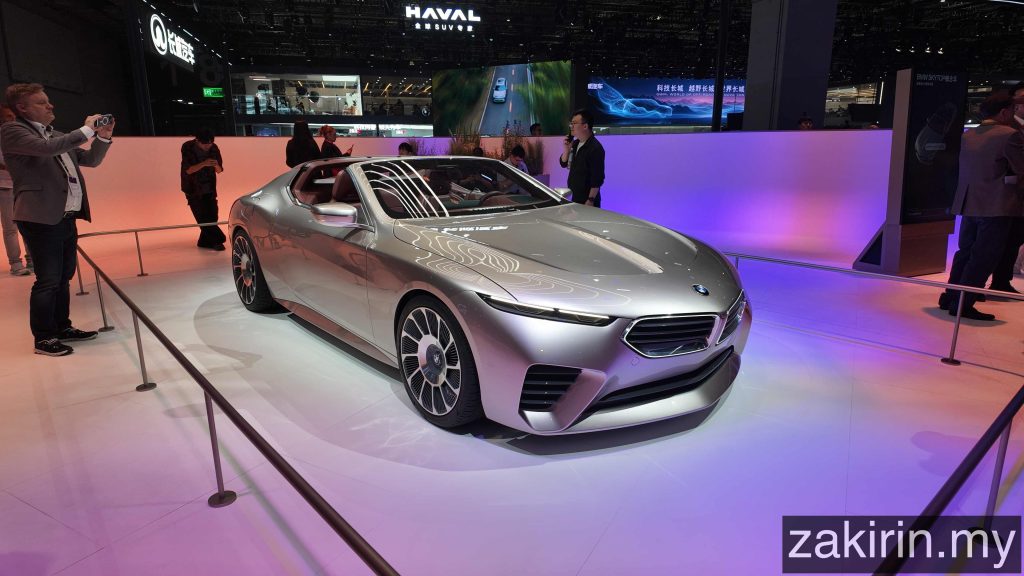
The Skytop is not merely a callback to BMW’s archives; it’s a deliberate reimagining of the brand’s DNA. The silhouette, with its prow-like elongated hood and taut rear haunches, evokes the 1950s 503 roadster — a car once deemed “too avant-garde” for its era — while the Z8’s sinuous profile is echoed in the tapered glass roof. Yet this is no nostalgia trip. Designers have injected controversy: the grille, a bronze-tinted reinterpretation of BMW’s iconic kidneys, sits lower and wider, challenging the polarizing designs of recent models like the iX. The removable targa top, a nod to 1980s icons like the Ferrari 288 GTO, transforms the car from a sleek coupe to an open-air grand tourer, blurring categories in a market obsessed with labels.
This duality extends to the materials. Hand-formed aluminum panels (a craft BMW revived for the Z8) meet 3D-printed bronze accents, merging artisanal tradition with aerospace innovation. Even the paint — a liquid-metal silver that shifts hues under Lake Como’s golden light — feels like a metaphor for BMW’s identity crisis: Are they futurists or traditionalists? The Skytop dares to be both.
The Interior: A Sanctuary for the Analog Age
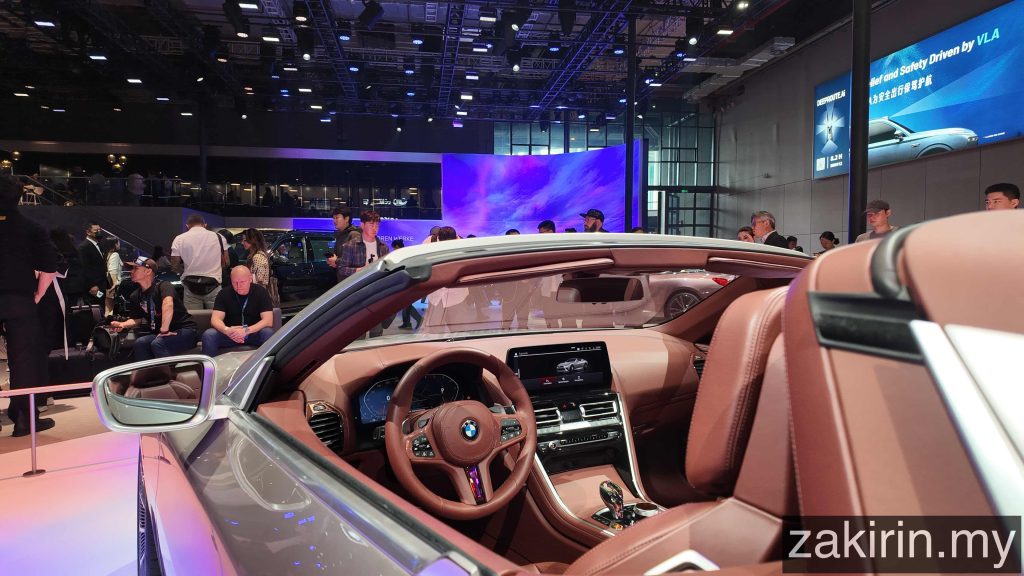
In an era where screens dominate cabins, the Skytop’s interior is a provocation. BMW’s designers have crafted a “post-digital” cockpit, favoring tactile indulgence over touchscreens. Hand-stitched leather wraps every surface, including the dashboard’s floating “ribbon” structure — a technical marvel requiring 40 hours of craftsmanship per unit. Crystal-infused trim elements, developed with Swarovski, refract light into prismatic patterns across the cabin, while analog dials with smoked-glass faces harken to 1970s chronographs.
Yet this isn’t Luddism. Hidden beneath the retro veneer lies cutting-edge tech: voice-activated AI adjusts ambient lighting to mimic the sun’s position, reducing eye strain on long drives, while haptic feedback in the steering wheel communicates navigation prompts through subtle vibrations. It’s a statement: luxury isn’t about rejecting innovation, but about subordinating it to human sensuality.
Power Play: The Elephant in the Room
BMW’s silence on the Skytop’s powertrain has fueled frenzied speculation. While the brand’s recent focus has been on electric vehicles like the i7 and i4, insiders suggest the Skytop could defiantly house a twin-turbocharged 4.4-liter V8 — the same 617-horsepower unit found in the M8 Competition. This choice would be politically charged. With the EU’s 2035 combustion-engine ban looming, the Skytop’s rumored ICE heart positions it as a “last dance” for petrol purists — a rolling monument to internal combustion.
But there’s another angle: BMW may be testing waters for synthetic fuels. A senior engineer, speaking anonymously, hinted the Skytop’s engine could be compatible with e-fuels, aligning with Porsche’s investments in carbon-neutral petrol. If true, the roadster becomes more than a plaything for billionaires; it’s a Trojan horse in the energy transition debate.
The Business of Exclusivity: Why Limited Editions Matter
BMW’s potential production run — rumored at 50–100 units, priced above $500,000 — isn’t just about profit. Limited editions like the Skytop serve as halo products, elevating brand prestige and driving demand for mainstream models. Consider the 2019 Z4-based Concept Coupe: though never mass-produced, its design language trickled into the 4 Series and iX. The Skytop’s flamboyant grille and glass roof could preview BMW’s 2030 lineup.
There’s also the collector calculus. With auction prices for BMW classics like the 507 and Z8 exceeding $2 million, the Skytop — likely sold via invitation-only to VIP clients — is engineered to appreciate. In an unstable market, automakers are courting the 1% who treat cars as alternative assets.
The Bigger Picture: BMW’s Identity at a Crossroads
The Skytop arrives as BMW faces existential questions. Can it compete with Tesla’s tech allure? Does it risk alienating traditionalists with EVs like the i7? This concept suggests a third path: leveraging heritage as a radical tool. By resurrecting forgotten design codes (the 503’s hood scoop, the Z8’s side gills) through a modern lens, BMW positions itself as the custodian of automotive culture — a role Mercedes-Benz has embraced with its Maybach sub-brand.
Yet critics argue such concepts are distractions. “BMW needs to focus on winning the EV race, not pandering to nostalgia,” says auto analyst Clara Voss. But perhaps that misses the point. The Skytop isn’t a car; it’s a manifesto. In an age of homogenized EVs, it screams that emotion still matters — that there will always be buyers who crave the snarl of a V8, the smell of leather, and the theater of a targa top stowed by hand.
Conclusion: A Roadster for the Apocalypse
The Skytop’s fate hinges on BMW’s summer 2024 decision, but its impact is already felt. It challenges rivals to match its audacity, dares regulators to reconsider their timelines, and whispers to enthusiasts: the soul of driving isn’t dead yet. Whether it becomes a collector’s trophy or a production reality, the Skytop proves that in the twilight of combustion, BMW still knows how to set the world on fire.