 Zakirin
Thieves Don’t Just “Peek” — They Use Tech Too
Most people assume a thief walks past, spots a bag or a charger, and smashes a window. That still happens — but criminals have quietly added smarter tools to their toolkit so they can target cars with higher confidence and less risk. Two practical technologies you should know about are Bluetooth / RF scanning and thermal / infrared imaging. Below I’ll explain, in plain language, how each tool is actually used in real crime reports, why thieves rely on it, and what you can do to stop being an easy target.
Intro for you: why this matter?
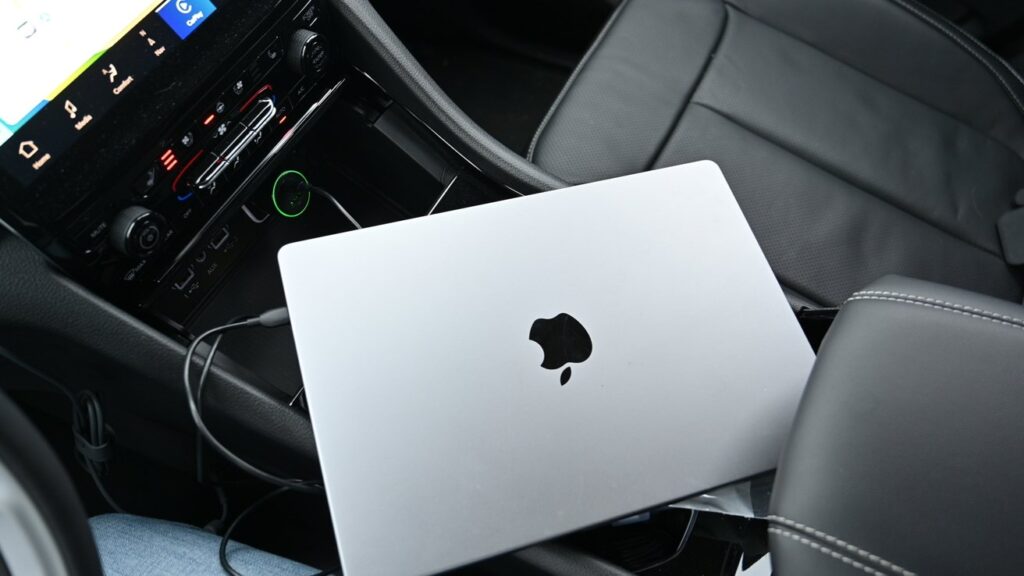
If you hide a laptop under a coat or tuck it in the boot and think that’s enough, think again. Modern devices can broadcast tiny signals and give off heat long after you put them down. Thieves who want a quick score learn to read those signals — not to be clever for the thrill, but because it makes their job faster and less risky. Knowing the real tools and real cases isn’t about scaring you; it’s about giving you the clear, practical steps that actually reduce theft.
Tool #1 — Bluetooth and RF scanning: how it works and real cases

Many phones, headphones and laptops use short-range radio signals (Bluetooth, Wi-Fi, Bluetooth Low Energy). These signals are meant to let devices find each other. A thief can use a phone app or cheap scanner to see which devices nearby are advertising themselves.
On August 9, 2023, CBS San Francisco published a report showing Bay Area thieves using Bluetooth locator apps to detect electronics inside parked cars. Around that same period, July 31, 2023, NBC Bay Area ran a segment in which law enforcement warned that criminals were scanning parking lots for broadcasting devices before deciding which cars to target. Wired has also documented how Bluetooth scanners have been used in targeted thefts and quoted police and crime-prevention specialists confirming the technique.
How thieves use it in practice: a person walks down a row of vehicles with a smartphone running a scanner app and watches for appearing device names or MACs. If a laptop or a phone in the car is on and discoverable, the scanner will often show an identifiable entry. That turns a long list of cars into a short list worth a closer look. The thief will then either return when it’s quieter or attempt a quick smash-and-grab while confidence is high.
Limits and why it’s not magic: the device must be powered on and broadcasting to appear. A fully shut-down laptop or a phone with Bluetooth disabled will not be picked up. Scanners produce false positives from passersby’s devices and can be confused by nearby networks. Still, when combined with a visual sweep (charger visible, bag on seat, or a reflection), Bluetooth confirmation is powerful because it turns suspicion into near-certain evidence that a car contains something worth stealing.
Tool #2 — Thermal / infrared imaging: how it works and real cases
What it is, simply: thermal and IR cameras detect temperature differences and display a picture of heat rather than light. Devices that were just used or are charging often retain a heat signature that a thermal camera can reveal.
While thermal imaging is more widely documented in organised thefts or police operations than in opportunistic smash-and-grab thefts, there are clear examples of thermal tech used around vehicle crime. For instance, April 17, 2024, CBS (Baltimore) covered a case where police used a drone fitted with thermal imaging to track a suspect who had fled in a stolen car; the same class of thermal tools has been shown in other stories about criminals exploiting heat signatures. And on June 18, 2025, WFMY (Greensboro) reported thieves using infrared-related tactics to interfere with or blind security cameras during break-ins — showing criminals adopt IR tech when it helps them avoid detection.
How thieves use it in practice: thermal scopes can show a warm rectangle where a laptop was recently used, or the glow of a charging battery at night. In scenarios where someone is checking multiple cars after hours, a quick thermal sweep can separate occupied or recently used cars from cold, empty ones. Organized groups may also deploy thermal drones or handheld scopes to reconnoitre larger lots or assist in coordinated thefts.
Limits and why it’s not magic: heat dissipates quickly; if a laptop has been off for a while it won’t show up. Insulated storage, thick coverings or metal panels reduce thermal visibility. Lower-cost thermal devices give coarse images that are excellent for spotting warm bodies but less good at identifying small warm electronics in cluttered interiors. Thermal tools take time and proximity to use effectively, so they are useful mainly when a criminal can afford to linger or when confirming a prior suspicion.
Why thieves combine methods
Criminals seek the lowest-risk path to the highest reward. Bluetooth scanning quickly narrows targets; thermal imaging can confirm recent use; human observation supplies the context (visible bag, charging cable, or repeated behaviour by the car owner). That layered approach turns guesswork into a confident selection process. Reports from multiple newsrooms and law-enforcement statements have stressed that Bluetooth scanners are commonly observed, and thermal/IR tech shows up in more organized or camera-evading operations.
How to protect yourself — practical actions that actually work
You can’t make your car immune to crime, but you can make it unattractive and impractical to target:
- Never leave gadgets in the car if you can avoid it. This is the single most effective step. Even the best hiding spots lose to patient thieves.
- Power down completely. Shut laptops off (don’t leave them in sleep mode) and turn Bluetooth/Wi-Fi discoverability off. A powered-down device is far less likely to be detected by RF scanners.
- Remove chargers and accessories. Cables dangling from outlets or visible charging lights are immediate red flags. Take chargers with you or hide them separately.
- Let gear cool before you park and store. Thermal detection is strongest right after use or charging; allow devices to return to ambient temperature, then store them.
- Use opaque, nondescript storage. Flattened, soft bags and unlabeled cases break up outlines and won’t scream “laptop inside.” Avoid leaving recognizable laptop bags or backpacks in sight.
- Park smarter. Busy, well-lit areas with CCTV are unattractive to thieves who need time to scan or use specialized equipment.
- Harden your data. Assume theft can happen: encrypt drives, use strong passwords and enable remote-locate/remote-wipe tools and backups. A stolen device isn’t just hardware loss — it’s a data breach risk.
- Report suspicious behaviour. If you notice someone loitering with a phone or device pointed at cars, notify security or police rather than confronting them.
Final word — don’t panic, adapt
Bluetooth scanners and thermal cameras can be used against you, but they are not omnipotent. Their effectiveness depends on simple conditions: the device being on or recently used, and the thief having enough time and proximity to scan. Your best defence is practical: remove giveaways, power down, and treat your car as if it’s on display. Those habits make you far less likely to be a target — because criminals pick the easiest, quickest wins first.
Sources : CBS San Francisco (KPIX) — Aug 9, 2023; NBC Bay Area — Jul 31, 2023; Wired — feature on Bluetooth scanners (Nov 2019); KTVU / Fox Business coverage — Aug 2023; CBS Baltimore — Apr 17, 2024; WFMY Greensboro — Jun 18, 2025.