 Akmal Azhar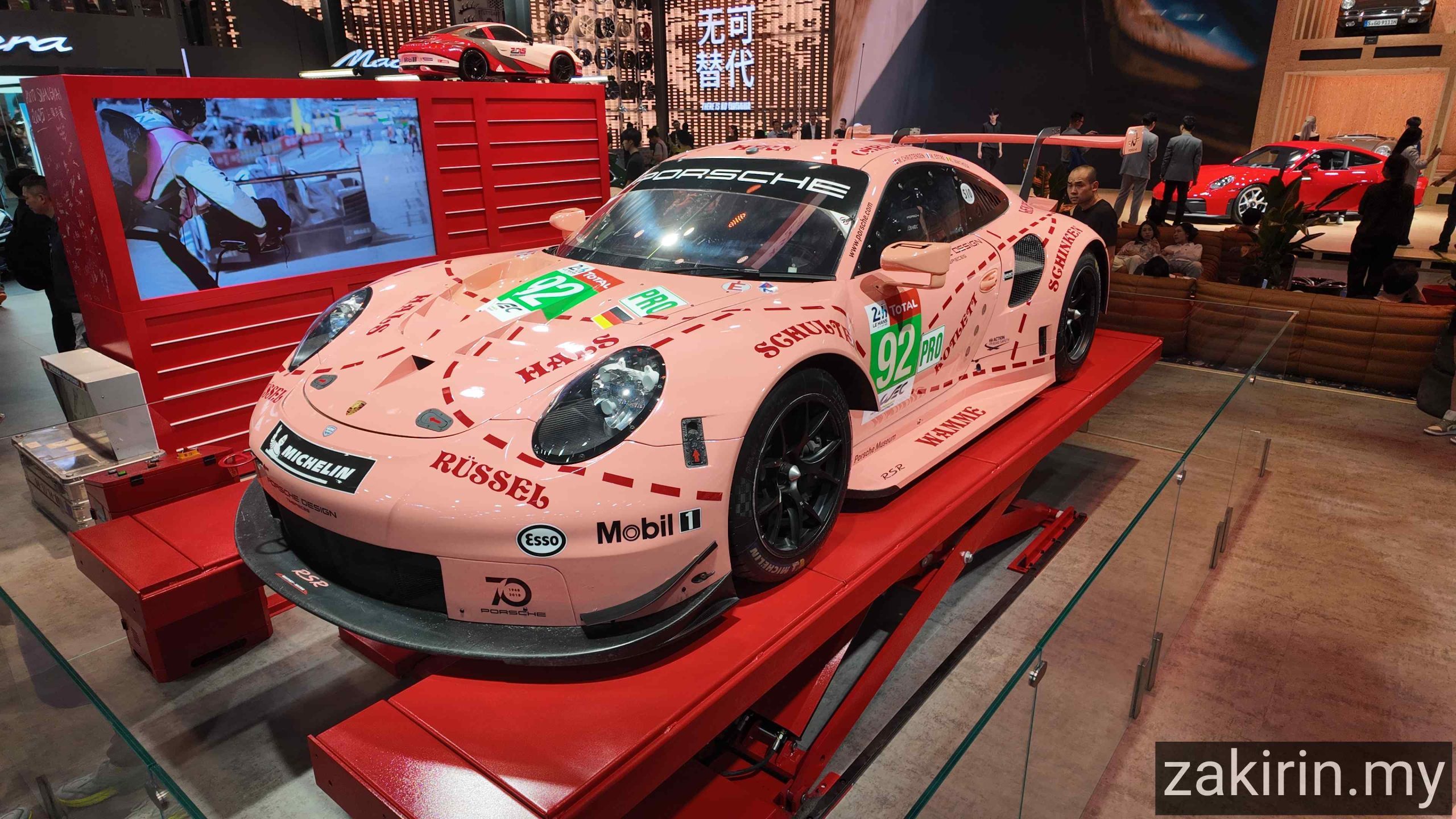
Introduction
The Porsche 911 RSR stands as one of the most radical interpretations of the iconic 911 lineage. While the silhouette may echo the familiar curves of its road-going siblings, the RSR is a purebred race car, engineered from the ground up for endurance racing supremacy. It competes in the world’s most demanding circuits, from the 24 Hours of Le Mans to the IMSA WeatherTech SportsCar Championship, carrying the weight of Porsche’s motorsport legacy on its shoulders.
Breaking with Tradition: The Mid-Engine Shift

What sets the RSR apart is its bold departure from tradition. For decades, the Porsche 911 was defined by its rear-engine layout, a design that, while unique, posed certain challenges in race environments. With the RSR, Porsche made the controversial and technically ambitious decision to move the engine in front of the rear axle, effectively making it a mid-engine car.
This move wasn’t made lightly—it was born from the pursuit of performance perfection. By relocating the engine, Porsche significantly improved the car’s weight distribution and aerodynamics, allowing for better cornering balance and more efficient use of downforce. This layout also made it possible to integrate a large rear diffuser, a first for a 911, which in turn gave the RSR incredible high-speed stability.
The Power Within: Engine and Transmission

Under the carbon-fiber body panels lies a naturally aspirated 4.2-liter flat-six engine, a high-revving powerhouse that produces around 515 horsepower, depending on the Balance of Performance regulations imposed by racing authorities.
The engine sings a mechanical symphony at over 9,000 RPM, delivering power with sharp throttle response and no turbo lag. Porsche chose to keep the engine naturally aspirated to maintain a linear and predictable powerband, ideal for long-distance endurance racing where consistency often beats raw speed.
The transmission is a race-tuned 6-speed sequential gearbox, controlled via paddle shifters. The gearbox has been optimized for rapid, precise shifts that minimize any interruption in power delivery, especially critical during intense battles through traffic and tight chicanes.
Shaped for War: Aerodynamics and Design

Complementing this powertrain is an aerodynamic package meticulously sculpted in Porsche’s wind tunnels. A low-slung splitter, smooth underbody, wide fenders, and a towering rear wing all contribute to downforce, cooling, and efficiency. Every millimeter of the RSR’s surface is shaped with a specific purpose.
Inside the Beast: Cockpit and Driver Interface
Inside the cockpit, the RSR is stripped of any luxury, focused solely on the demands of a professional driver. A single carbon-fiber racing seat is surrounded by a full FIA-spec roll cage, fire suppression systems, and a digital dashboard brimming with telemetry.
The driver interface is complex and technical, allowing quick access to systems like fuel mapping, traction control, pit speed limiter, and communication tools. It’s a battlefield workstation, not a car interior.
On Track Performance: Racing Legacy and Rivalries
On track, the RSR has faced some of the toughest rivals in GT endurance racing: Ferrari’s 488 GTE, the Ford GT, Aston Martin’s Vantage GTE, and Corvette’s C7.R and C8.R. Despite fierce competition, the RSR has claimed numerous victories and class championships in both WEC and IMSA. Porsche’s team strategy, paired with the car’s robustness and efficiency, often gives it the edge in races that last 6, 12, or even 24 hours.
Motorsport Politics: The Balance of Performance Debate
But no car operates in a vacuum. The RSR is entangled in the intricate politics of modern motorsport. Chief among these is the Balance of Performance system, a regulatory mechanism designed to level the playing field by adjusting variables like weight, power output, and fuel capacity.
Porsche has, at times, voiced concerns that their success with the RSR has led to disproportionate restrictions, effectively punishing excellence. Still, the brand continues to adapt and innovate within the rules, a testament to its engineering strength and resilience.
Beyond the Track: Political and Corporate Significance
Beyond the track, the RSR plays a subtle but notable role in Porsche’s corporate narrative and political posture. Motorsport serves as a proving ground for technology that may one day influence road cars, particularly in areas like fuel efficiency, hybridization, and lightweight materials.
Porsche leverages this role when engaging with European regulatory bodies, presenting itself as a leader in sustainable performance. The RSR, in this context, becomes a symbol of what disciplined innovation can achieve under the pressures of real-world racing.
Cultural Weight: Evolution of an Icon
Culturally, the RSR stands as a symbol of transformation. It reflects a brand willing to challenge its own traditions in the name of progress. To purists, a mid-engine 911 may seem like heresy, but to engineers and racers, it’s a brilliant evolution. The sound of its high-revving flat-six, the aggressive stance, and its undeniable presence on the grid have earned it a loyal following among motorsport enthusiasts.
Conclusion: The Ultimate Expression of Porsche’s Racing Soul
The Porsche 911 RSR is not just a racing machine—it is a philosophical statement. It says that legacy must evolve, that even icons must adapt, and that performance demands sacrifice and reinvention. In the world of endurance racing, where reliability, speed, and innovation must harmonize for hours on end, the RSR doesn’t just participate. It leads.


 Yusri Ng