 Zakirin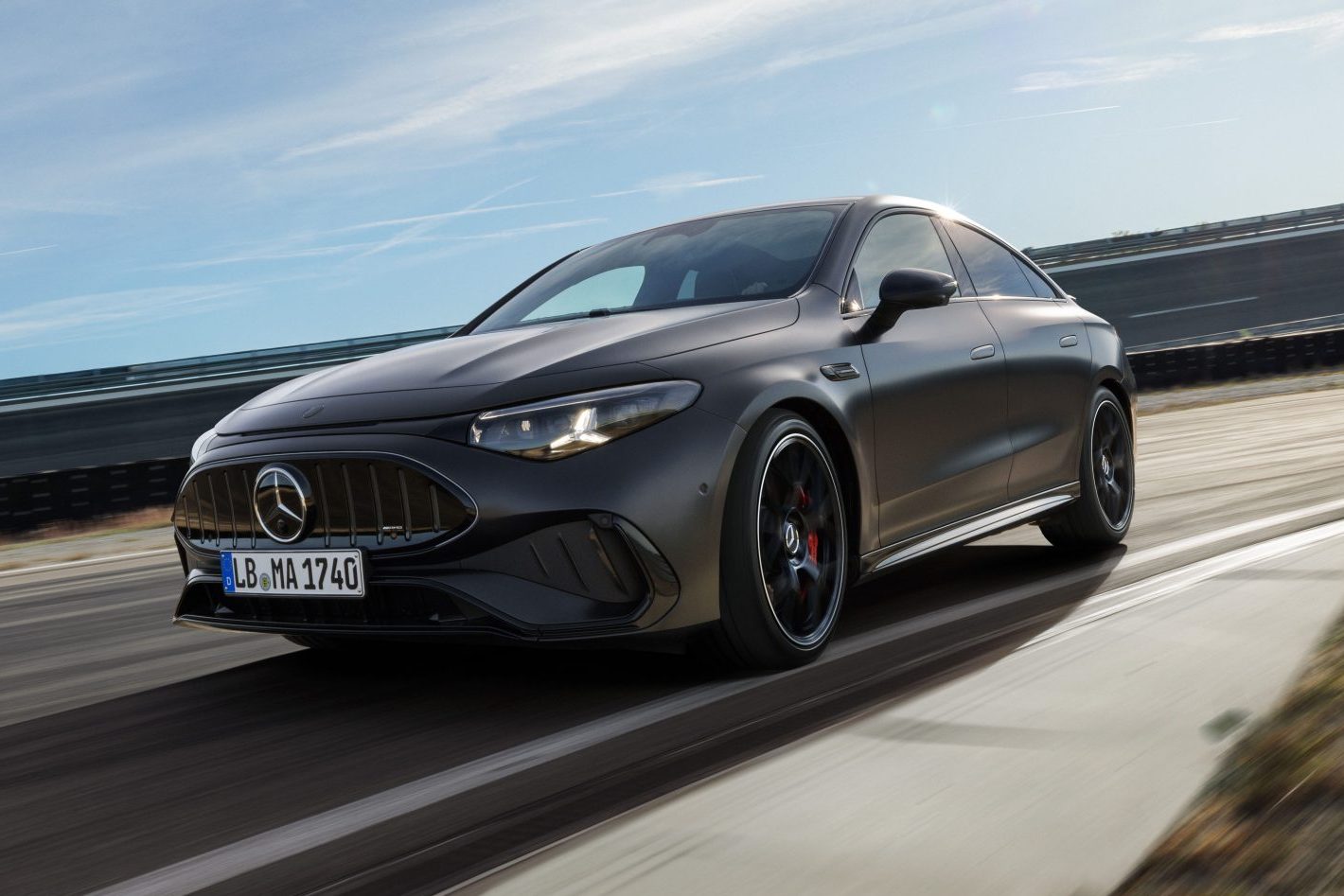
A piece of legislation recently passed by the US Senate Commerce Committee is causing significant concern for Mercedes-Benz, potentially threatening the German automaker’s long-standing presence in the United States.
The legislation, originally designed to toughen restrictions on Chinese automakers entering the US market, includes a controversial provision that could unintentionally catch Mercedes-Benz in the crossfire.
The 15 Percent Threshold
The Connected Vehicle Security Act, which is currently pending full Senate approval, proposes a sweeping ban on the import, production, sale, and resale of vehicles from manufacturers where Chinese entities hold more than a 15 percent ownership stake.
This specific threshold is highly problematic for Mercedes-Benz. Currently, the German brand has nearly 20 percent of its shares owned by Chinese entities. China’s state-owned BAIC Group holds a 9.98 percent stake, while Geely founder and chairman Li Shufu owns 9.69 percent.
Because the combined ownership exceeds the proposed 15 percent limit, Mercedes-Benz could theoretically face a complete ban on US operations if the bill becomes law as currently written.
An Unintended Target
The primary goal of the legislation, proposed by Ohio Republican Senator Bernie Moreno and Michigan Democrat Senator Elissa Slotkin, is to protect the US industrial base and block Chinese automakers from gaining a foothold in the American passenger vehicle market.
Lawmakers quickly realized that banning Mercedes-Benz was not their intention. Senator Ted Cruz, who chairs the committee, explicitly stated that lawmakers would never consider banning Mercedes-Benz sales in the US, acknowledging that the bill requires significant changes before it can become law. Cruz also called for the 15 percent threshold to be removed entirely, questioning if the figure was intentionally chosen to weaken Mercedes-Benz, a direct rival to General Motors’ Cadillac brand.
Mercedes-Benz Responds
Mercedes-Benz is actively monitoring the situation and has stressed its massive footprint in the US economy.
The automaker pointed out that:
- No single Chinese shareholder holds over 10 percent of the company.
- Major shareholders are not directly represented on the supervisory board and possess no control or decision-making authority.
- It employs roughly 160,000 people across the US.
- It produces vehicles in factories located in Alabama and South Carolina.
- It partners with 386 dealers across 49 states.
The company’s CEO, Ola Källenius, promised that Mercedes-Benz would do everything in its power to protect its US business. The automaker is reportedly lobbying to have the permissible amount of Chinese interest raised to 25 percent, or to implement a qualitative national security risk test instead of a strict numerical cutoff.
If the bill were to pass without changes, Senator Bernie Moreno indicated that Mercedes-Benz would have until 2030 to comply with the new ownership regulations and could potentially receive waivers if necessary.