 Akmal Azhar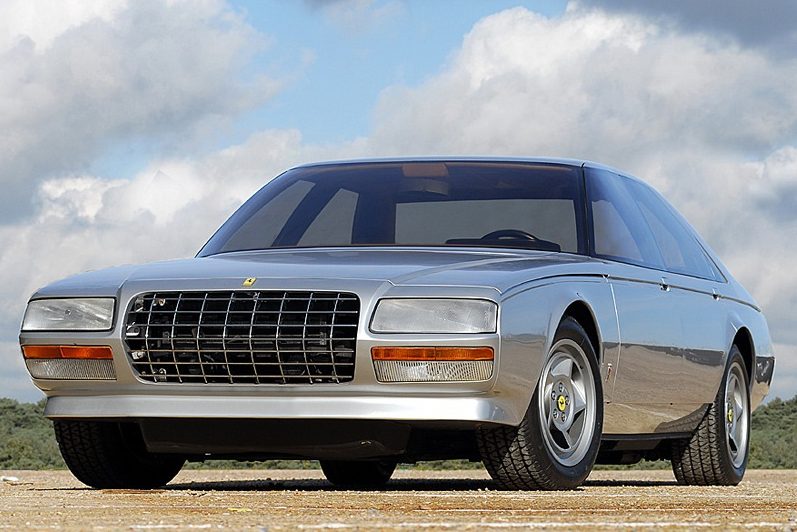
In the pantheon of Ferrari’s storied history, few cars stand out as unexpectedly daring as the Ferrari Pininfarina (often shortened to “Pinin”). Unveiled in 1980, this one-off concept car shattered the marque’s traditional sports car mold, presenting a radical vision of a four-door Ferrari sedan. Named in honor of Sergio Pininfarina, the legendary Italian designer and patriarch of the Pininfarina design house, the car was both a tribute and an experiment. Though it never reached production, the Pinin remains a fascinating footnote in automotive history, showcasing Ferrari’s willingness to explore uncharted territory.
A Tribute to a Design Legend
The Ferrari Pinin was conceived as a birthday gift for Sergio Pininfarina, celebrating his 50th anniversary with the company. Sergio had shaped some of Ferrari’s most iconic models, including the 250 GT SWB and the Daytona, and the Pinin was a heartfelt nod to his legacy.
Ferrari entrusted Pininfarina’s own design team—led by Sergio’s son, Andrea Pininfarina—to create the car, blending familial pride with cutting-edge automotive innovation. The result was a vehicle that defied expectations, merging Ferrari’s performance DNA with grand touring practicality.
Breaking the Mold: A Four-Door Ferrari
The most striking aspect of the Pinin was its four-door configuration, a first for Ferrari. In an era when the brand was synonymous with two-seat sports cars and occasional 2+2 grand tourers, the Pinin’s sedan body style was revolutionary.
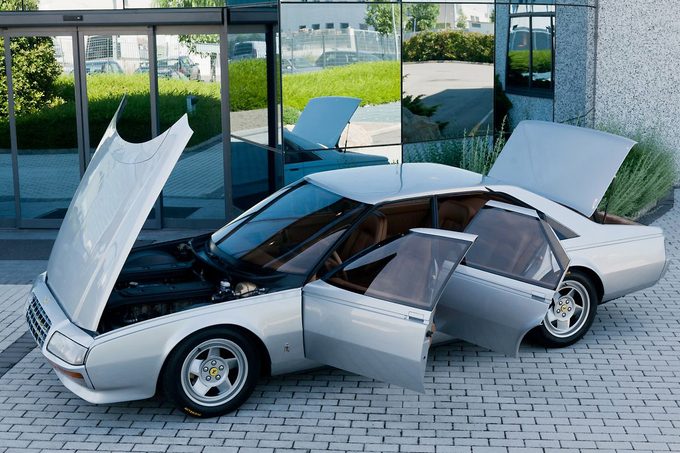
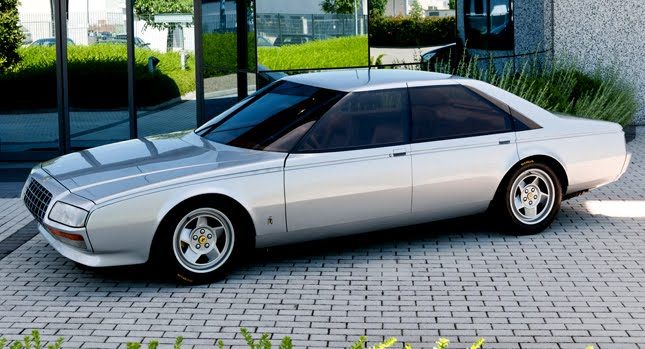
The design team faced a unique challenge: how to retain Ferrari’s signature elegance and sportiness while accommodating four doors. The solution was a sleek, elongated silhouette with a long hood, a sloping roofline, and a truncated rear reminiscent of a shooting brake. The rear doors were discreetly integrated, hinged at the C-pillar to maintain the car’s coupe-like profile.
The Pinin’s exterior was a masterclass in balancing form and function. Its aerodynamic lines, pop-up headlights, and bold grille echoed Ferrari’s racing heritage, while the expansive glasshouse and chrome accents added a touch of luxury. At nearly 5 meters long, the Pinin was a substantial vehicle, yet its proportions avoided the boxiness typical of 1980s sedans.
Luxury Meets Performance: The Interior and Powertrain
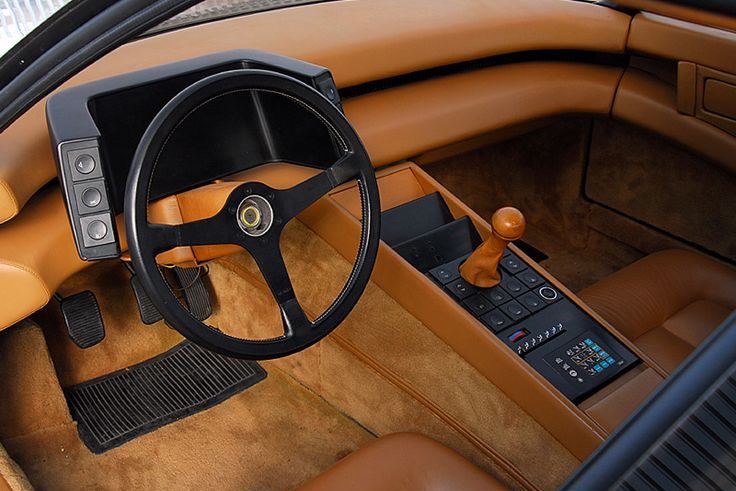
Inside, the Pinin offered a glimpse into Ferrari’s interpretation of a luxury sedan. The cabin featured plush Connolly leather upholstery, polished wood trim, and a driver-centric dashboard with analog gauges.
The rear seats were generously spaced, a stark contrast to the cramped quarters of Ferrari’s 2+2 models. Yet, the Pinin didn’t abandon its sporting roots—the steering wheel, pedals, and gear lever were lifted directly from the Ferrari 400i, a nod to its performance lineage.
Under the hood lay a 5.0-liter V12 engine, borrowed from the Ferrari 400 GT. This longitudinally mounted powerplant produced 310 horsepower and 313 lb-ft of torque, channeled to the rear wheels via a three-speed automatic transmission.
While the engine was detuned compared to Ferrari’s contemporary sports cars, it provided ample power for a grand tourer, propelling the Pinin to a top speed of 155 mph. The chassis, derived from the 400 GT, was modified to accommodate the extended wheelbase and four-door layout, with reinforced suspension components to handle the added weight.
A Concept Car with a Purpose
The Pinin was never intended for production. Instead, it served as a rolling laboratory for Ferrari and Pininfarina to explore new ideas. At the 1980 Turin Motor Show, where the car debuted, Ferrari emphasized that the Pinin was purely a design study.
Yet, it sparked intense speculation about Ferrari’s future direction. Could the brand expand beyond sports cars? Would a four-door Ferrari appeal to affluent buyers seeking practicality without sacrificing prestige?
The public reaction was mixed. Purists balked at the idea of a “family Ferrari,” while others praised its audacity. Automotive journalists noted that the Pinin’s design language—particularly its wedge-shaped profile and integrated rear spoiler—hinted at future Ferrari models like the Testarossa.
Legacy: Paving the Way for Ferrari’s Future
Though the Pinin faded into obscurity after its show car debut, its influence lingered. Ferrari’s experimentation with unconventional body styles resurfaced decades later with models like the FF (2011) and GTC4Lusso (2016)—shooting brake-style grand tourers that blended performance with practicality.
These cars, like the Pinin, challenged the notion of what a Ferrari could be, proving that the brand could innovate without compromising its core identity.
The Pinin also underscored the symbiotic relationship between Ferrari and Pininfarina. Sergio Pininfarina himself called the car “a dream that became reality,” reflecting the collaborative spirit that produced icons like the Dino 246 GT and F40.
Where Is the Ferrari Pinin Today?
After its tour of auto shows, the Pinin was retired to the Pininfarina Museum in Cambiano, Italy, where it remains a centerpiece of the collection. The car’s pristine condition and historical significance make it a magnet for design enthusiasts and Ferrari aficionados. In recent years, it has occasionally been displayed at vintage car events, where its bold lines and four-door layout continue to provoke curiosity and admiration.
Conclusion: A Testament to Bold Vision
The Ferrari Pinin stands as a testament to a moment when Ferrari dared to reimagine itself. It challenged conventions, blurred boundaries, and proved that even a brand steeped in tradition could take risks. While the world never saw a production four-door Ferrari, the Pinin’s legacy lives on in the brand’s willingness to innovate—a philosophy that continues to drive Ferrari forward.
In an era dominated by SUVs and electric vehicles, the Pinin’s story feels more relevant than ever. It reminds us that automotive greatness lies not just in speed or power, but in the courage to envision something entirely new. The Ferrari Pinin may have been a one-off, but its spirit of exploration endures.

 Zakirin