 Zakirin
McLaren’s latest revelation in hybrid powertrain technology marks a significant evolution in the realm of high-performance engineering. The new hybrid V-8 system found in the McLaren W1 does more than simply refine the ideas that powered the legendary P1—it redefines them. At its core, the innovation behind the W1’s system is a departure from the traditional “torque fill” approach that was once the hallmark of McLaren’s hybrid prowess. In the P1, the concept of torque fill was employed to counteract the inherent turbo lag that accompanies the use of twin turbochargers on a V-8 engine.
By supplementing the high-rpm power of the turbocharged engine with the instant torque of an electric motor, the P1 achieved a harmonious blend that delivered an astonishing 903 horsepower and 664 pound-feet of torque. However, with the debut of the W1, McLaren’s engineering team decided to rethink and reinvent the hybrid formula, seeking to create a powertrain that not only offered superior performance but did so while shedding unnecessary weight and improving overall transient response.
In the new hybrid architecture of the W1, the philosophy is clear: the internal combustion engine should deliver robust performance even under the demands of massive turbo boost, while the electric motor is tasked with providing an extra surge of power exactly when it is needed. Richard Jackson, McLaren’s chief engineer for powertrain, explained that the previous torque fill strategy, while effective, placed a considerable burden on the hybrid system. The new approach adopted in the W1 is geared toward reducing this strain by integrating a more sophisticated balance between the engine and its electric companion. By optimizing the interaction between these two power sources, McLaren has managed to create a system that provides not only an enhanced power output but also a more immediate and responsive driving experience.
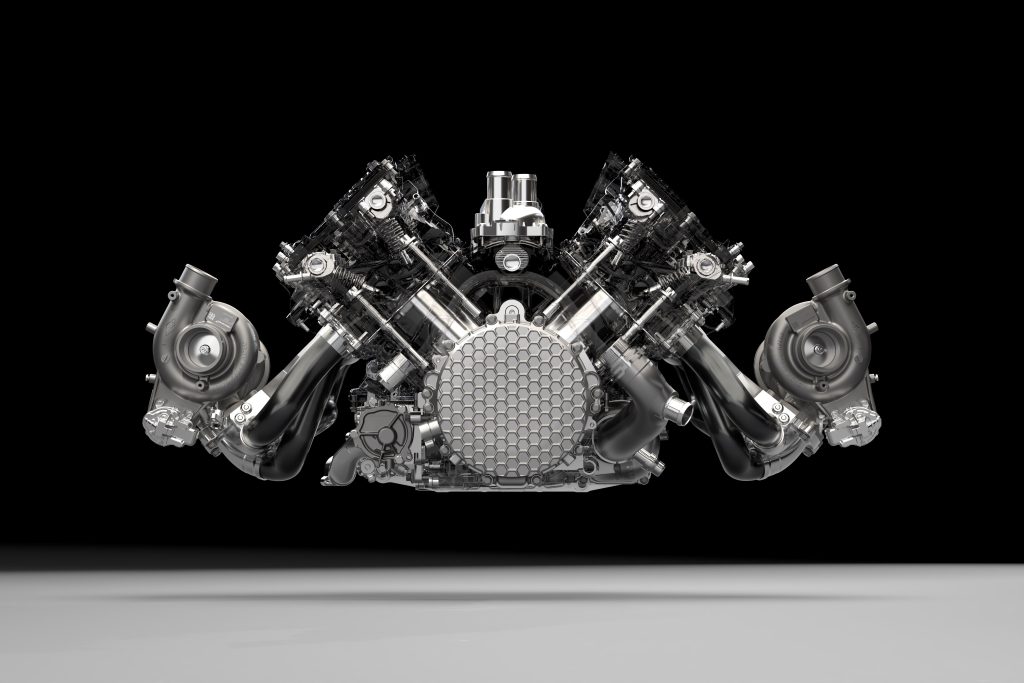
Central to this breakthrough is the introduction of McLaren’s new 4.0-liter V-8 engine, known as the MHP-8. Although it shares the same displacement as its predecessor, the MHP-8 has been re-engineered with several critical modifications. The bore has been slightly reduced while the stroke has been extended, a combination that maintains an oversquare configuration with a 92-millimeter bore and a 75-millimeter stroke. This configuration, which enables the engine to achieve higher revolutions, pushes the redline to an impressive 9,200 rpm. On its own, the engine delivers a staggering 916 horsepower and a torque output of 664 lb-ft—figures that mirror and even surpass the combined output of the P1’s hybrid system. This level of performance is achieved without sacrificing the essential character of a high-revving, visceral engine that is both thrilling to drive and distinctly McLaren.
One of the most striking aspects of the MHP-8 engine is its blend of advanced technologies that underscore McLaren’s commitment to innovation. The engine is the first from McLaren to employ a dual-fuel system that combines port injection and direct injection. This dual approach allows for a more precise control of the fuel delivery, optimizing combustion under various operating conditions.
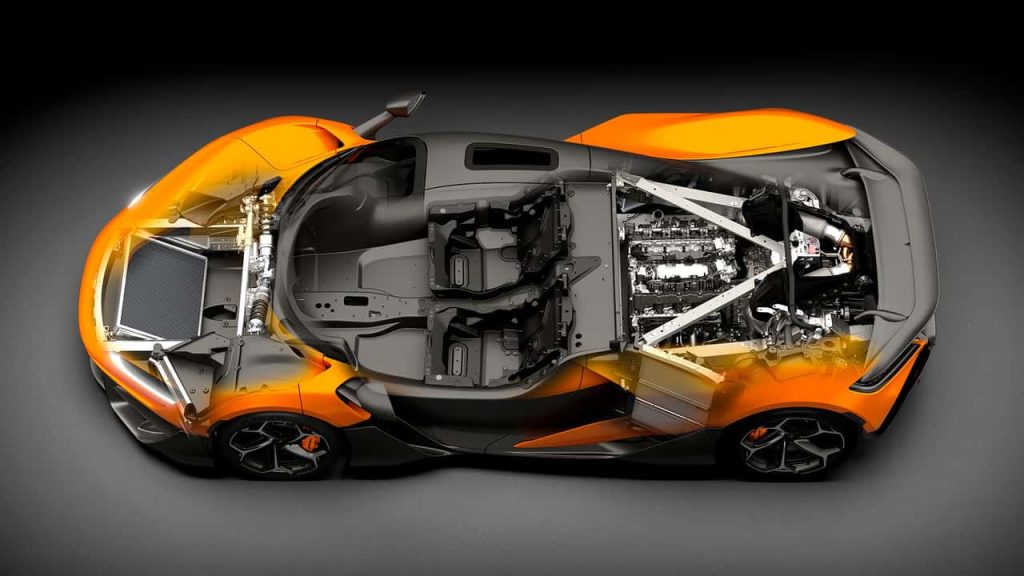
Additionally, the engine features hollow, sodium-filled intake valves, a design choice that reduces the overall weight of the valve assembly while enhancing durability and performance under extreme conditions. The use of plasma-spray cylinder liners further exemplifies the engineering ingenuity at work, providing a robust yet lightweight solution that contributes to the overall reduction in engine mass. These refinements are complemented by a shorter chain drive and optimized bore spacing, which not only help to decrease the physical dimensions of the engine but also ensure that the height and center of gravity remain low—a critical factor in maintaining the vehicle’s agile handling dynamics.
Another noteworthy innovation is the strategic placement of the turbochargers. In contrast to some of its competitors who have adopted electric turbochargers in an effort to minimize lag, McLaren has opted for conventional twin-scroll turbochargers that are mounted in the traditional position outside the engine’s cylinder banks. This decision was driven by a careful consideration of the trade-offs between additional weight and the benefits of electric assistance. By foregoing the heavier electric turbos, McLaren has allowed more of the battery’s energy to be redirected toward the electric motor, which plays a crucial role in delivering an instant torque boost when demanded by the driver. The twin-scroll design enhances the responsiveness of the turbos, ensuring that the engine can quickly transition from low to high power outputs without sacrificing performance or efficiency.
Weight reduction is another critical pillar of the W1’s hybrid system design. McLaren has managed to achieve an 88-pound reduction in weight compared to previous systems, a testament to the relentless pursuit of efficiency and performance. This weight saving is not merely a numerical achievement; it translates into tangible benefits in acceleration, handling, and overall driving dynamics. Every pound shed from the powertrain allows the vehicle to accelerate more rapidly, improves braking performance, and enhances the stability and agility of the car through corners. In a hypercar, where the balance between power and weight is paramount, such advancements are instrumental in carving out a competitive edge.
The battery system that underpins the hybrid functionality in the W1 further highlights McLaren’s forward-thinking approach. In stark contrast to the P1’s battery, which boasted a capacity of 4.7 kilowatt-hours and weighed 234 pounds, the W1’s battery is markedly more compact, delivering just 1.4 kilowatt-hours of energy and weighing a mere 110 pounds. While this reduction in capacity might seem like a drawback at first glance, it is in fact a deliberate design decision.

McLaren’s focus in the W1 is not on achieving extended all-electric range—the vehicle’s all-electric driving capability is limited to just 1.6 miles—but rather on ensuring that the battery can discharge and recharge at lightning speeds to provide an immediate performance boost. The battery’s design is inspired by that found in McLaren’s Speedtail, utilizing cylindrical cells that are optimized for rapid energy delivery. Despite having a slightly lower capacity than the Speedtail’s 1.6 kWh battery, the W1’s battery is engineered to be five pounds lighter, further contributing to the overall weight savings and ensuring that the hybrid system remains as nimble as possible.
Equally innovative is the integration of the electric motor with its control unit into a single, compact “E-Module” that weighs only 44 pounds. This E-Module is mounted directly to the side of the eight-speed dual-clutch transmission and is responsible for delivering additional torque to the wheels downstream of the main clutches. By consolidating the electric motor and its control electronics into one cohesive unit, McLaren has eliminated unnecessary redundancies and potential points of failure, all while enhancing the overall efficiency of the system. This integration allows the electric motor to operate more effectively, ensuring that the surge of additional power is delivered seamlessly when the driver demands it, without putting undue stress on other components such as the friction materials within the transmission.
Beyond the technical intricacies, the new hybrid powertrain in the W1 represents a broader shift in McLaren’s design philosophy—one that places a premium on driver engagement and the overall sensory experience of operating a high-performance vehicle. McLaren’s engineers have meticulously fine-tuned every aspect of the engine and hybrid system to ensure that the auditory and tactile feedback remains integral to the driving experience.
For instance, by optimizing component stiffnesses and incorporating longer exhaust manifolds, the engineers have crafted an engine note that is both aggressive and emotionally resonant. The strategic relocation of the timing system to the rear of the engine further contributes to the desired sound and vibration profile, ensuring that the W1 not only performs exceptionally but also communicates its performance in a way that excites and engages the driver.
The benefits of these innovations extend far beyond the confines of raw performance figures. McLaren’s new hybrid system is designed to meet the stringent Euro7 emissions standards, which represent some of the most rigorous environmental regulations in the world. By ensuring that the MHP-8 engine and its associated hybrid components comply with these standards, McLaren is positioning itself at the forefront of an automotive industry that is increasingly defined by the need to balance performance with sustainability.

The decision to forego a non-hybrid variant of the engine underscores the company’s commitment to this dual mandate—delivering uncompromising performance while also reducing environmental impact. This forward-looking approach is not only relevant for the W1 but is also expected to influence the design of future models, such as the anticipated successor to the 750S, where the MHP-8 engine is slated to play a prominent role.
In many ways, the W1’s hybrid system is emblematic of the broader trends shaping the high-performance automotive sector today. Manufacturers across the industry are grappling with the challenges of integrating hybrid technology into vehicles that have long been defined by their raw power and mechanical purity. The traditional notion that hybrid systems are inherently heavy or inefficient is being upended by innovations like those found in the W1. McLaren’s emphasis on lightweight design, rapid energy discharge, and seamless integration of electric and combustion power is setting new benchmarks for what can be achieved when modern engineering meets the uncompromising demands of high-performance driving.
The impact of these advancements is multifaceted. From a performance perspective, the reduction in weight combined with the substantial power outputs means that the W1 is poised to deliver an exhilarating driving experience that is both responsive and dynamic. Every element of the powertrain has been engineered with precision, from the high-revving characteristics of the MHP-8 engine to the immediate, torque-rich boost provided by the electric motor. This synergy between components ensures that the car remains agile and responsive, whether it is accelerating out of a tight corner or unleashing its full potential on a straightaway.
From a technical standpoint, the innovations incorporated into the W1’s powertrain represent a significant leap forward in automotive engineering. The use of advanced materials such as hollow camshafts and 3D-printed cores in the water jackets is indicative of a broader trend toward embracing cutting-edge manufacturing techniques. These innovations not only reduce weight but also enhance the durability and performance of critical engine components. In a hypercompetitive segment where every ounce counts, such improvements are vital in ensuring that the vehicle can deliver consistent performance even under the most demanding conditions.
The integration of the electric motor within the E-Module is another testament to McLaren’s forward-thinking approach. By consolidating key components and reducing the overall mass of the system, McLaren has managed to create a hybrid solution that is both effective and efficient. This level of integration minimizes the complexity of the powertrain, reducing potential points of failure and streamlining maintenance, while at the same time ensuring that performance remains at the forefront.
Another significant aspect of the W1’s hybrid system is its impact on driver engagement. In the realm of hypercars, performance is not measured solely in numbers—it is experienced through the sensory feedback that the car provides. McLaren has taken great care to preserve the emotional connection between driver and machine. The meticulous calibration of engine response, combined with the immediate torque delivery of the electric motor, creates a driving experience that is both intuitive and exhilarating. The hybrid system is designed not merely as an add-on but as an integral part of the car’s character, enhancing the visceral thrill of high-performance driving without detracting from the traditional appeal of a roaring, high-revving engine.

This blend of performance, efficiency, and driver-centric design speaks volumes about the current state of automotive innovation. As environmental regulations tighten and consumer expectations evolve, manufacturers are compelled to explore new technologies that reconcile seemingly disparate objectives. McLaren’s solution in the W1 is a prime example of how advanced hybrid systems can be engineered to deliver not only on the promise of reduced emissions but also on the demand for uncompromising performance. In this context, the W1 stands as a beacon of what is possible when engineering ingenuity is applied to the challenges of modern automotive design.
Looking ahead, the influence of the W1’s hybrid technology is likely to be felt across the entire spectrum of McLaren’s future vehicles. With plans to integrate the MHP-8 engine into forthcoming models, including the next evolution of the 750S, McLaren is laying the groundwork for a new era of performance cars that fully embrace the benefits of hybrid technology. This strategic move not only enhances the company’s competitive position in the hypercar segment but also serves as a blueprint for the broader industry, demonstrating that it is possible to achieve remarkable performance gains while simultaneously addressing the imperatives of efficiency and sustainability.
In conclusion, the new hybrid V-8 powertrain in the McLaren W1 is far more than a simple upgrade; it is a reimagining of what a hybrid system can be. By abandoning the traditional torque fill approach and embracing a design that prioritizes both weight reduction and instantaneous power delivery, McLaren has set a new standard in automotive engineering.
The MHP-8 engine, with its advanced dual-injection system, high-revving capabilities, and numerous weight-saving innovations, exemplifies the company’s relentless pursuit of performance excellence. At the same time, the thoughtfully designed hybrid system, anchored by a compact, high-performance battery and a seamlessly integrated electric motor, ensures that the car meets the stringent demands of modern emissions standards without sacrificing the thrill and engagement that drivers expect from a true hypercar.
This convergence of advanced technology, meticulous engineering, and a deep understanding of driver dynamics marks a pivotal moment not only for McLaren but for the entire high-performance automotive industry. As manufacturers continue to push the boundaries of what is possible, the innovations showcased in the W1 will undoubtedly inspire future developments that further blur the lines between traditional combustion power and modern hybrid efficiency. Ultimately, the McLaren W1 stands as a testament to the transformative potential of hybrid technology when it is applied with a singular focus on performance, precision, and the pure joy of driving.