
 Akmal Azhar
What Is Electronic Fuel Injection (EFI)?
Electronic Fuel Injection, commonly known as EFI, has become a cornerstone of modern automotive engineering, fundamentally transforming the way fuel is delivered to engines. Once dominated by carburetors—a mechanical system that mixed air and fuel—vehicles have now widely adopted EFI for its superior precision, efficiency, and performance.
How EFI Works
At its core, EFI is a computer-controlled fuel delivery system that uses a network of sensors to monitor various engine parameters in real time. These sensors collect data on engine temperature, throttle position, air intake volume, and more. This information is sent to the vehicle’s electronic control unit (ECU), which acts as the system’s brain. The ECU processes this data to determine the exact amount of fuel the engine requires at any given moment, and then sends that precise amount to the engine via injectors.
Advantages Over Carburetors
This level of accuracy results in a more consistent and optimized air-fuel mixture. The benefits are immediate and noticeable: better throttle response, smoother engine performance, improved fuel economy, and reduced emissions. Unlike carburetors, which rely on mechanical adjustments and can be prone to inconsistency, EFI systems continuously adapt to changing conditions like altitude, temperature, and engine load, offering a more refined and responsive driving experience.
The Origins of EFI
While EFI might seem like a recent innovation, its roots go back to World War II, where early versions were used in aircraft to maintain consistent fuel delivery at varying altitudes. The first production car to feature fuel injection was the 1955 Mercedes-Benz 300 SL, a revolutionary vehicle that showcased how performance and efficiency could coexist. In the following years, companies like General Motors and Bendix Aviation further explored electronic fuel delivery, though their initial attempts were limited in commercial impact.
Mass Adoption and the Role of Bosch

It wasn’t until Bosch developed a reliable and practical EFI system in the 1960s that the technology gained momentum. In 1967, the Volkswagen 1600 Type 3 became the first mass-produced car to use Bosch’s EFI system, marking a turning point in automotive design. From then on, EFI began replacing carburetors in a wave that eventually made it the industry standard by the late 1980s and early 1990s.
EFI in Today’s Vehicles
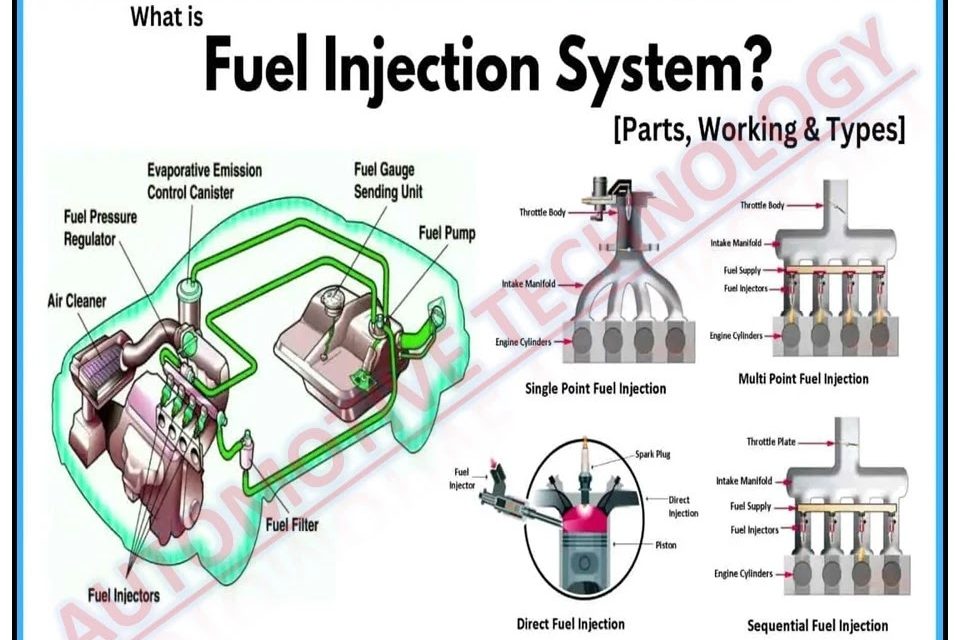
Today, EFI systems are virtually universal in gasoline-powered vehicles. Over time, the technology has evolved into more advanced forms, including multi-point fuel injection and gasoline direct injection (GDI), both of which further refine fuel delivery and efficiency. In performance and racing circles, EFI has also proven to be more tunable and reliable, allowing precise engine mapping and diagnostics that simply weren’t possible with older mechanical systems.
Conclusion: A Lasting Impact on Automotive Engineering
In essence, EFI is not just a technical feature—it’s a defining innovation that has helped shape the modern car. Its impact spans improved engine reliability, greater fuel economy, cleaner emissions, and an overall enhancement in how vehicles perform and respond. As the automotive world continues to push toward electrification and hybrid systems, the legacy of EFI remains a testament to how digital precision transformed the internal combustion engine for the better.


 Zakirin