 Zakirin
For decades, the “H” badge has been a symbol of automotive supremacy across Asia. From the bustling streets of Bangkok to the highways of Kuala Lumpur, Honda has long been the undisputed king of reliability, sensible engineering, and VTEC-powered joy. But recent headlines have painted a far grimmer picture.
With unprecedented plant closures in Thailand and plummeting sales in the world’s largest auto market, a dramatic narrative has emerged: Is Honda being kicked out of ASEAN? And if so, is Malaysia next on the chopping block?
Here is a deep dive into why Honda is suffering globally, why Malaysia remains a surprising fortress of sales, what Honda Global is doing to survive, and our verdict on the brand’s future in Malaysia.
The Global Struggle: Why Honda is Bleeding Market Share
To understand the “kicked out of ASEAN” narrative, we must first look at the epicenter of Honda’s current crisis: China and Thailand.
The Great Fall in China
China was once Honda’s golden goose. In 2020, Honda sold over 1.6 million vehicles there. By fiscal year 2025, that number had nosedived to roughly 611,000 units—a catastrophic drop of nearly 70% from its peak.
Why the sudden collapse? Honda completely misread the speed of the electric vehicle (EV) revolution. While local Chinese juggernauts like BYD pumped out highly advanced, aggressively priced EVs, Honda relied on its legacy internal combustion engine (ICE) success. By the time Honda launched its “e:N” and “Ye” series EVs, they were widely considered too expensive and technologically lagging in autonomous and connected features compared to local rivals. In fact, the situation became so dire that Honda has had to cancel the development of several new EV models in China due to falling behind in pricing and advanced technology, sourced from [BigGo Finance].
The ASEAN Retreat: Thailand Plant Closure
This Chinese EV offensive didn’t stay within China’s borders; it aggressively spilled over into ASEAN. Thailand, long considered the Detroit of Southeast Asia and a primary manufacturing hub for Japanese automakers, is currently undergoing a seismic shift.
In mid-2024, Honda made the shocking announcement that it would cease vehicle production at its Ayutthaya plant by 2025. The facility will be repurposed merely for parts, consolidating all vehicle assembly to its newer Prachinburi plant.Honda’s Thai production had fallen from a high of 228,000 units in 2019 to below 150,000 units annually.
Honda is closing its Ayutthaya plant in Thailand by 2025 due to severe overcapacity and aggressive market capture by Chinese EV brands like BYD, sourced from [Bangkok Post / Paultan.org].With BYD and other Chinese makers opening massive factories in Rayong, Japanese brands are actively losing their grip on the Thai market.
The Malaysian Exception: Why Honda is Still Winning Here
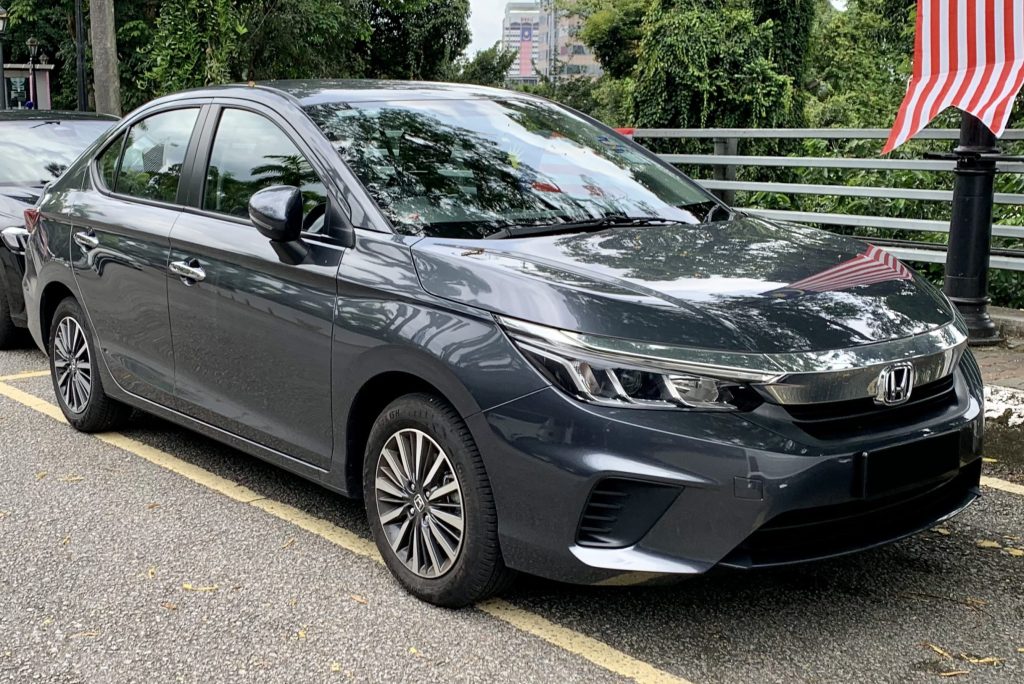
With Thailand shrinking and China collapsing, one might assume Honda Malaysia is bracing for the end. The reality is the exact opposite.
In 2025, Honda Malaysia sold 72,301 cars, capturing an 8.8% share of a record-breaking total industry volume.More impressively, Honda retained its crown as the Number 1 non-national passenger vehicle brand in Malaysia for the 12th consecutive year.
How is Malaysia dodging the bullet?
- The e:HEV Hybrid Strategy: While the rest of the world hyper-fixated on full battery electric vehicles (BEVs), Malaysia’s charging infrastructure is still maturing. Honda perfectly timed the market with its e:HEV (hybrid) lineup. Electrified variants of the HR-V and CR-V accounted for over 30% of total hybrid sales, proving that Malaysian buyers want fuel efficiency without range anxiety.
- Local Assembly (CKD) Dominance: Honda Malaysia has a highly optimized CKD plant in Pegoh, Melaka. By locally assembling core models (City, HR-V, Civic, CR-V), they benefit from favorable tax structures, keeping prices competitive against direct imports.
- The National Car Buffer: In Thailand, Chinese EVs compete directly with Japanese ICE cars on price. In Malaysia, the sub-RM100k market is heavily protected and dominated by Perodua and Proton. Chinese EVs entering Malaysia generally sit in the RM100k+ bracket. Because Honda has already positioned itself as a premium “upgrade” from national cars, brand loyalty and perceived prestige keep the middle-class Malaysian buyer hooked on the “H” badge.
Honda Global’s Counter-Offensive: The Master Plan
Honda is bleeding, but they are not waving the white flag. Recognizing that a centralized, slow-moving corporate structure is fatal in the modern auto industry, Honda Global has initiated drastic survival measures.
1. The Super-Alliance: Honda, Nissan, and Mitsubishi
In a move that shook the automotive world, Japanese automakers Honda, Nissan, and Mitsubishi have entered into a strategic alliance to merge resources and standardise software to counter the Chinese EV threat, sourced from [Motor1 / Nikkei / Paultan].
Developing modern, software-defined EVs is absurdly expensive. By teaming up, these three giants—who have historically been fierce rivals—will share core EV components, batteries, and software platforms. This pooling of R&D budgets is a direct defense mechanism to achieve the economies of scale that BYD and Tesla currently enjoy.
2. A Pragmatic Pivot Back to Hybrids
Honda has realized that forcing a pure-EV lineup too quickly is financial suicide in markets that aren’t ready. Following a massive internal restructure, Honda is actively pivoting its short-to-medium-term global strategy back to HEVs (hybrids) as its core profit driver, while completely redesigning its future EV architecture from the ground up.
Our Verdict: Honda’s Future in Malaysia
Let’s address the elephant in the room: Is Honda Malaysia next to be kicked out?
Absolutely not.
The narrative that Honda is being “kicked out” of ASEAN is a sensationalized view of a very necessary corporate consolidation. Honda is shedding dead weight and unprofitable manufacturing capacity in Thailand to optimize its business.
In Malaysia, Honda’s foundation is rock solid. They have correctly identified that the Malaysian demographic is not fully ready to abandon the combustion engine. By aggressively pushing the e:HEV hybrid technology—which offers excellent low-end torque, stellar fuel economy, and zero reliance on charging stations—Honda has created the perfect bridge for the next 5 to 10 years. Furthermore, their careful introduction of the fully electric e:N1 proves they are testing the EV waters without betting the entire house on it.
Honda may be licking its wounds globally, but in Malaysia, the brand has mastered the local terrain. They aren’t going anywhere. As long as they continue to respect the Malaysian buyer’s demand for practical, premium-feeling, and reliable hybrids, the “H” badge will continue to rule the non-national segment for years to come.