 Zakirin
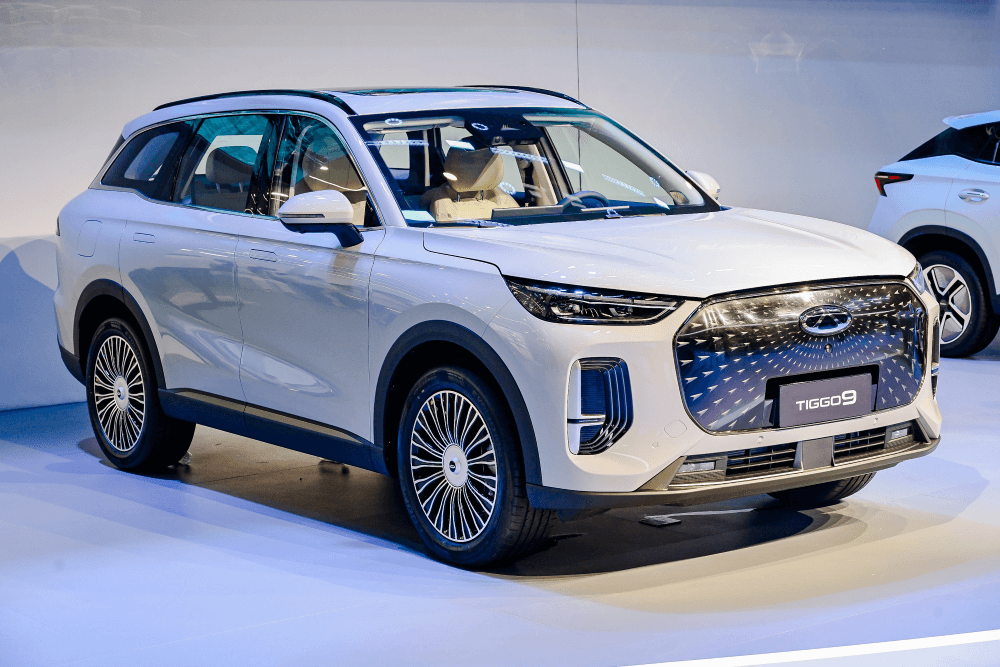
Chery is accelerating its global manufacturing footprint, with plans to transition more than half of its total export volume to localized assembly (CKD) by the end of this year, pivoting from direct vehicle shipments to regional industrial integration.
- Chery Executive Vice President Zhang Guibing confirmed that 48% of the brand’s current export volume is already manufactured outside of China, with a target to cross the 50% threshold by the close of 2026.
- The automaker has outlined aggressive medium-term localisation targets, aiming for 60% CKD output by 2027 and 70% by 2030.
- Chery also revealed future infrastructure and mobility plans, including the rollout of fast-charging networks in the UK, Spain, and Thailand from 2027, alongside a robotaxi deployment in the UAE.
Speaking from Chery’s global headquarters in Wuhu, China, executive leadership emphasized that the brand’s overseas strategy is shifting from pure sales volume toward comprehensive industrial investments. By localising production, Chery intends to generate domestic employment and integrate regional technologies into its supply chain, effectively shielding its operations from evolving international import tariffs.
| Strategic Timeline & Metric | Chery Global Export & Infrastructure Targets |
| Current CKD Export Ratio | 48% of total overseas volume built outside China |
| End of 2026 Target | Exceed 50% localized production (CKD) |
| 2027 Target | 60% localized production (CKD) |
| 2030 Target | 70% localized production (CKD) |
| Charging Infrastructure Rollout | Fast-charging and energy storage networks in the UK, Spain, and Thailand from 2027 |
| Autonomous Mobility | Robotaxi deployment in the United Arab Emirates (UAE) starting in 2027 |
| US Market Entry Strategy | Exploring joint ventures utilising “China-free” hardware and software |
Global Expansion and Infrastructure Investments
As China’s top automotive exporter for 23 consecutive years, Chery’s manufacturing pivot is designed to establish sustainable footholds in key international markets. Beyond assembling vehicles, the company is diversifying into mobility ecosystems. Starting in 2027, Chery will begin constructing dedicated fast-charging networks and energy storage facilities in the United Kingdom, Spain, and Thailand to support its growing portfolio of new energy vehicles.
Additionally, the automaker confirmed plans to introduce commercial autonomous robotaxi services in the United Arab Emirates beginning next year.
Targeting the United States Through Strategic Partnerships
Addressing one of the most heavily restricted markets for Chinese automakers, Chery International Executive Vice President Charlie Zhang indicated that the brand remains highly open to entering the United States. To navigate stringent regulatory and geopolitical hurdles, Chery is actively exploring potential joint ventures with established American automakers.
To overcome immediate regulatory roadblocks, executive leadership stated that Chery is technically prepared to engineer vehicles for the US market utilising entirely “China-free” solutions for both electronic hardware components and software operating systems.