 Zakirin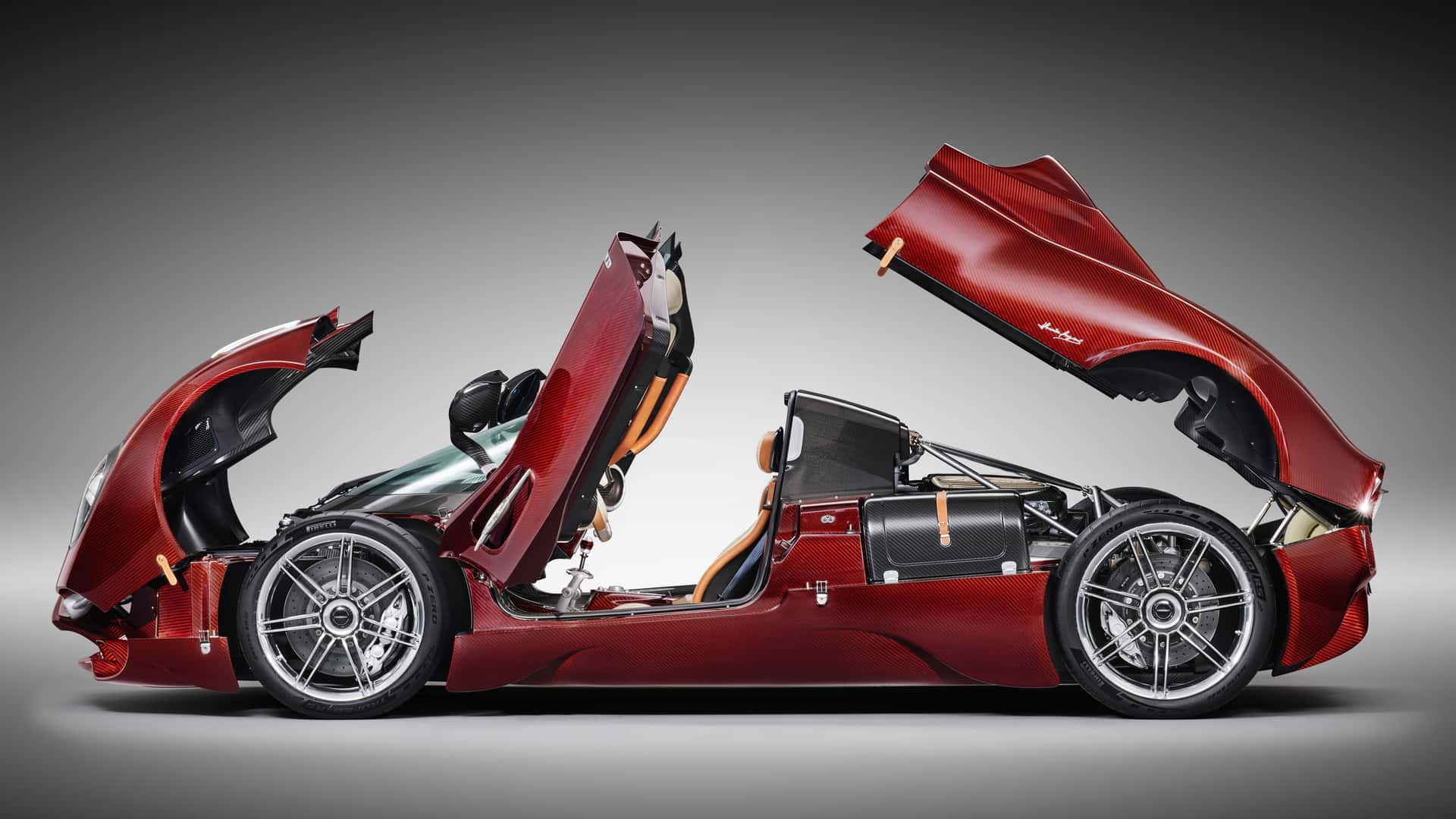
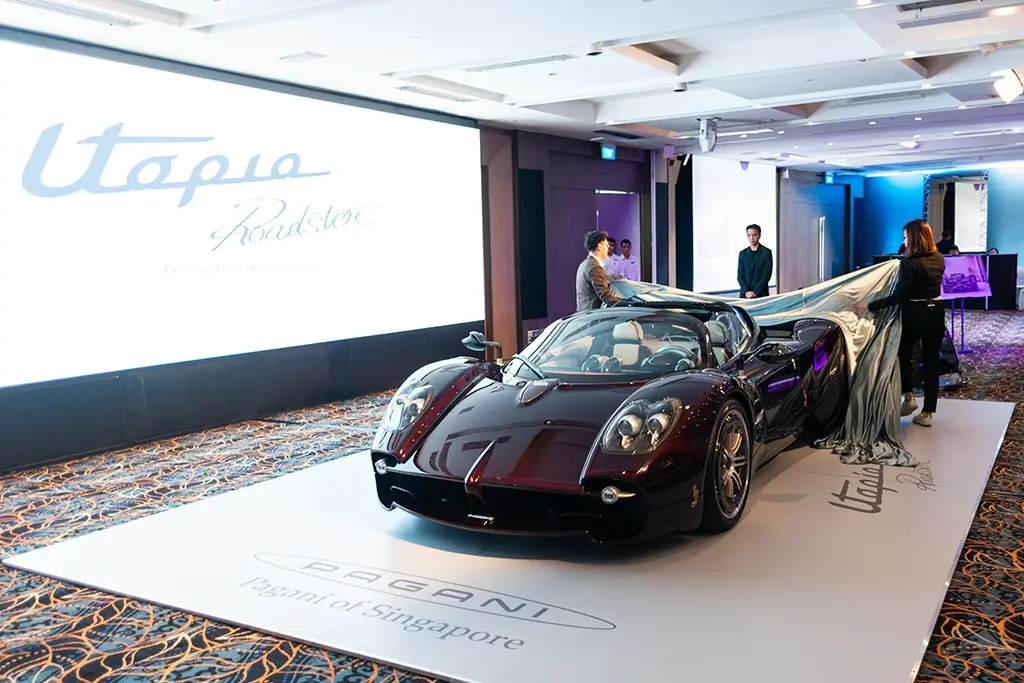
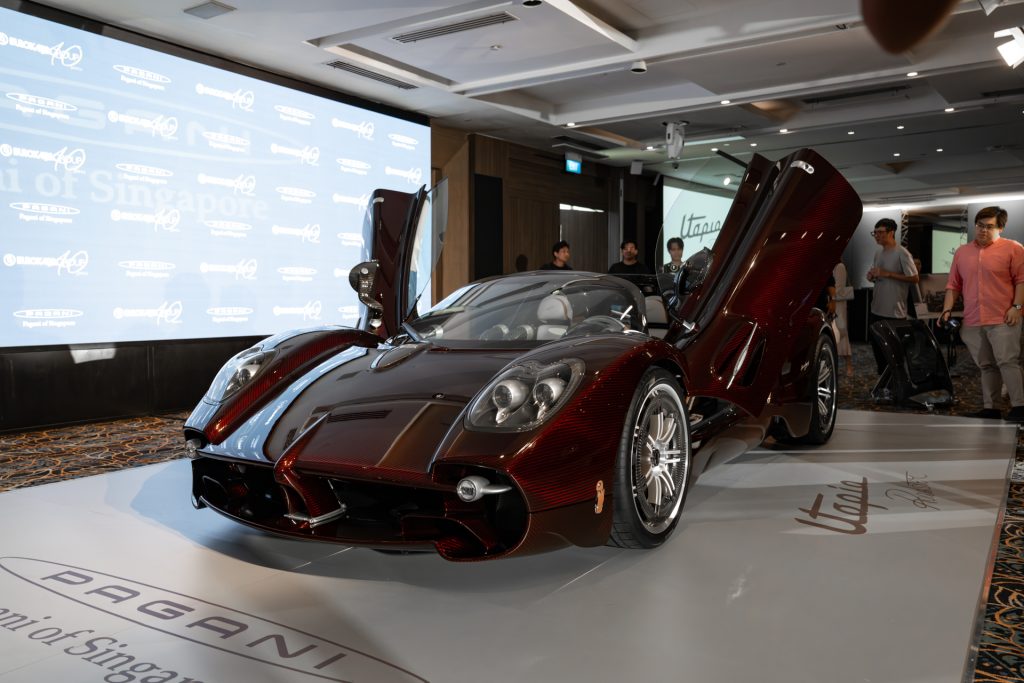
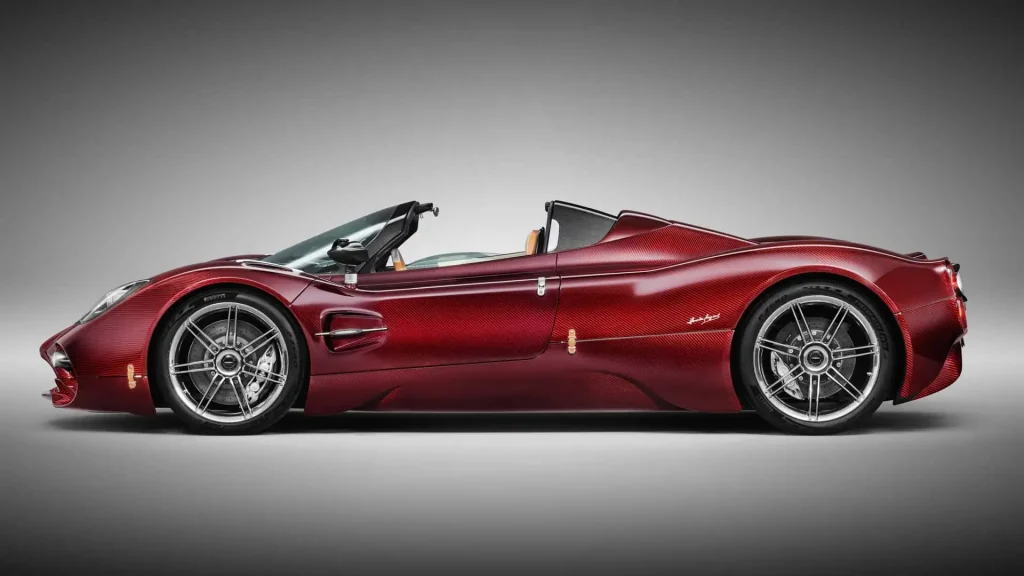
The Pagani Utopia Roadster, unveiled amid the gleaming lights of a global automotive exhibition, stands as a testament to the relentless pursuit of perfection that defines the Italian marque. This open-top marvel, a sibling to the Utopia coupe, transcends the conventional boundaries of hypercar design, blending avant-garde engineering with an almost poetic reverence for artistry.
Pagani’s founder, Horacio Pagani, a former Lamborghini engineer with an uncompromising vision, has cultivated a brand synonymous with exclusivity, where each vehicle is less a machine and more a sculptural ode to human ingenuity. The Utopia Roadster’s debut is not merely the launch of a new model but a reaffirmation of Pagani’s philosophy: that cars should evoke emotion as fiercely as they deliver performance. Every curve of its bodywork, hand-sculpted from carbon-titanium composites, serves a dual purpose—channeling air to cool its roaring AMG-sourced V12 engine while creating a visual symphony of light and shadow.
The absence of a roof, a daring choice in a hypercar, is offset by a monocoque chassis reinforced with proprietary Carbo-Titanium HP62 G2 and Carbo-Triax HP62 materials, ensuring torsional rigidity comparable to its closed-top sibling. This structural integrity allows the Roadster to knife through corners with surgical precision, its 852-horsepower engine propelling it from 0 to 60 mph in under 2.8 seconds, yet it is the car’s ability to marry brutality with delicacy that captivates—a Pagani signature.
The genesis of the Utopia line traces back to Horacio Pagani’s childhood in Argentina, where he sketched cars inspired by Leonardo da Vinci’s notebooks, dreaming of machines that fused art and science. This ethos crystallized in 1999 with the Zonda, a car that defied the era’s angular designs with its organic, wind-sculpted form.
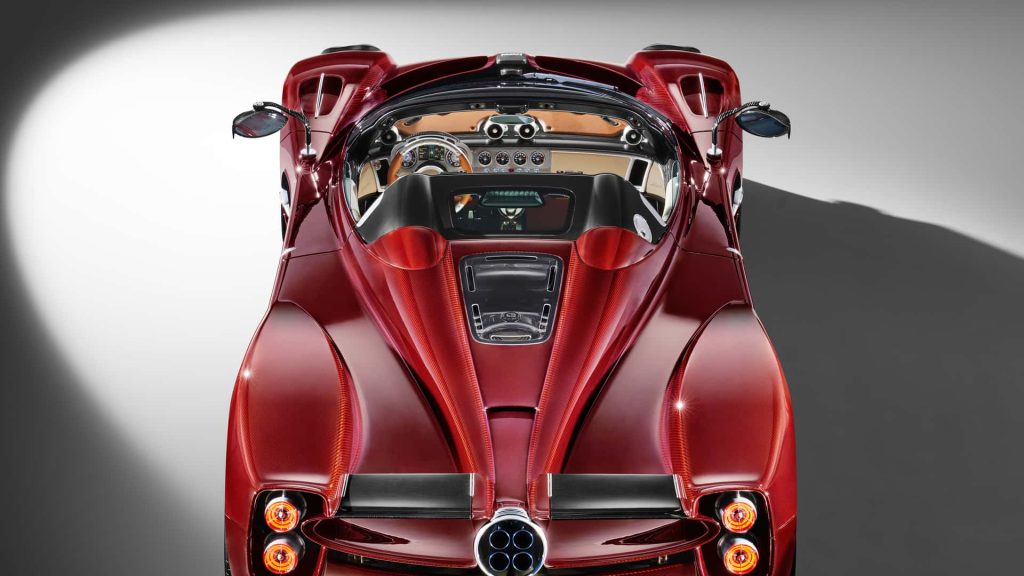
The Utopia Roadster inherits this legacy but elevates it through collaborations with aerospace engineers and master craftsmen. Its 6.0-liter twin-turbo V12, developed exclusively with Mercedes-AMG, features a bespoke “Giorgio” intake system that harmonizes the engine’s growl into a mechanical aria, while titanium exhausts coated in ceramic reduce backpressure and weight. The Roadster’s aerodynamics, refined in Pininfarina’s wind tunnels, incorporate active elements like rear diffusers that adjust mid-drive, balancing downforce and drag with AI-driven fluidity.
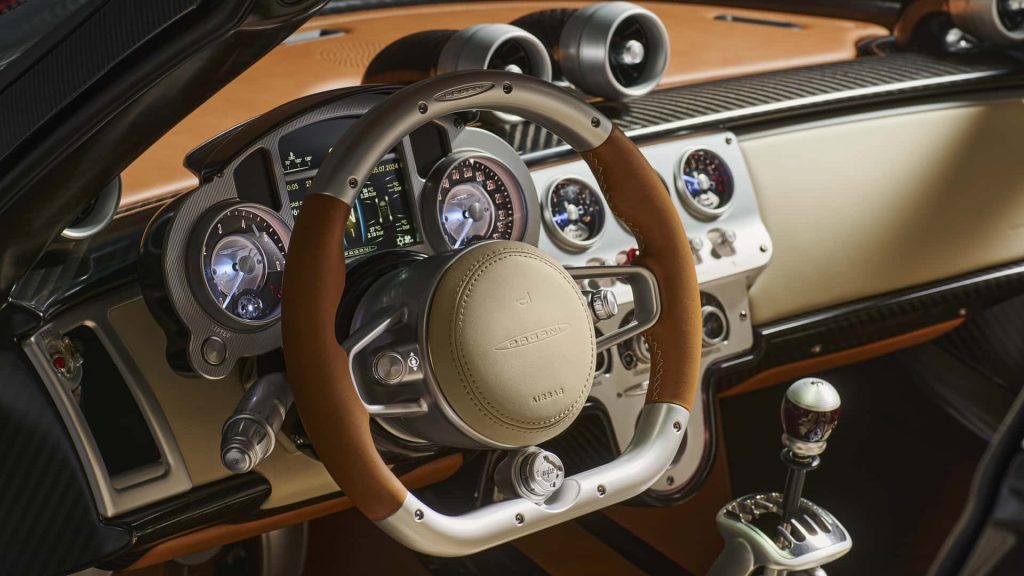
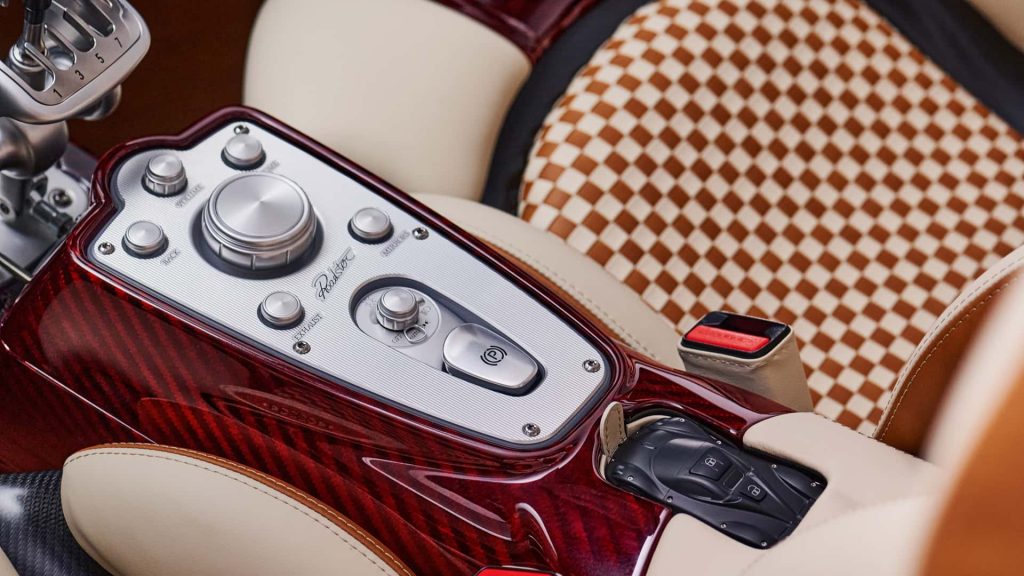
Yet, for all its technological bravado, the car’s soul lies in details invisible to the eye: the way its aluminum gearshift knob, milled from a single block, rests perfectly in the palm, or the leather seats, tanned using century-old Tuscan methods and stitched with thread dyed to match the owner’s specifications.
Pagani’s production process borders on the monastic. Each Utopia Roadster is assembled in Modena, Italy, by a team of 30 artisans who spend over 6,000 hours per car, a stark contrast to the automated lines of mainstream manufacturers. The carbon fiber body panels are woven in-house on looms originally designed for Formula 1, then cured in autoclaves at precise temperatures to eliminate microscopic air bubbles. The suspension system, a forged titanium alloy triangulated setup, is hand-polished to reduce stress fractures, while the wheels—20-inch front, 21-inch rear—are forged from a single piece of aluminum to shave grams without sacrificing strength.
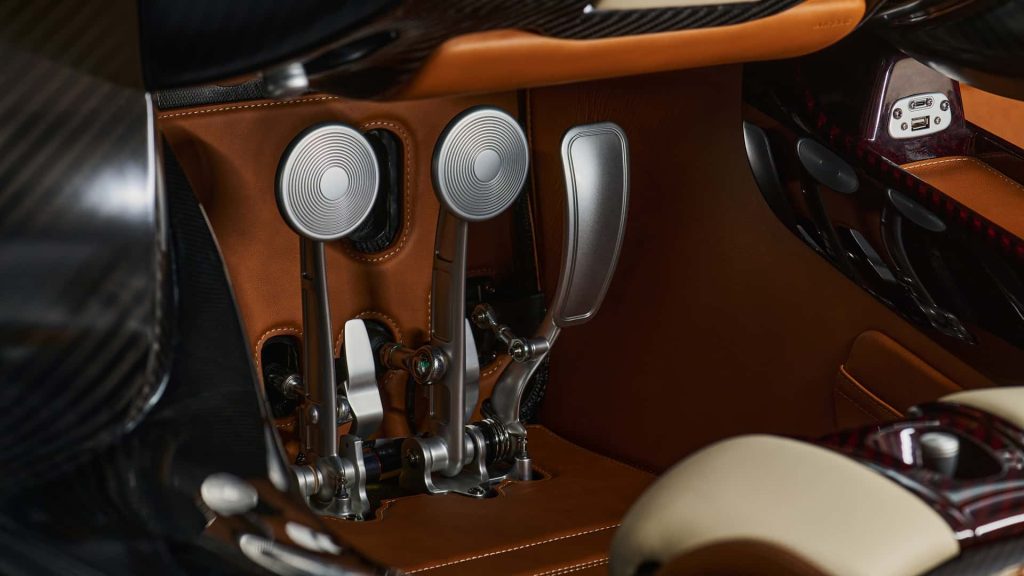
Even the pedals are CNC-machined from billet aluminum, their surfaces laser-etched to prevent slippage. This obsession with detail extends to the cabin, where analog gauges with sapphire glass faces are mounted on a magnesium dashboard, their needles sweeping over faces painted with luminescent Super-LumiNova, a material borrowed from Swiss watchmaking. The absence of touchscreens is deliberate; Pagani believes tactile engagement—the click of a physical dial, the resistance of a metal toggle—deepens the driver’s connection to the machine.
Sustainability, often an afterthought in hypercar circles, finds subtle expression in the Utopia Roadster. Pagani sources its leather from free-range Tuscan cattle, tanned using vegetable dyes, while the carbon fiber incorporates recycled aerospace-grade fibers. The V12 engine, though a relic in an electrifying industry, meets Euro 6 emissions standards through hybrid-style particulate filters and a plasma-coated combustion chamber that optimizes fuel burn. Horacio Pagani has hinted at hybrid technologies for future models, but insists electrification must not dilute the sensory thrill of driving. “A Pagani should always stir the soul,” he remarked in a recent interview, “even if its electrons are as carefully orchestrated as its cylinders.”
The Roadster’s exclusivity is quantified in numbers: only 99 units will be built, each priced at approximately $20,000,000 SGD , with delivery slots reserved for clients vetted by Pagani’s secretive selection committee. Owners gain access to the “Pagani Arte” program, which offers bespoke customization—clients have commissioned everything from 24-karat gold-plated exhaust tips to interiors embroidered with family crests by artisans from Milan’s Scala Opera House costume ateliers. Yet the car’s true value lies in its cultural resonance. It has appeared in private collections alongside Warhols and Picassos, a recognition of its status as kinetic art. Automotive critics have lauded it as “the last great analog hypercar,” a rebuttal to the digitized sterility of rivals like the Koenigsegg Jesko or Rimac Nevera.
Pagani’s narrative is inseparable from Horacio’s personal journey. Emigrating to Italy in 1983 with little but a portfolio of sketches, he slept on Lamborghini’s factory floor to save money, eventually convincing the company to let him establish a carbon fiber research division. His breakthroughs there laid the groundwork for the Countach Evoluzione, the first carbon fiber supercar, but creative differences led him to found Pagani Automobili in 1992.
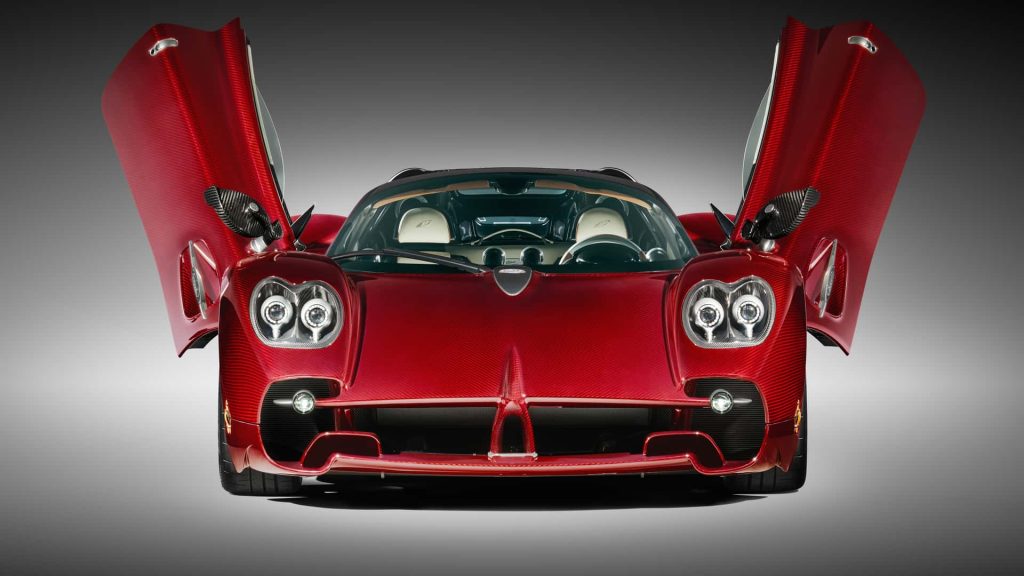
The Zonda, unveiled seven years later, was a revelation—its carbon fiber monocoque, then a rarity, weighed just 99 pounds, and its design, inspired by jet fighters and marine life, made contemporaries like the Ferrari F50 seem staid. The Utopia Roadster, however, represents a maturation of this vision. Its design team, led by Horacio’s son Christopher, spent three years refining the car’s proportions, using virtual reality simulations to ensure every vent and scoop served a function. The result is a car that looks fast standing still, its dihedral doors arcing upward like wings, its quad exhausts glowing cherry red under hard acceleration.
In an era where autonomous driving and electrification dominate headlines, the Utopia Roadster is a defiant celebration of human-centric engineering. Its manual transmission, a rarity in modern hypercars, requires a deliberate, rhythmic interplay between driver and machine, a quality Horacio likens to “playing a Stradivarius.” The car’s development involved input from Pagani’s tight-knit community of owners, many of whom are collectors and racing veterans. Their feedback led to innovations like the “Eterno” infotainment system, a removable titanium tablet that integrates with the car’s diagnostics but can be stored out of sight to preserve the analog experience. Even the key, a miniature sculpture of the car’s silhouette cast in platinum, reflects this ethos—a tactile object meant to be cherished, not hidden in a pocket.
Pagani’s impact extends beyond automotive circles. The brand has collaborated with Swiss watchmaker Hublot on limited-edition timepieces and with fashion houses like Zegna on bespoke interior trims. These partnerships underscore a belief that luxury is holistic—a synergy of materials, craftsmanship, and heritage. The Utopia Roadster’s launch event itself was a multisensory spectacle, featuring a live orchestra performing compositions tuned to the engine’s frequency and a gallery showcasing the car’s components as standalone art pieces. This theatricality is intentional; Pagani understands that in a world of digital ephemerality, physical experiences acquire mythic resonance.
Critics argue that Pagani’s focus on art over innovation risks obsolescence as rivals embrace hybrid powertrains and AI-driven dynamics. Yet the brand’s sales figures—every Zonda and Huayra ever built has appreciated in value, some fetching over $15 million at auction—suggest a enduring appetite for its analog mastery. The Utopia Roadster, with its balance of tradition and futurism, may well become a pivot point in hypercar history. As emissions regulations tighten, Pagani plans to offset its carbon footprint through reforestation initiatives, planting a grove of oak trees for each Utopia sold—a nod to its roots in Italy’s Motor Valley, where Enzo Ferrari and Ferruccio Lamborghini once raced to redefine speed.
In the end, the Utopia Roadster is more than a car. It is a manifesto—a declaration that in an age of algorithms and autonomy, there remains space for objects crafted with human hands and hearts. Horacio Pagani often quotes his mentor, Leonardo da Vinci: “Art is never finished, only abandoned.” With the Utopia Roadster, one senses he is still sketching, still dreaming, still pushing the boundaries of what a car can be.