 Zakirin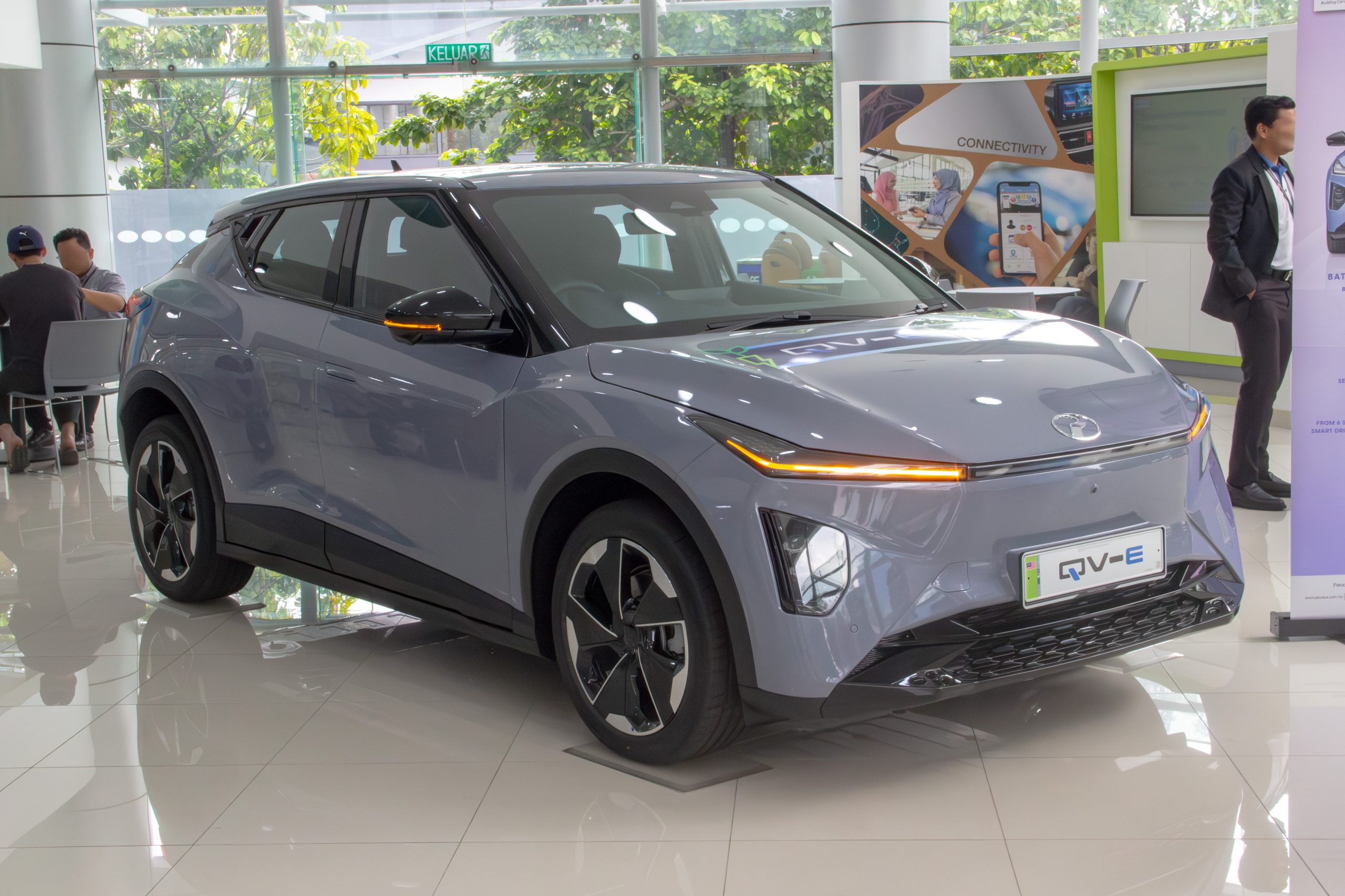
Recent discussions between Malaysian and Japanese government officials have indicated the possibility of a new electric vehicle partnership between Perodua and its long-time technical partner, Daihatsu. The talks, which surfaced during a bilateral meeting on regional economic relations, point towards a potential shift in the dynamic between the two automakers following the launch of Perodua’s first homegrown electric vehicle, the QV-E. As Daihatsu currently lacks a proprietary battery-electric platform, industry observers suggest the Japanese manufacturer may either rebadge the Malaysian model for overseas markets or join Perodua in developing future zero-emission architectures.
Key Points
- The Malaysian Minister of Investment, Trade and Industry recently discussed a potential electric vehicle collaboration between Perodua and Daihatsu with Japanese counterparts.
- Perodua developed the QV-E model internally using a Magna Steyr-developed platform, as Daihatsu’s current electrified lineup is limited to hybrid powertrains.
- Analysts indicate Daihatsu may rebadge the Malaysian vehicle to maintain its market share in Indonesia or participate in developing upcoming A-segment models.
Bilateral Ministerial Discussions
The prospect of a renewed technical alliance was raised earlier this week when Malaysia’s Minister of Investment, Trade and Industry, Johari Abdul Ghani, met with Japan’s Parliamentary Vice-Minister of Economy, Trade and Industry, Takuo Komori. The meeting was primarily scheduled to reinforce established economic ties between Kuala Lumpur and Tokyo. However, a subsequent statement by Johari noted that the two representatives specifically broached the topic of a Daihatsu-Perodua partnership in developing electric vehicles in Malaysia.
At present, neither automaker has formally announced a joint electric vehicle programme. Throughout their 33-year relationship, Daihatsu has functioned as the primary technology provider, supplying platforms, internal combustion engines, and transmissions for almost all Perodua models. The recent ministerial remarks suggest that discussions are underway at the governmental level to structure a new phase of this partnership, specifically tailored to battery-electric vehicles and the shifting demands of the ASEAN automotive sector.
Perodua’s Independent EV Development
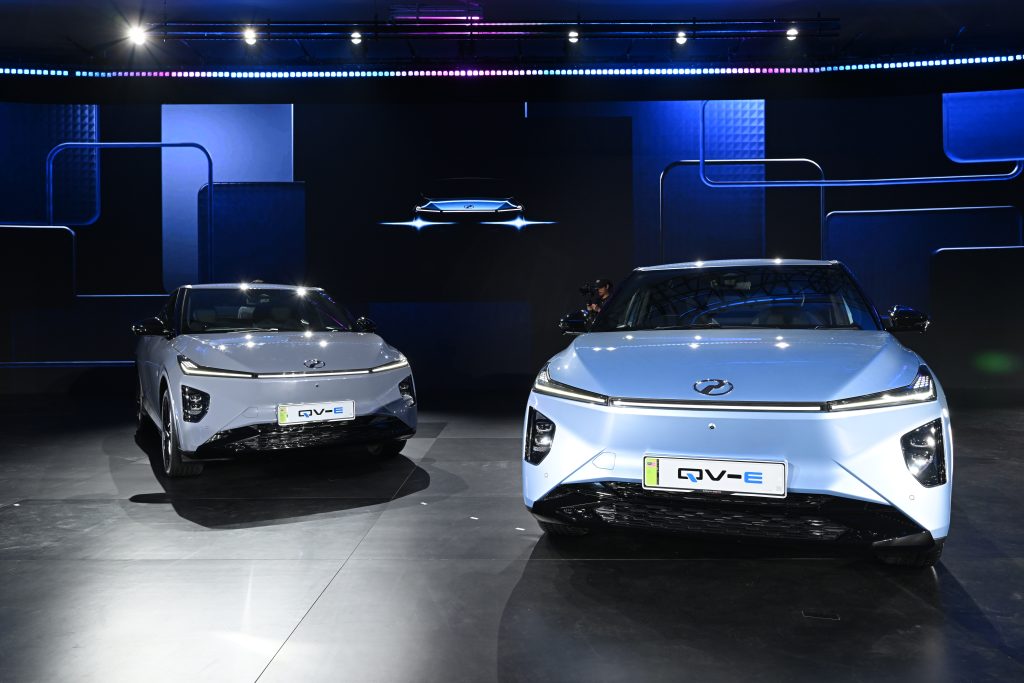
The speculation surrounding this partnership stems from Perodua’s recent release of the QV-E, an electric vehicle designed and engineered entirely in-house without the utilisation of Daihatsu components. The national carmaker undertook the project independently to meet the Malaysian government’s mandate for a locally branded electric vehicle. Furthermore, Daihatsu did not have an existing electric vehicle architecture for Perodua to adapt during the project’s inception.
Daihatsu has historically focused on compact internal combustion vehicles and has a minimal presence in the fully electrified space. Its current hybrid portfolio is limited to the Rocky e-Smart Hybrid, which was introduced to the Malaysian market solely as a lease-only evaluation vehicle known as the Ativa Hybrid. Because Daihatsu had yet to develop a scalable electric platform, Perodua sourced a dedicated architecture developed by Magna Steyr for the QV-E to ensure the vehicle reached the market on schedule.
Potential Rebadging Strategies
Industry observers have outlined two primary outcomes that could materialise from the ongoing discussions. The first involves Daihatsu rebadging the locally assembled QV-E to sell under its own marque in specific overseas markets. Such an arrangement has historical precedent; the Perodua Myvi is currently exported to Indonesia and sold as the Daihatsu Sirion.
For Daihatsu, applying its badge to a Malaysian-developed electric vehicle offers several strategic market advantages:
- Defending its market share in Indonesia against the rapid expansion of Chinese electric vehicle manufacturers such as BYD.
- Benefitting from reduced regional import taxes under the ASEAN Free Trade Area (AFTA) agreement for vehicles manufactured with high local content in Malaysia.
- Delaying the heavy capital expenditure required for internal electric vehicle development while catering to its domestic Japanese customer base, which continues to favour petrol-powered compact cars.
While the QV-E would not qualify for the same direct incentives as locally-assembled EVs in Indonesia, the AFTA tariff reductions would still allow Daihatsu to price the vehicle competitively against imported Chinese models without bearing primary research and development costs.
Future Platform Sharing
The second potential outcome is Daihatsu’s direct participation in Perodua’s subsequent electric vehicle projects. Perodua President and CEO Zainal Abidin Ahmad confirmed earlier this year that the company’s independent work on the QV-E had prompted inquiries from both Daihatsu and Toyota regarding future collaboration. He noted that the Japanese firms expressed interest in joining Perodua’s ongoing development cycles rather than simply supplying parts.
Currently, Perodua is reportedly developing a smaller A-segment electric model utilising the same Magna Steyr-engineered architecture that underpins the QV-E. Adapting this platform for multiple brands would significantly alter the traditional engineering hierarchy between the companies. The following table illustrates the potential shift in development responsibilities based on industry speculation:
| Vehicle Segment | Powertrain Type | Primary Developer | Target Markets |
| B-Segment Hatchback | Internal Combustion | Daihatsu | Global & ASEAN |
| C-Segment Crossover | Battery Electric (QV-E) | Perodua | Malaysia |
| A-Segment Hatchback | Battery Electric | Perodua & Daihatsu | ASEAN & Japan |
Sharing the upcoming A-segment platform would allow Toyota and Daihatsu to introduce affordable electric models to their respective line-ups without financing ground-up engineering. In return, Daihatsu’s input could assist Perodua in refining manufacturing processes and interior material quality, which industry reviewers have identified as an area targeted for improvement in the current QV-E iteration.
Cost Amortisation and Competition
For Perodua, securing Daihatsu and Toyota as clients for its electric vehicle architecture would provide a substantial avenue to amortise the initial development costs of the platform. Increasing production volume through export and rebadging agreements is standard industry practice for lowering the per-unit cost of battery packs and electric motors.
This scale of production is particularly relevant given the local market context, as Perodua prepares to compete with Proton’s expanding electric vehicle lineup, including the upcoming eMas 5. A formalised joint-development agreement with Daihatsu would theoretically grant Perodua the volume necessary to price its future models competitively. The ongoing negotiations between the ministries and the automakers indicate that supply chain structures within the Malaysian automotive industry are being adjusted to accommodate the transition to electric mobility.