 Zakirin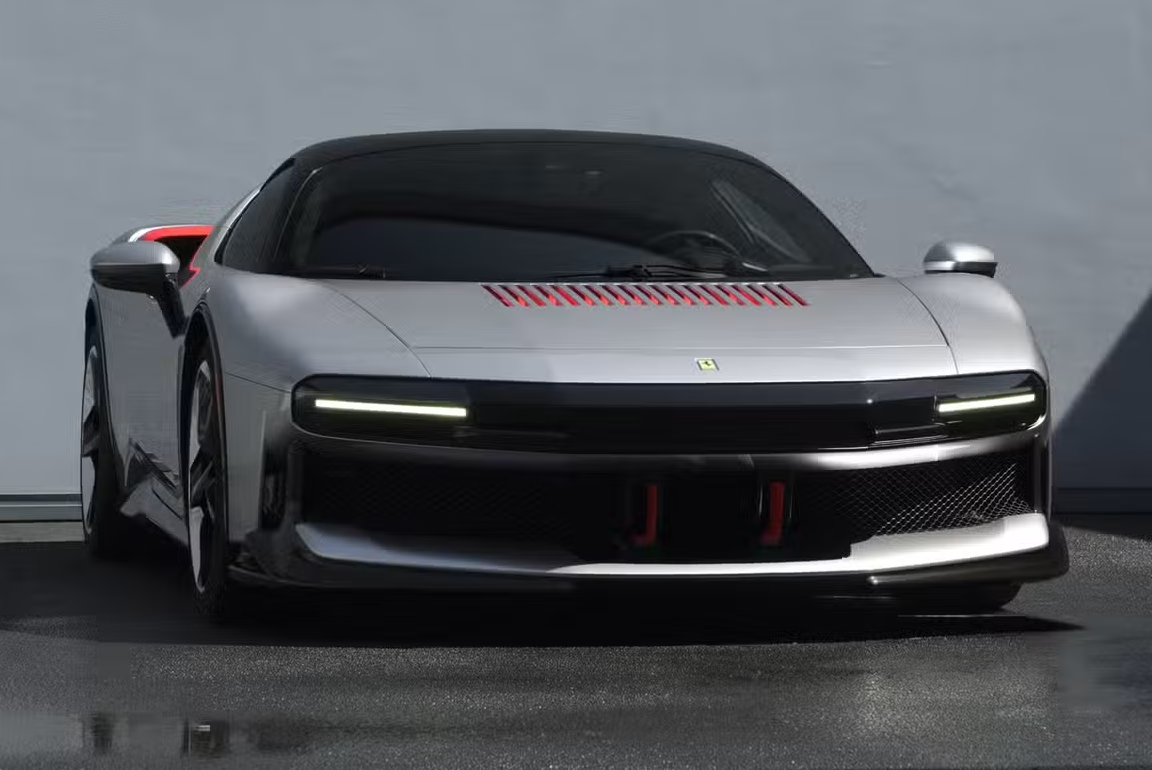
For automotive purists and high-net-worth collectors, even a standard Ferrari might feel a bit too ordinary. Enter Ferrari’s Special Projects program—a highly exclusive, invitation-only coachbuilding service that transforms the bespoke fantasies of its wealthiest clients into singular reality. The latest masterpiece to emerge from this program is the Ferrari CZ26, a breathtaking one-off supercar unveiled at the 2026 Monterey Car Week.
Commissioned by a client in the United States, the CZ26 is the second Special Projects vehicle revealed this year, following the HC25 in May. Built on the bones of the SF90 Stradale, the CZ26 does more than just flaunt wealth; it serves as a fascinating “what if” for Ferrari’s design trajectory, specifically hinting at what their controversial new EV, the Luce, could have looked like in an alternate universe.
A “Technological Design Language”
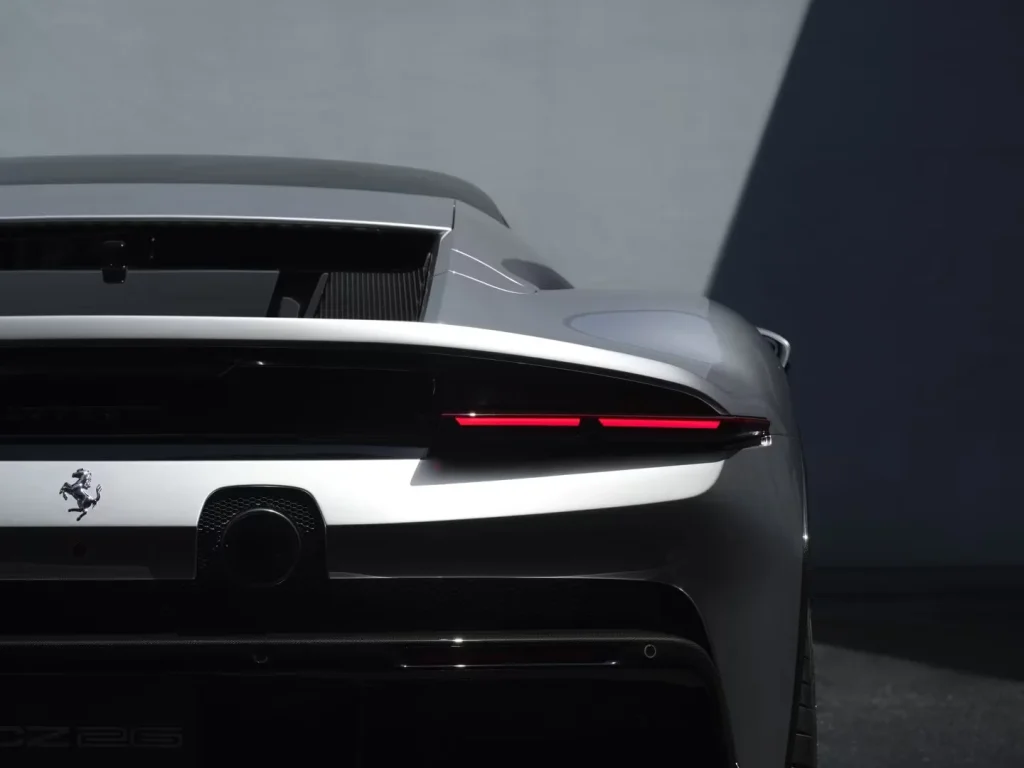
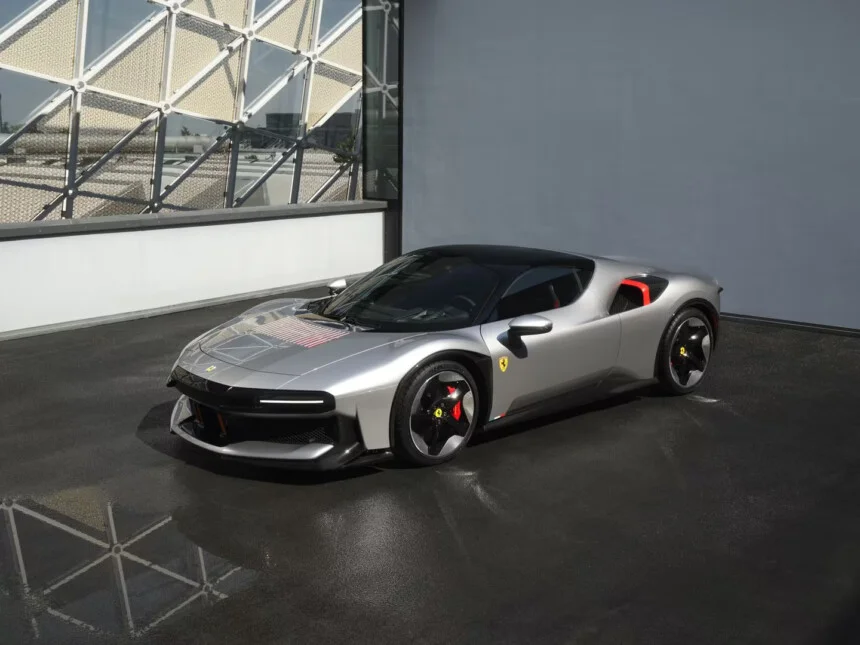
Visually, the CZ26 is a striking departure from typical Maranello curves. Ferrari refers to its aesthetic as a “technological design language,” aiming to project the classic supercar formula into the future using precision and purity as guiding principles.
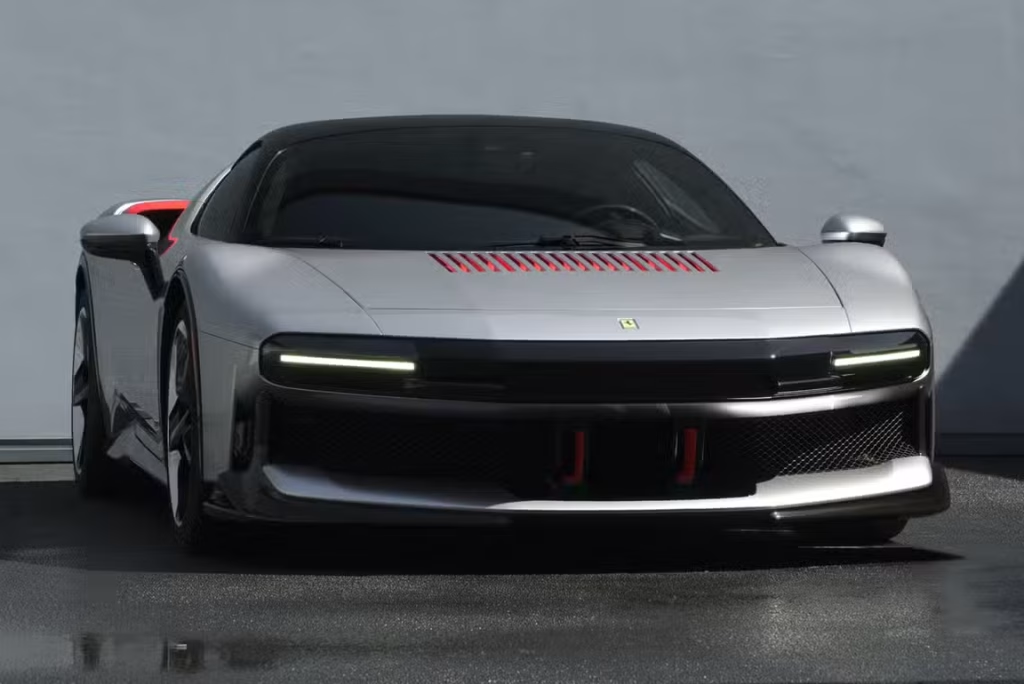
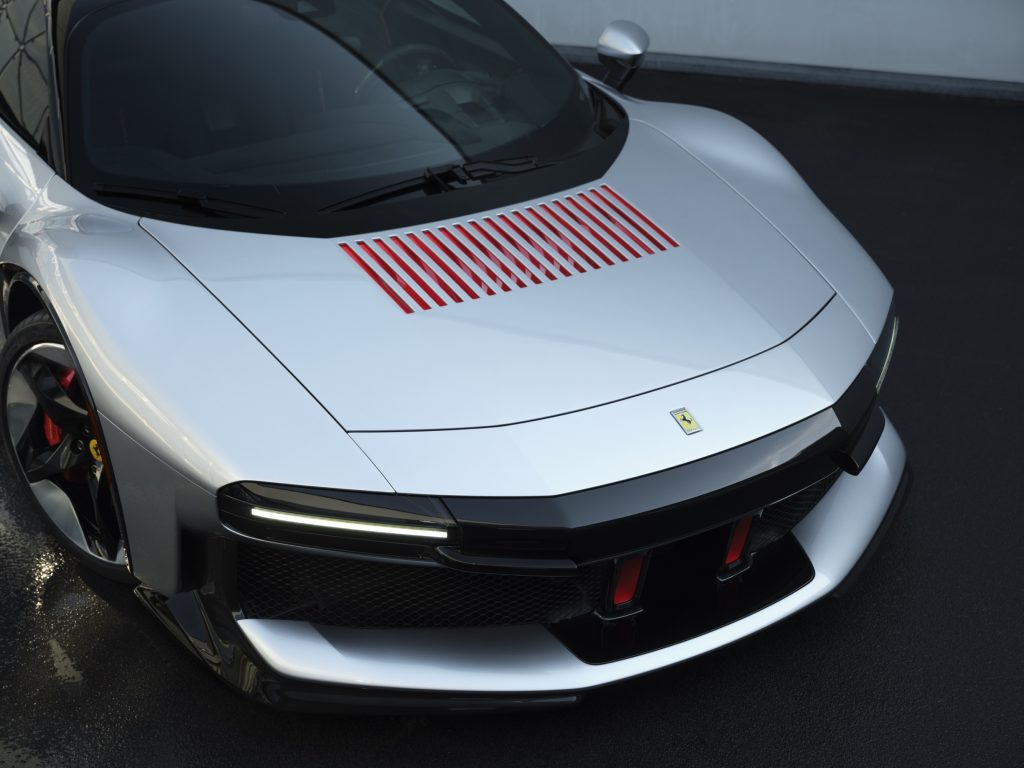
The front end is broad and squared-off, featuring rectangular lower intakes, hidden headlights, and straight-line daytime running lights. If this sounds familiar, it’s because it closely mimics the controversial design language of the Ferrari Luce—the brand’s upcoming four-door, all-electric grand tourer. The CZ26 effectively proves that if Ferrari had chosen to make its first EV a hypercar instead of a five-seat grand tourer, the polarizing “Luce look” would have likely been heralded as a futuristic triumph rather than facing the backlash it did.
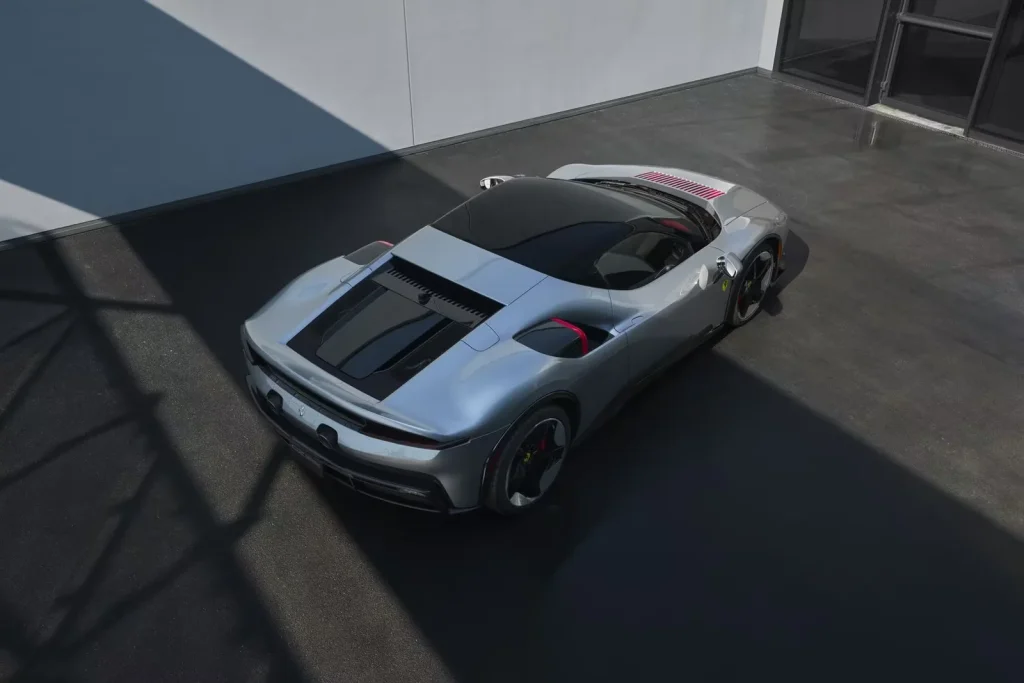
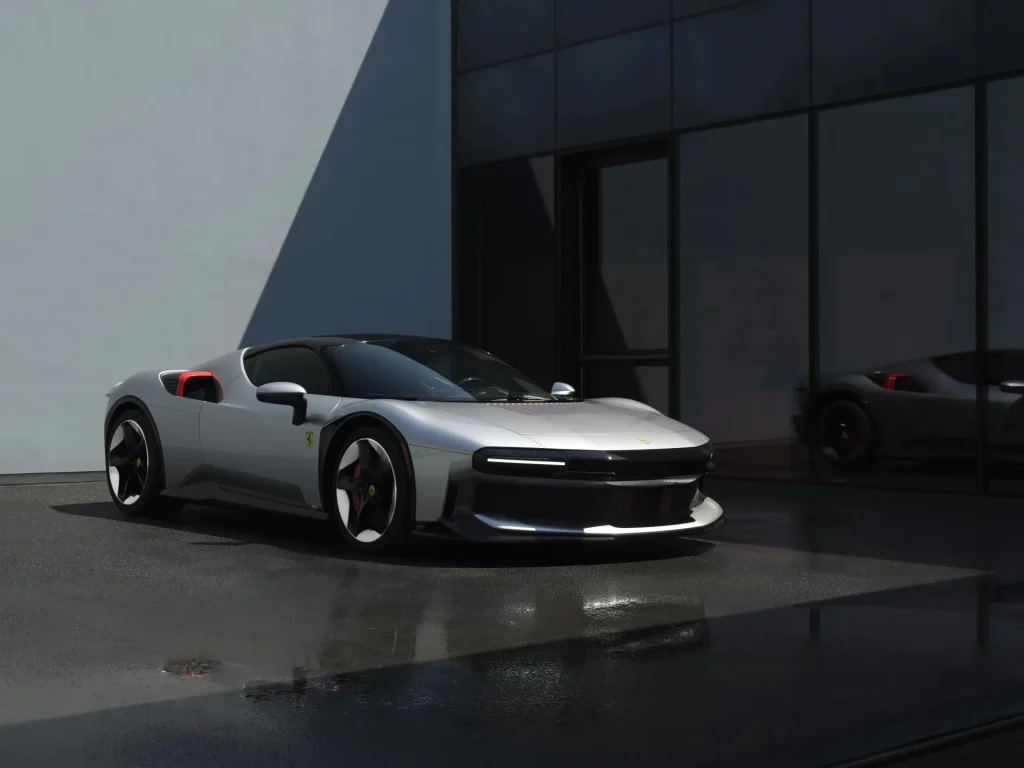
Moving to the side profile, the CZ26 retains the greenhouse and overall proportions of its donor car, the SF90 Stradale. The rear, however, integrates contemporary cues like a subtle ducktail spoiler and taillights reminiscent of the recent 12Cilindri. Finished in an exclusive, liquid-like “Argento Veloce” silver paint, the car even shares a faint, retro-futuristic silhouette with Hyundai’s acclaimed N Vision 74 concept.
Bespoke Inside and Out
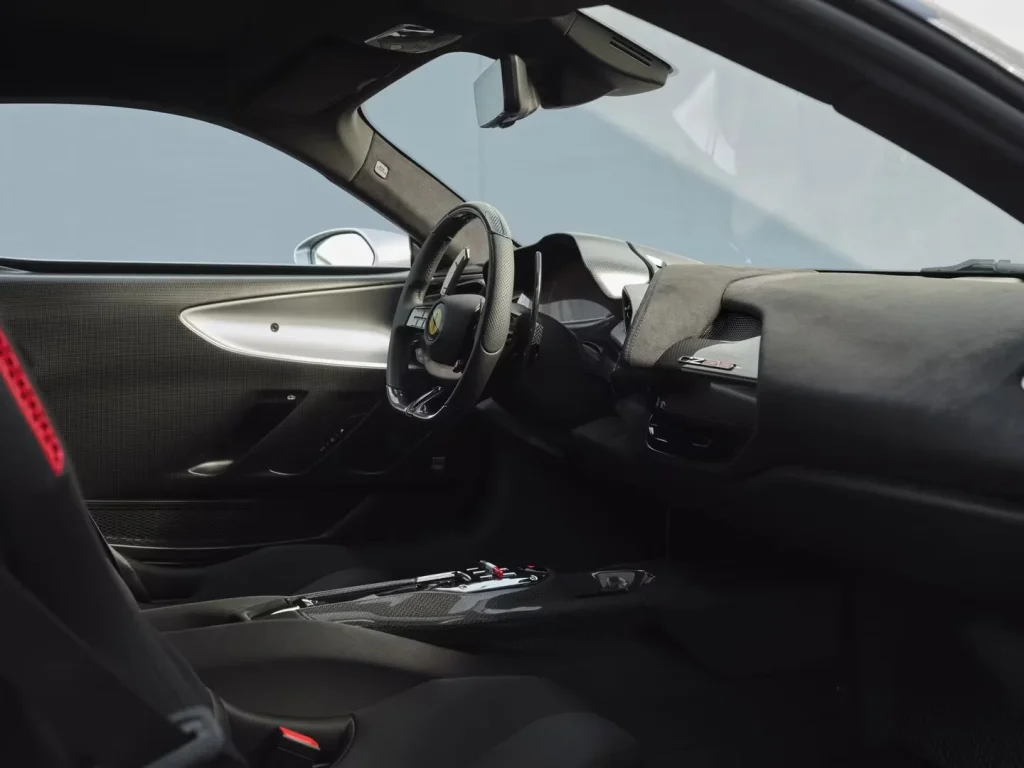
The bespoke treatment extends deeply into the cabin. Rather than wrapping every surface in traditional Italian leather, the CZ26 opts for a high-tech approach. A custom black technical fabric dominates the interior, while the seats feature unique inserts crafted via 3D printing. Matte technical fabrics are paired with satin finishes, and the carbon fiber accents even feature woven metallic filaments.
To visually connect the interior with the striking exterior, body-colored elements are integrated into the doors and upper dashboard. On the outside, contrasting “Rosso Lampante” red accents, pigmented carbon fiber, custom gloss-black textured wheels, and natural-finish titanium exhaust tips complete the highly tailored look.
Electrified, But Still Roaring
Because this is a Special Projects build, the underlying mechanicals remain untouched. But when the donor car is an SF90 Stradale, that is hardly a compromise.
The CZ26 is powered by a mid-mounted, twin-turbocharged 4.0-liter V8 engine paired with an eight-speed dual-clutch automatic transmission. On its own, the V8 produces a massive 786 horsepower. However, it is assisted by a trio of electric motors—two on the front axle and one at the rear—pushing the total system output to a staggering 986 horsepower. (For context, this same powertrain has since been tuned to 1,036 horsepower in the new 849 Testarossa, the SF90’s successor).
The Reality of the One-Off Dream
Cars like the CZ26 represent the absolute pinnacle of automotive exclusivity. Even if you have the estimated $4 million starting price in the bank, you can’t simply order one. The Special Projects program is strictly by invitation, offered only to Ferrari’s most devoted and elite clientele. With a maximum of just two projects undertaken per year, the waiting list is famously long.
While most of the world will only ever see the CZ26 through a screen, its existence is crucial for the automotive industry. It acts as a rolling laboratory for Ferrari’s design team, allowing them to experiment with radical new forms. The CZ26 proves that Ferrari still knows how to design a jaw-dropping, futuristic supercar—leaving many to wonder why they don’t apply this same audacious design language to their regular production models more frequently.