 Zakirin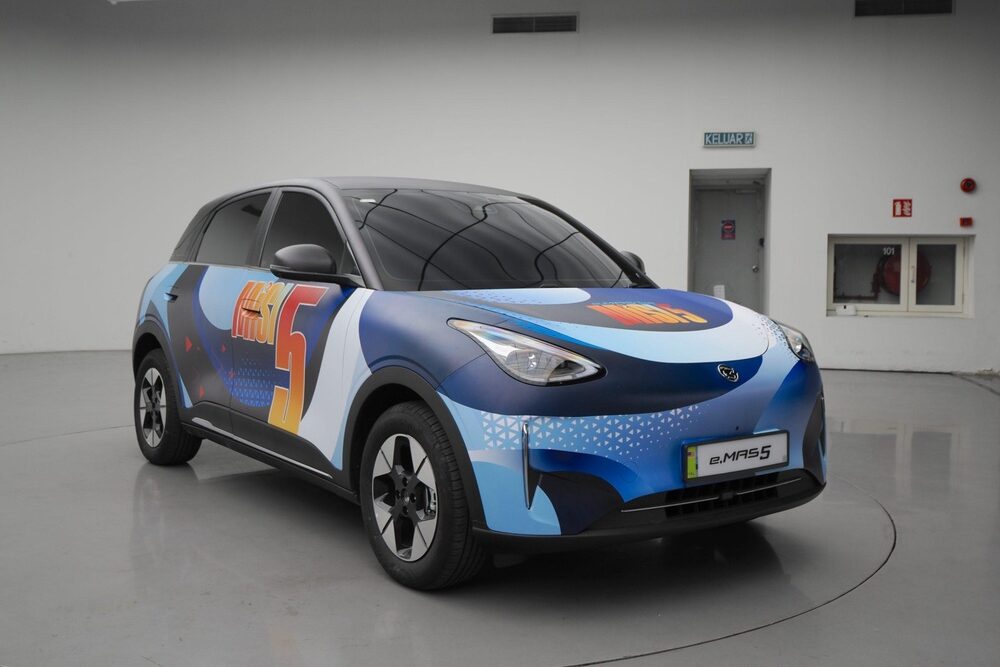
Since its debut, Proton’s eMas (stylized as e.MAS) electric vehicle lineup has been caught in the crosshairs of a heated debate. Critics and skeptics have been quick to dismiss the new EVs as simple “rebadged” Geely models, questioning their status as true Malaysian national cars. Furthermore, with Geely actively entering other right-hand drive (RHD) markets like Australia, Thailand, and Indonesia under its own brand name—bypassing Proton as its regional spearhead—many are asking: Did Proton get played by its Chinese partner?
Recently, Pro-Net (the distributor of Proton’s eMas EVs) stepped up to set the record straight. In an appearance on the Jangan Kecam podcast, Pro-Net Chief Branding Officer Salawati Mohd Yusoff and Product Marketing Assistant Manager David Tiah tackled these controversies head-on, offering an inside look at the engineering reality behind the eMas badge.
The “Just a Rebadge” Myth
The core of the criticism stems from the visual and structural similarities between the Proton eMas models (like the eMas 7) and their Geely counterparts (such as the Geely Galaxy E5). To the untrained eye, swapping a Geely logo for a Proton one seems like a simple copy-paste job. Pro-Net argues that this assumption fundamentally disrespects the sheer volume of engineering hours invested by Malaysian talents.
According to Tiah, bringing a vehicle into the Malaysian market involves extensive localization. “There are a lot of work and processes which need to be done to make sure the cars… are suitable for the rakyat and our roads,” he explained. This includes rigorous durability testing and ensuring the tech infrastructure functions flawlessly in the local climate and traffic conditions.
Salawati expanded on this, detailing how Proton engineers are deeply embedded in the development process over in China. Far from just acting as project managers, Malaysian engineers specializing in electrical systems, electronics, and powertrains are actively collaborating with Geely at their Hangzhou Bay R&D center.
“Every time people mention ‘rebadge’, I don’t think we’re doing justice to our young Malaysian talents,” Salawati noted, emphasizing that many of these engineers spend years in China co-developing these vehicles.
The Right-Hand Drive Equation
One of the most complex elements of adapting an EV for Malaysia is the conversion to right-hand drive. While it is true that newer platforms, such as the Geely Galaxy E5 (Proton eMas 7), were developed from the ground up as global models with RHD compatibility baked in, Proton’s historical role in RHD development cannot be erased.
For earlier models like the X50 and X70, Proton led the RHD conversion process, ensuring that critical components like steering geometry, firewall layout, and safety features met ASEAN NCAP standards. Pro-Net points out that the collaborative DNA established during those early conversions heavily influences how current and future models are co-developed. Malaysian engineers provide vital input to ensure the cars meet local expectations.
However, the collaboration does have boundaries. For instance, the suspension setups for the eMas 5 and the eMas 7 PHEV utilize Geely’s global tuning, meaning Proton’s renowned “ride and handling” team did not specifically tailor the suspension for these specific models. This represents a shift from older models, highlighting a more globalized approach to manufacturing.
Did Geely Game Proton?
The elephant in the room is Geely’s strategy in the broader ASEAN and Oceania markets. Initially, there was a narrative that Proton would serve as Geely’s exclusive gateway into all RHD markets globally. However, Geely’s recent standalone entries into Thailand, Indonesia, and Australia have sparked fears that Proton has been sidelined.
While Pro-Net’s executives primarily focused on the engineering validity of the eMas vehicles during the podcast, the broader industry context suggests a nuanced business strategy rather than a betrayal. Geely is expanding its global footprint at an aggressive pace. Utilizing Proton as a regional hub is highly effective for Malaysia and potentially specific neighboring markets, but Geely launching its own distinct brand identity in competitive markets like Australia allows the Chinese giant to compete directly with global EV heavyweights like BYD and Tesla without the baggage of a legacy brand.
Conclusion: A New Era of National Cars
The debate over the Proton eMas reveals a shift in what it means to be a “national car” in the 21st century. The days of designing a vehicle entirely from scratch within a single country’s borders are largely over, replaced by global platform sharing and joint-venture engineering.
While the eMas EVs share a heavy amount of Geely DNA—and even utilize global suspension tunes rather than localized ones—calling them mere “rebadges” ignores the hundreds of Malaysian engineers actively shaping their development. Proton hasn’t necessarily been “gamed”; rather, the brand has evolved from a standalone manufacturer into an active co-developer within a massive global conglomerate. The eMas is a reflection of this modern reality: a product of international synergy, but one with Malaysian hands undeniably on the wheel.