 Akmal Azhar
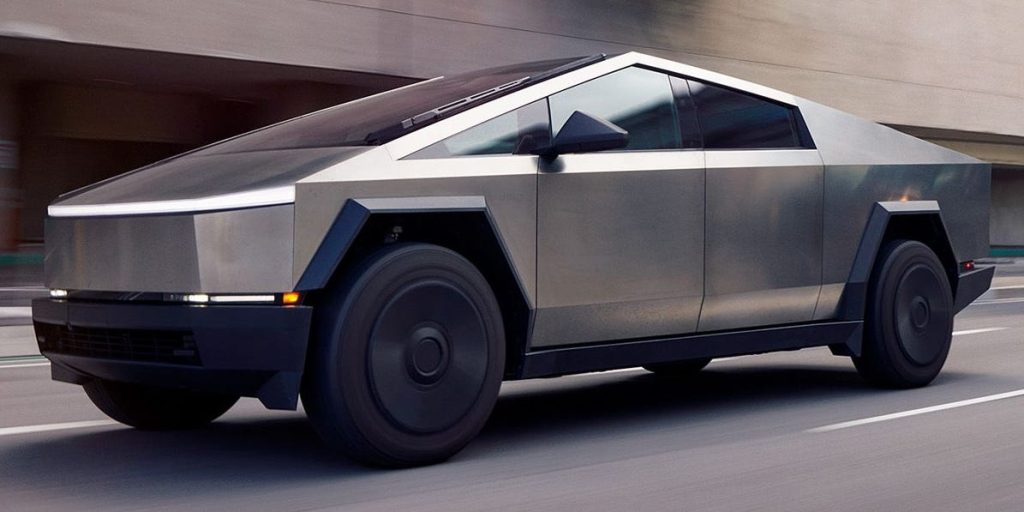
Tesla Inc. has encountered a major disruption in its production pipeline after the reintroduction and expansion of aggressive tariffs on Chinese imports by former U.S. President Donald Trump. The move, which was aimed at reviving American manufacturing and curbing U.S. reliance on Chinese goods, has sent shockwaves through the electric vehicle (EV) industry—especially impacting Tesla’s roadmap for its next-generation products: the Tesla Semi and the highly anticipated Cybercab robotaxi.
At the heart of the issue is a sudden, dramatic increase in tariffs on components imported from China. Tesla, which had been planning for a 34% duty rate on these parts, was blindsided when the rate ballooned to a staggering 145%, effectively quadrupling costs overnight. This has forced the automaker to suspend shipments of essential components, putting its October 2025 trial production timeline in jeopardy and casting uncertainty over its 2026 mass production goals.
A High-Tech Vision Meets Political Reality
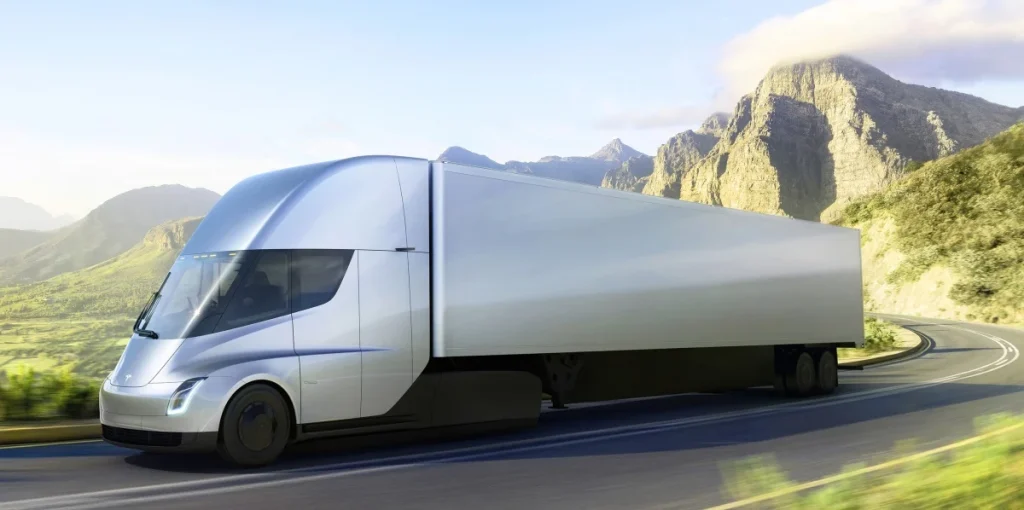
Tesla’s latest production strategy had hinged on the rapid scaling of its Cybercab and Semi vehicle lines. The Cybercab, a sleek, autonomous ride-hailing electric vehicle, was designed to disrupt urban transport. Meanwhile, the Tesla Semi aimed to revolutionize freight logistics with zero-emission, long-haul transport.
Both projects relied heavily on high-performance components—especially batteries, semiconductors, and autonomous driving hardware—sourced from Tesla’s manufacturing partners in China. While Tesla has been gradually working toward localizing its supply chains within North America, its cutting-edge products are still deeply entwined with global manufacturing networks, particularly those based in China.
The sudden tariff hike has effectively frozen this part of the supply chain, with Tesla pausing its shipments from China to reassess the economic viability of importing components under such high tariff rates. Industry insiders report that Tesla executives were “caught off guard” by the magnitude of the tariff increase.
Musk vs. Trump: A Clash of Philosophies
Elon Musk, Tesla’s enigmatic CEO, has long promoted global free trade as a necessary ingredient for technological innovation and scalable sustainability. Although he has occasionally praised Trump’s leadership style and business-friendly policies, the tariff move is a clear point of friction between their ideologies.
Sources close to the matter say Musk attempted to appeal directly to Trump, urging him to reconsider the new tariff policy. However, it appears the administration remains firm in its stance, arguing that the tariffs are essential to rebuilding American industrial capacity and reducing strategic dependence on foreign suppliers.
Trump, who is campaigning on an “America First” economic platform, has defended the tariffs as a way to bring manufacturing back to the U.S. and protect national security. In public statements, he has framed companies like Tesla as “strong enough to adapt,” though critics argue that the move will stifle innovation rather than encourage domestic production.
The Broader Impact on Tesla’s Lineup and Strategy
In addition to the disruption to Cybercab and Semi production, the tariff war has prompted Tesla to halt new orders for its Model S and Model X in China. The Chinese government responded swiftly to Trump’s tariff hike with its own set of retaliatory tariffs, including a 125% duty on American-made vehicles.
This tit-for-tat trade escalation is reminiscent of the 2018–2019 trade war, which created instability across multiple industries and led to billions in economic losses. For Tesla, the renewed tariffs are particularly painful, as the company has invested heavily in China—both as a manufacturing base and a massive consumer market.
Tesla’s Shanghai Gigafactory is currently one of the most productive EV factories in the world, and China is one of Tesla’s top-selling markets. A trade freeze with China could slow Tesla’s global growth and compromise its competitive edge in the EV space, especially against Chinese automakers like BYD, Nio, and XPeng, who are rapidly gaining international traction.
Shifting Supply Chains and Strategic Rethinking
To mitigate the impact of the tariffs, Tesla is reportedly accelerating its plans to diversify its supply chain. This includes increasing reliance on North American suppliers and potentially shifting certain manufacturing capabilities to Mexico and Canada.
However, such strategic shifts take time—particularly for advanced components like batteries and AI chips that require specialized production facilities. Analysts note that while reshoring supply chains is a long-term solution, it is unlikely to resolve the immediate bottlenecks created by the tariff shock.
“Tesla is in a tough spot,” said Andrea Lim, a senior analyst at EV Intelligence Group. “They’re too advanced in their product development cycle to completely redesign their vehicles around different components, but now they face a cost structure that makes mass production economically unfeasible.”
Political Uncertainty Looms Large
The timing of the tariff implementation also complicates matters. With the U.S. presidential election only months away, companies like Tesla are navigating a politically volatile environment. A potential shift in administration could reverse or modify the current tariff policies, but banking on that possibility introduces its own set of risks.
In the meantime, Tesla must make hard choices: delay production, absorb losses, or attempt a redesign with domestically sourced alternatives. Each path comes with trade-offs that could affect Tesla’s brand, stock value, and competitive standing in the EV market.
The Global Innovation Equation
Tesla’s tariff troubles serve as a broader case study in the challenges of innovation in a geopolitically fractured world. While the idea of localized, national manufacturing holds appeal in theory, the reality is that modern technology—especially something as complex as a self-driving electric vehicle—is the result of deeply interdependent global ecosystems.
The tariff war doesn’t just impact Tesla; it sends ripples across the entire tech industry. From semiconductors to clean energy systems, countless innovations rely on international collaboration and supply chains. Disrupting these networks in the name of political posturing could have long-term consequences for both economic growth and technological progress.
What’s Next for Tesla?
In the short term, Tesla is likely to issue revised production guidance in its upcoming quarterly earnings call. Investors will be watching closely for any signs of how the company intends to navigate the choppy geopolitical waters.
For now, trial production for both the Cybercab and Tesla Semi appears delayed, though Tesla has not announced an official postponement. If the tariff situation remains unresolved through summer, mass production scheduled for 2026 may have to be pushed back significantly.
As Tesla scrambles to reassess its strategy, the broader EV market is watching—and waiting. If the world’s leading EV manufacturer struggles to survive the economic and political fallout of trade nationalism, smaller players may find the road ahead even rockier.

 Zakirin