 Zakirin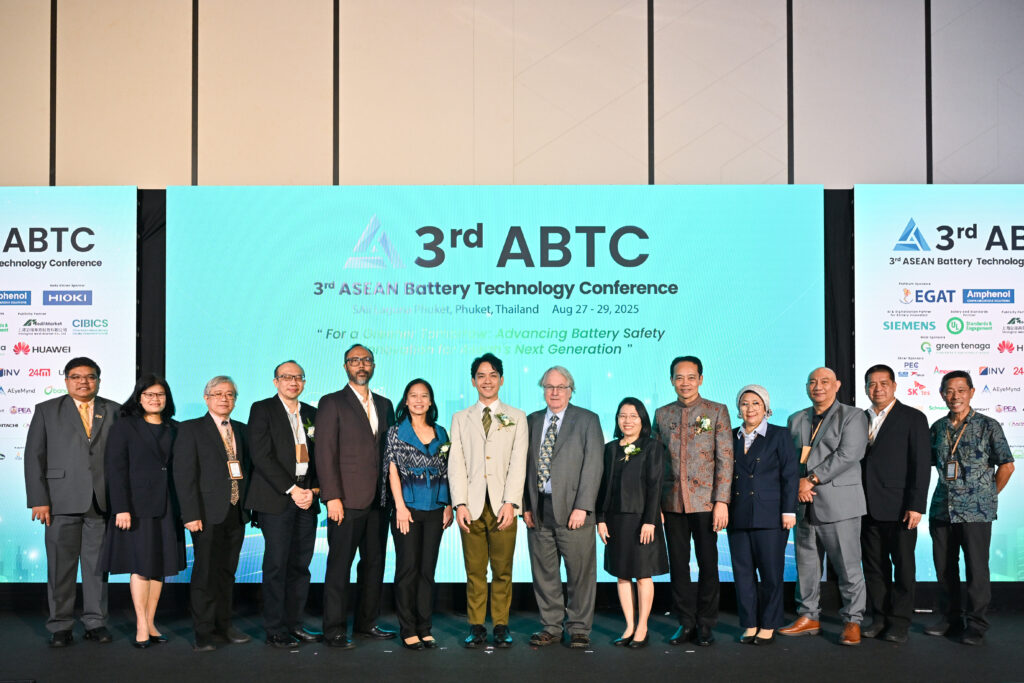
NanoMalaysia Berhad (NMB), through its subsidiary Gigafactory Malaysia Sdn Bhd (GMSB), is advancing its domestic electric vehicle (EV) battery production capabilities. Located at a 15,000-square-foot facility in the Suria Industrial Park in Sepang, Selangor, the plant has officially commenced the small-scale manufacturing of homegrown graphene-enhanced lithium-ion batteries.
Further details regarding the facility’s operations and strategic roadmap were provided by NMB following a site tour conducted during the fourth ASEAN Battery Technology Conference (ABTC), which took place from August 19 to 21, 2026.
Technological Development and Origins
Established in 2022, GMSB clarified in a released FAQ that its operations extend beyond the mere assembly or rebranding of imported battery units. The core technology—encompassing the graphene-enhanced lithium-ion chemistry, intellectual property, material development, cell engineering, and manufacturing processes—is the culmination of long-term domestic research and development.
This technological pathway began with the National Graphene Action Plan 2020 (NGAP 2020), a strategic initiative launched in 2014 by the Ministry of Science, Technology and Innovation (MOSTI) through NMB. The objective was to establish Malaysia as a global hub for graphene innovation.
This initiative was followed by the NanoMalaysia Energy Storage Technology Initiative (NESTI) in 2021, designed to develop and commercialize advanced energy storage systems. Through the NESTI program, and supported by the Hydrogen Electric Vehicle Battery Centre (HEBATT) acting as an R&D and fabrication hub, NMB developed graphene-based lithium-ion pouch cells, water-based aluminum-ion batteries, and sodium-ion alternatives. NMB’s future development pipeline also includes solid-state, metal-organic framework, and redox flow batteries.
Initial Production Capacity and Target Markets
At the Sepang facility, GMSB is currently operating at an initial production capacity of approximately 1 Megawatt-hour (MWh) per year, translating to roughly 92,000 battery cells annually.
During this initial commercialization phase, GMSB’s primary focus will be on supplying the electric two-wheeler (motorcycle) market. Based on an indicative 5 kWh battery pack requirement per vehicle, the current annual output is sufficient to produce approximately 200 electric two-wheeler battery packs. The company is also exploring applications in portable energy devices.
Regional Partnerships and Future Expansion
To support its manufacturing processes, GMSB has established a regional partnership with Khon Kaen University (KKU) in Thailand. Additionally, GMSB has partnered with Indonesia’s National Battery Research Institute (NBRI) to launch Bateri Nusantara, a collaborative effort combining GMSB’s downstream battery technology and manufacturing capabilities with NBRI’s expertise in battery materials.
While the current output is classified as small-scale, GMSB has outlined plans for significant expansion. The company anticipates scaling up production capacity to 1 Gigawatt-hour (GWh) within the next two to three years.
Furthermore, GMSB aims to commence exporting its locally developed battery technology by 2027, signaling an intent to compete in the broader regional and global EV supply chain.