 Zakirin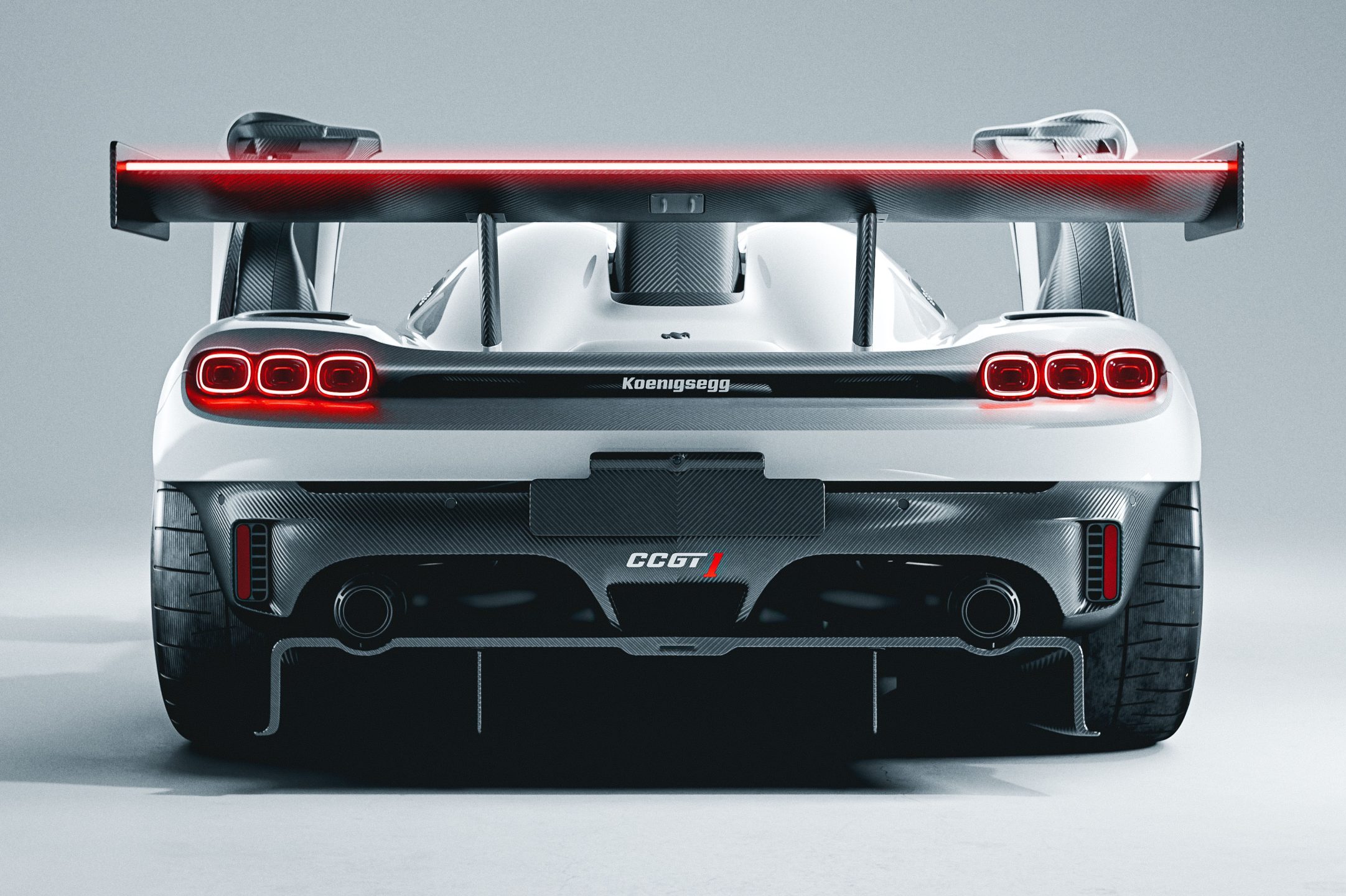
If there is a central theme to Monterey Car Week, it is the celebration of automotive extremes. Every August, the lawns of Pebble Beach and the bustling, sun-drenched staging areas of The Quail serve as the launchpad for the rarest, fastest, and most expensive machinery on the planet. For 2026, Koenigsegg arrived in California ready to steal the show, pulling the covers off a vehicle steeped in both triumph and heartbreak: the Koenigsegg CCGT1.
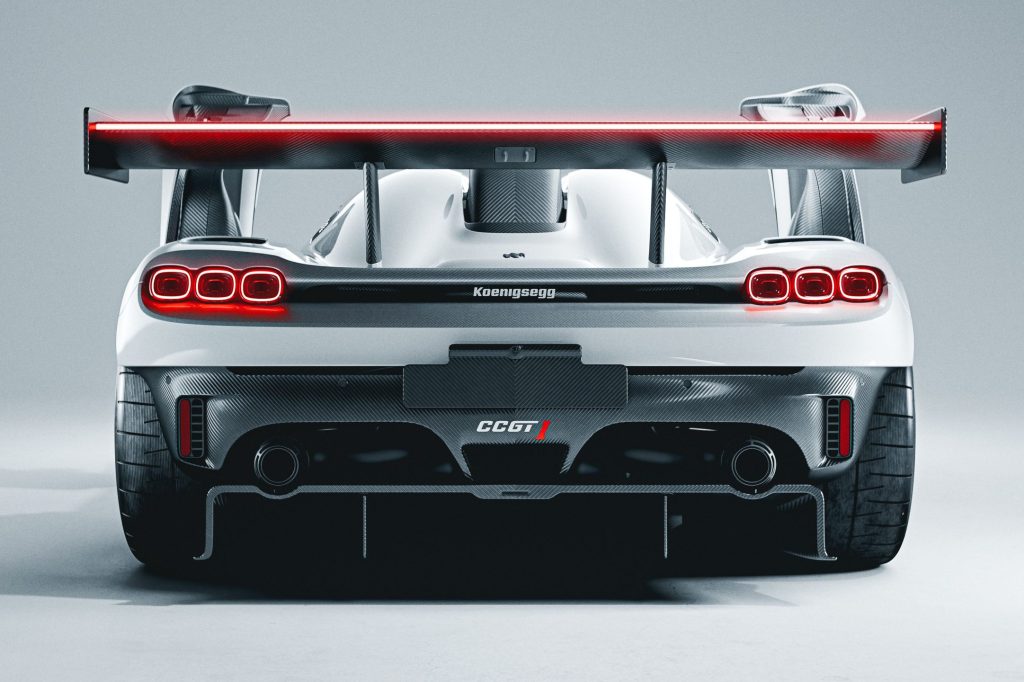
Designed as a modern homage to the aborted 2007 CCGT GT1 racing project, the new CCGT1 uses the celebrated CC850 as its foundation.It features bespoke aerodynamic bodywork, the return of Koenigsegg’s legendary “white carbon fiber” in a new “Ghost Fibre” finish, and a staggering 1,600 horsepower. It is, without question, a masterclass in modern hypercar engineering. Yet, beneath the jaw-dropping statistics and the massive active rear wing lies a fascinating contradiction. By creating a wildly complex, unrestricted street-legal track monster, Koenigsegg hasn’t actually replicated the spirit of the original CCGT—they’ve completely rewritten history to fit their modern ethos of absolute excess.
The Legend Denied Its Moment: The Original CCGT

To understand the CCGT1, one must first look back at the heartbreak of the mid-2000s. From the very genesis of the Koenigsegg brand, founder Christian von Koenigsegg harbored dreams of conquering the 24 Hours of Le Mans. When he designed the first CC prototypes, he meticulously scaled the car’s width and frontal area to perfectly align with FIA GT1 regulations.
Working alongside legendary fabricator Dag Bölenius, Koenigsegg eventually developed the CCGT—a dedicated endurance racer. It was an exercise in pure constraint and mechanical balance. Tipping the scales at roughly 1,000 kg (leaving room to place ballast for perfect weight distribution), it was powered by a naturally aspirated 5.0-liter V8. Because of FIA rules, the engine was deliberately restricted to “just” 600 horsepower. Outfitted with a sequential magnesium gearbox and an aero package producing over 600 kg of downforce, the CCGT showed blistering competitive pace during its initial shakedown testing with test driver Loris Bicocchi.
Then, fate intervened. Just two months into testing, the FIA abruptly altered the GT1 regulations, mandating that competing vehicles be based on much higher-volume production cars. As a boutique manufacturer, Koenigsegg was instantly locked out. The project was shelved, and the sole CCGT never turned a competitive lap. It became a legendary “what if” in endurance racing lore.
A Megacar Dressed for the Circuit

Fast forward to Monterey Car Week 2026, and Koenigsegg has resurrected that dream in the form of the CCGT1.While the new car shares its doors and removable roof with the CC850, virtually every other body panel has been aggressively redesigned to prioritize track performance.
Led by advanced CFD engineering, the aerodynamic profile of the CCGT1 is defined by a massive active rear wing—a direct visual nod to the 2007 original.However, unlike the static aero of the mid-2000s, this wing features 30 degrees of automatic adjustment, dynamically shifting between low-drag, air-brake, and high-downforce modes.The result is a substantial 800 kg of downforce at 250 km/h (155 mph), meticulously balanced by a redesigned front fascia and active underbody flaps to ensure the car remains planted through high-G corners.
Aesthetically, Koenigsegg has introduced “Ghost Fibre,” a dazzling evolution of the white carbon fiber last seen on the ultra-rare Trevita.This finish gives the CCGT1 an otherworldly, shimmering presence under the California sun while offering reduced weight and added protection.
Shifting Paradigms: 1,600 Horsepower and the KSS

While the original CCGT was defined by its restricted 600-horsepower naturally aspirated V8, the CCGT1 throws constraint out the window.Housed beneath a bespoke roof scoop and enhanced cooling systems is Koenigsegg’s ferocious twin-turbo V8.On standard pump fuel, it produces 1,280 horsepower.Fill the tank with E85 biofuel, and that figure jumps to a physics-defying 1,600 horsepower.
Transferring that immense power to the rear wheels is Koenigsegg’s revolutionary 9-speed Light Speed Transmission (LST), but with a bespoke track-focused twist.To mimic the visceral feel of the original GT1 car, the CCGT1 debuts the “Koenigsegg Sequential Shift” (KSS).This interface provides a physical clutch pedal specifically for take-offs, coupled with a push-pull sequential shifter that utilizes ignition cuts for lightning-fast, clutchless upshifts on the track.
For owners who want to take their multi-million dollar tribute car to the circuit, Koenigsegg is also offering its first-ever factory-authorized track package. This equips the CCGT1 with dedicated track tires, a carbon fiber roll cage, racing seats with six-point harnesses, integrated air jacks, and a race-grade fire suppression system, effectively turning it into the fastest-lapping Koenigsegg ever produced.
Honoring a Rulebook by Throwing It Away

There is no denying that the CCGT1 is a technological marvel. However, as it rotated on its display stand in Monterey, a fascinating critique emerged among motorsport purists: The CCGT1 is profoundly antithetical to the car it honors.
The tragic beauty of the original 2007 CCGT was that it was a pure homologation machine. Its entire existence, dimensions, and powertrain were shaped by the strict confines of FIA regulations. It was an exercise in doing more with less—extracting maximum mechanical grip and chassis balance from a restricted 600-horsepower engine to fight Aston Martins and Corvettes on the Mulsanne Straight.
The CCGT1, by contrast, is an exercise in absolute, unbridled excess. It is not bound by any racing rulebook. Instead of a lightweight, naturally aspirated engine, it utilizes a twin-turbo setup generating nearly three times the power of the original.Instead of a rudimentary, analog sequential racing gearbox, it uses a hyper-complex 9-speed, multi-clutch Light Speed Transmission masked by software to feel like an old-school sequential.It relies on advanced active aerodynamics rather than static mechanical grip.
Critics argue that by celebrating a regulation-bound race car with an unrestricted, 1,600-horsepower street-legal megacar, Koenigsegg has missed the fundamental essence of what makes a GT1 car special. The CCGT1 isn’t a race car; it is a meticulously crafted track-day toy for billionaires, complete with the option to drive it in full automatic ‘D’ mode in traffic. Does a car featuring 30-degree active aero and a digitized clutch pedal truly honor an analog race car, or is it just the exceptional CC850 dressed up in motorsport cosplay?
Defenders of the CCGT1 counter that this is the only logical way a modern Koenigsegg could honor the past. To build a 600-horsepower car in 2026 would be entirely off-brand for a company that practically invented the term “megacar.” The CCGT1 represents what Koenigsegg might have done if they had been allowed to race without any rules at all.
The Verdict
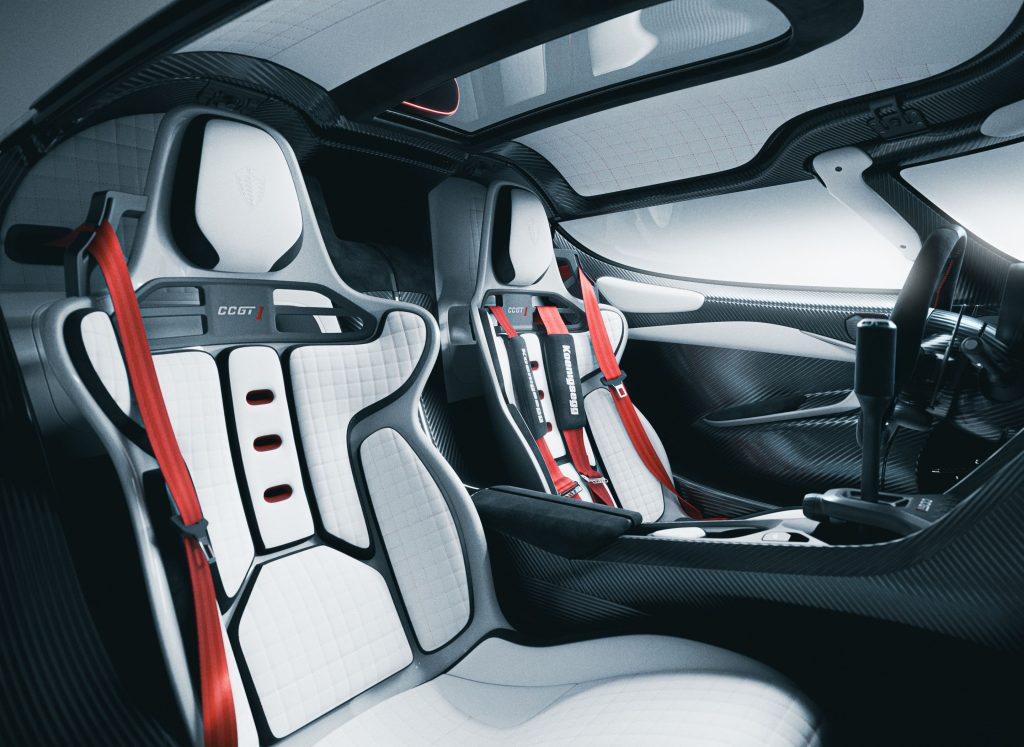
With only 70 examples slated for production—all of which were allocated long before the silk was dropped in Monterey—the Koenigsegg CCGT1 is destined to remain a unicorn. It perfectly straddles two distinct identities: a road-legal grand tourer capable of sublime comfort, and a ferocious circuit scalpel armed with air jacks and slicks.
While purists may debate whether an unrestricted 1,600-horsepower hypercar is the proper way to honor a 600-horsepower analog race car, the automotive world is undeniably richer for its existence. The FIA may have killed Christian von Koenigsegg’s Le Mans dream two decades ago, but with the CCGT1, he has ensured that the ghost of that dream will haunt track days for decades to come.