 Zakirin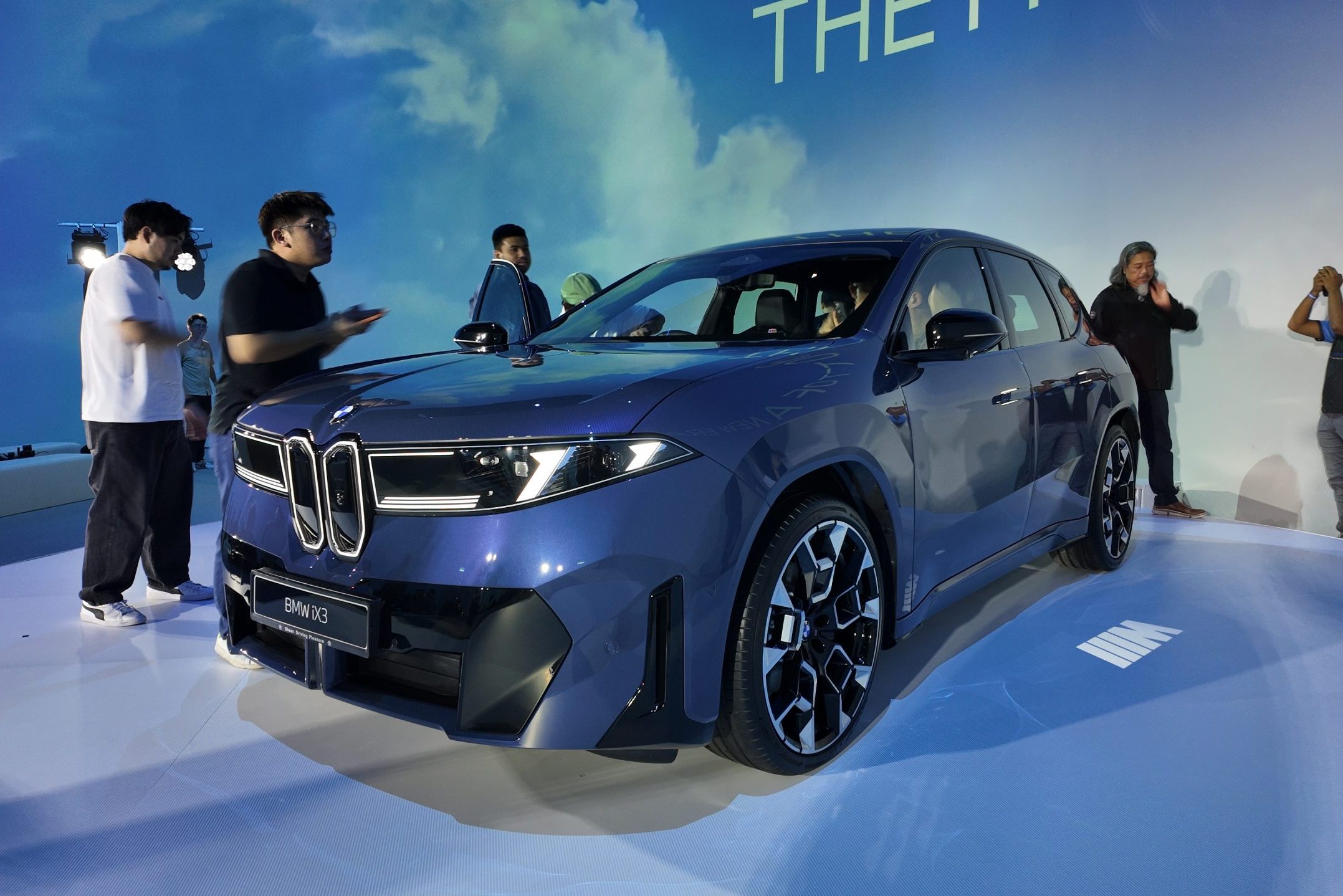
The first production model from BMW’s revolutionary Neue Klasse generation has officially landed in Malaysia—the BMW iX3 50 xDrive M Sport Pro. This is not a simple mid-life facelift or a re-skinned existing platform. It represents a total reset of BMW’s design philosophy, engineering architecture, and software ecosystem for its entire electric vehicle (EV) lineup heading into the next decade.
Before diving into the 5 unique highlights that define this machine, let’s go over the performance figures, technical specifications, and official Malaysian market pricing.
Key Specifications & Malaysian Market Pricing
The BMW iX3 50 xDrive M Sport Pro is offered in two pricing tiers depending on the warranty and service package selected:
| Parameter | Specification / Detail |
| System Output (Power) | 345 kW (~469 PS / 463 hp) |
| Maximum Torque | 645 Nm |
| Acceleration (0–100 km/h) | 4.9 seconds |
| Top Speed | 210 km/h |
| Driving Range (WLTP) | Up to 805 km |
| Official RRP (Base Vehicle) | MYR 378,800 |
| Full RRP (with BSRI) | MYR 399,800 (BMW Service & Repair Inclusive) |
Boasting a WLTP driving range of up to 805 km on a single charge, the new iX3 sets a formidable benchmark for energy efficiency in the premium local EV market.
1️⃣ Rear Visibility — The Aerodynamic Trade-off for an 805 km Range
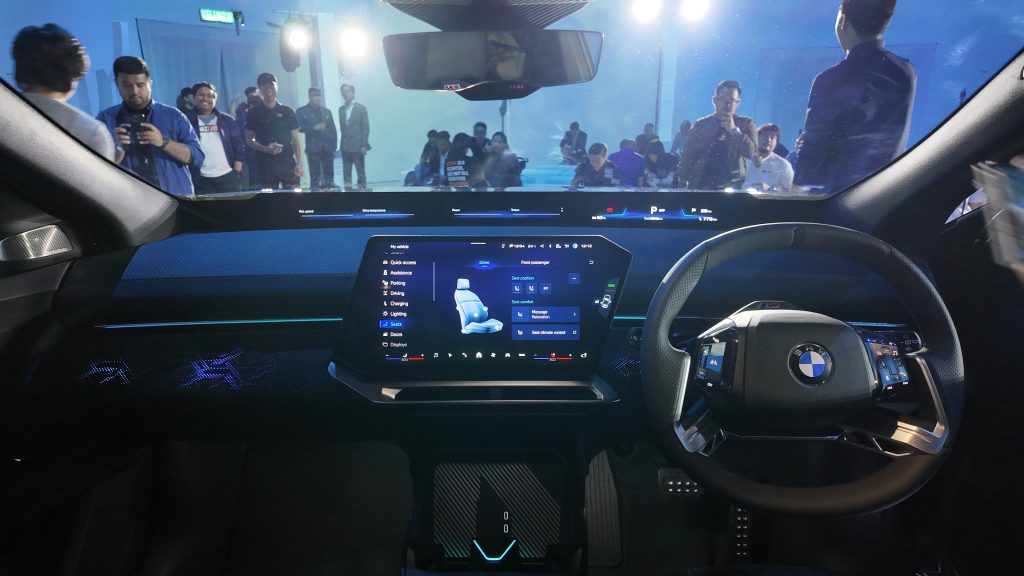
Stepping into the cabin of the new iX3, the first thing that hits you is the overwhelming sense of openness and natural light. The full-length panoramic glass roof comes standard, pairing seamlessly with the pillar-to-pillar Panoramic Vision display to create an airy, futuristic ambiance.
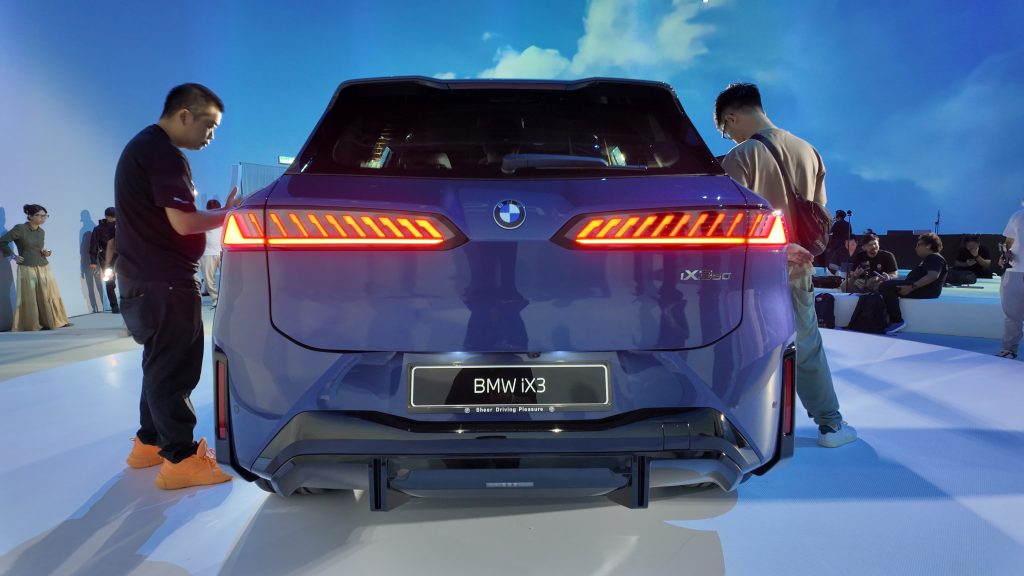
However, the moment you turn around or glance at the traditional rearview mirror, you immediately notice how slim and restricted the rear glass area actually is.
Why Did BMW Do This?
- Aerodynamic Drag Coefficient: Achieving a massive 805 km WLTP range from a single charge does not happen by accident. BMW aerodynamic engineers had to eliminate air resistance wherever possible.
- Tapered Design Language: One of the most effective ways to reduce turbulent wake at the rear of an SUV is to taper the fastback roofline and shrink the physical glass area at the back.
Real-World Driving Implications
For the driver, this means direct rear line-of-sight is distinctly limited. When reverse parking or maneuvering through tight spaces, you will find yourself relying heavily on the 360-degree cameras, side mirrors, and proximity sensors rather than simply glancing over your shoulder.
This is not a design oversight; it is a calculated engineering decision made in pursuit of maximum efficiency. For daily driving in tight or poorly lit basement parking lots, this is a compromise you will definitely need to get used to.
2️⃣ Panoramic Vision & New BMW OS — A Complete Digital Reset
The cockpit layout of this Neue Klasse iX3 doing away with the conventional instrument setup that BMW has refined for decades.
Key Highlights of the Neue Klasse Cockpit
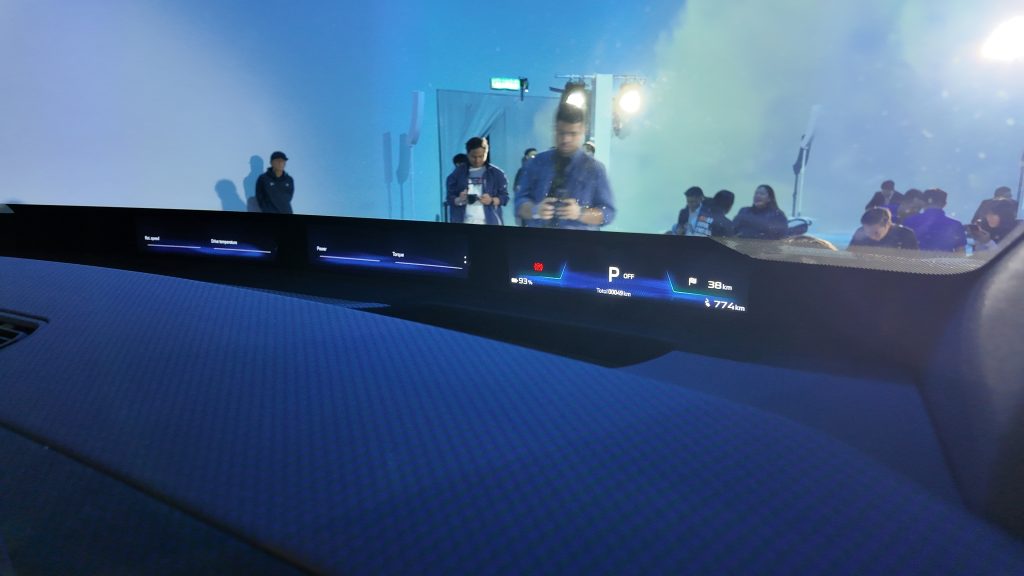
- Elimination of the Traditional Instrument Cluster: There is no longer a standalone digital screen sitting directly behind the steering wheel.
- BMW Panoramic Vision: Essential driving information is projected across the dark lower band of the windscreen, stretching seamlessly from the left A-pillar all the way to the right A-pillar. Information like speed, navigation prompts, drive modes, and battery status sit directly within the driver’s natural line of sight without blocking the road ahead.
- Redesigned Central Display & Steering Wheel: The center touchscreen adopts an aggressive geometric shape, paired with a brand-new two-spoke steering wheel featuring minimalist haptic controls.
The Learning Curve
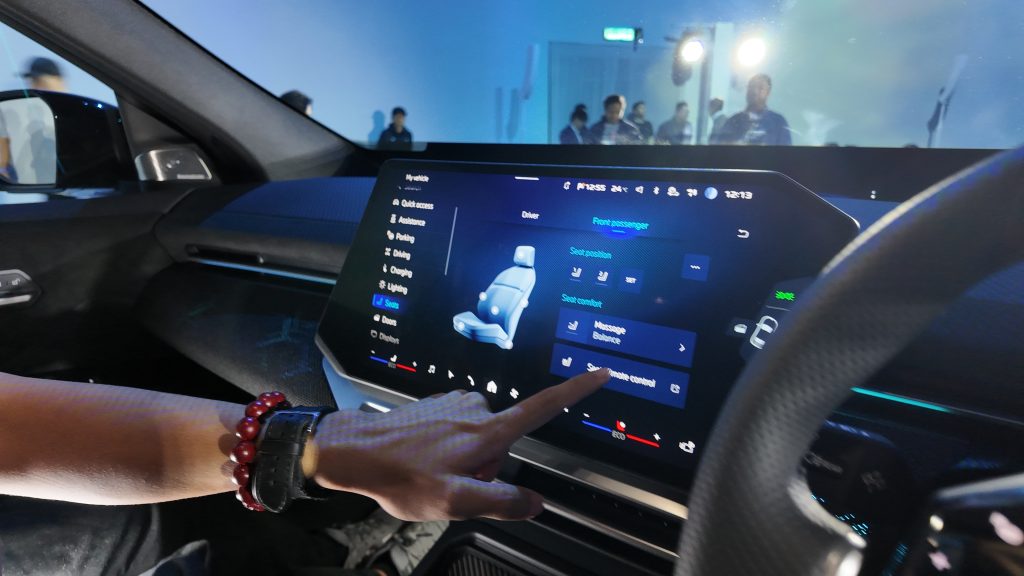
Powering this setup is a completely new core version of the BMW Operating System. The menu layouts, navigation logic, and user interface differ entirely from the iDrive 8 and 8.5 systems found in current BMW models.
Furthermore, for long-time BMW owners, the iconic rotary iDrive Controller on the center console has been removed entirely. Every interaction now relies on touchscreen inputs, intelligent voice control, and haptic wheel controls. Adapting to this new software ecosystem will require a bit of a learning curve, but once mastered, the interface feels significantly cleaner, faster, and more modern.
3️⃣ Dual-Motor Setup & “Heart of Joy” — The Brain Behind the Dynamics
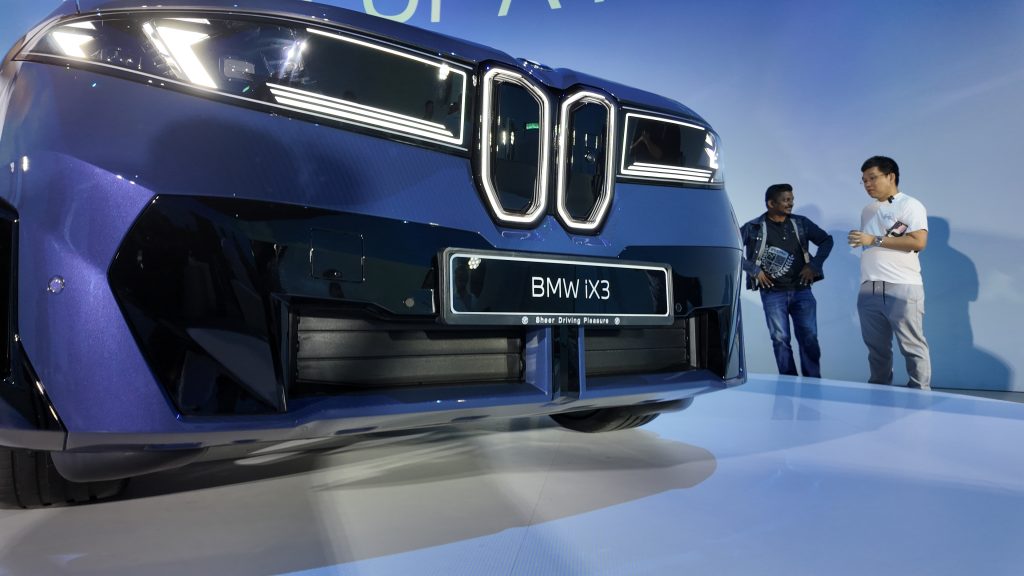
Underneath the radical sheet metal, the iX3 50 xDrive M Sport Pro packs a sophisticated dual-motor electric powertrain engineered to balance raw performance with sustained energy efficiency.
Dual-Motor AWD Configuration
- Front Motor — Asynchronous Motor (ASM): Mounted on the front axle, this induction-style motor can coast with zero mechanical drag when not needed, conserving battery power during steady-state highway cruising.
- Rear Motor — Externally Excited Synchronous Motor (EESM): Mounted on the rear axle, this motor eliminates permanent rare-earth magnets while delivering linear power delivery at high speeds and consistent power density.
The Central Brain: “Heart of Joy”
The real magic of the iX3’s handling lies not just in its electric motors, but in the central processing unit BMW calls the “Heart of Joy.”
In conventional vehicle architecture, acceleration, braking, steering, and dynamic stability control (DSC) are managed by separate, standalone electronic control units (ECUs) that talk to each other over a vehicle bus network.
The Heart of Joy unifies all driving dynamics, powertrain functions, and chassis controls into a single, ultra-high-speed central computer:
- Blistering Processing Speeds: Control algorithms execute up to 10 times faster than traditional multi-ECU setups.
- Unified Vehicle Dynamics: Steering response, torque vectoring, and regenerative braking are calculated simultaneously within a single processing loop.
- The Driving Result: The driver experiences laser-sharp body control, zero throttle lag, and immediate, predictable traction under aggressive cornering.
4️⃣ Hard Case Front Seatbacks — Minimalist Aesthetics with a Rear Comfort Trade-off
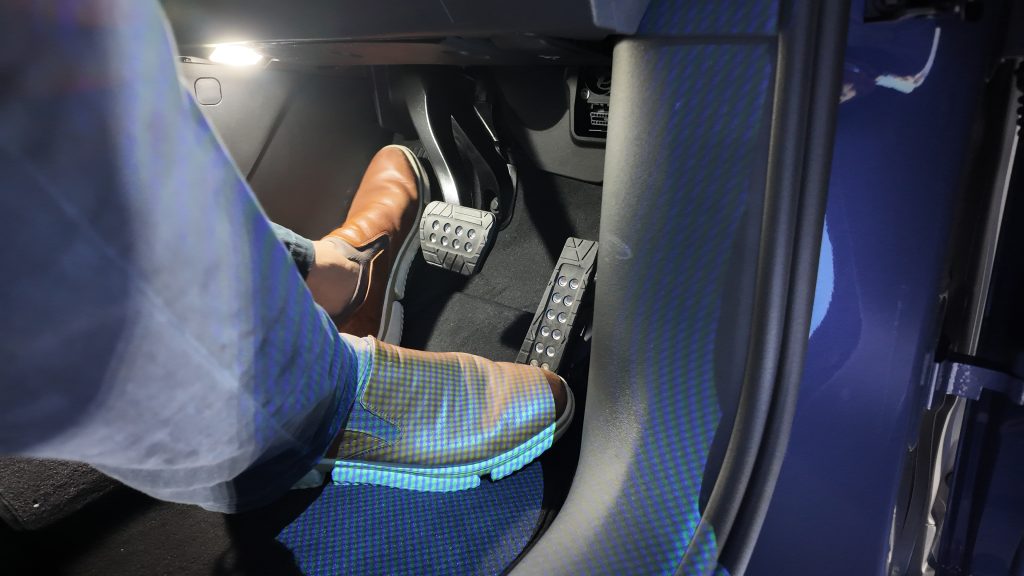
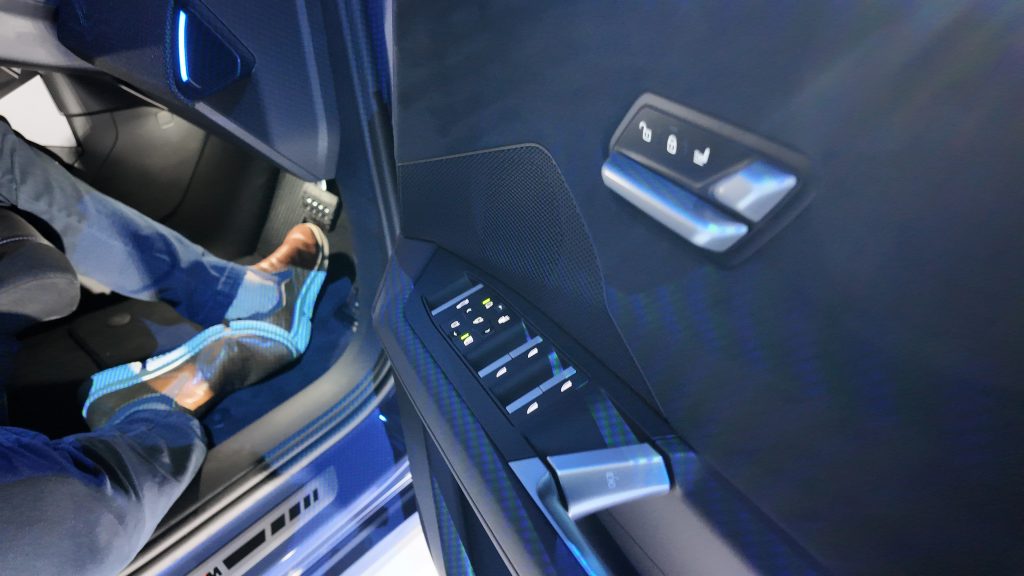
The overall interior theme of the Neue Klasse emphasizes extreme minimalism. Seat adjustment toggles are simplified into sleek switches, while the brake and accelerator pedals feature a perforated black finish that mirrors the industrial aesthetic of the cabin.
However, there is one specific physical detail on the front seats that prospective buyers must pay attention to.
Hard Shell Seat Construction
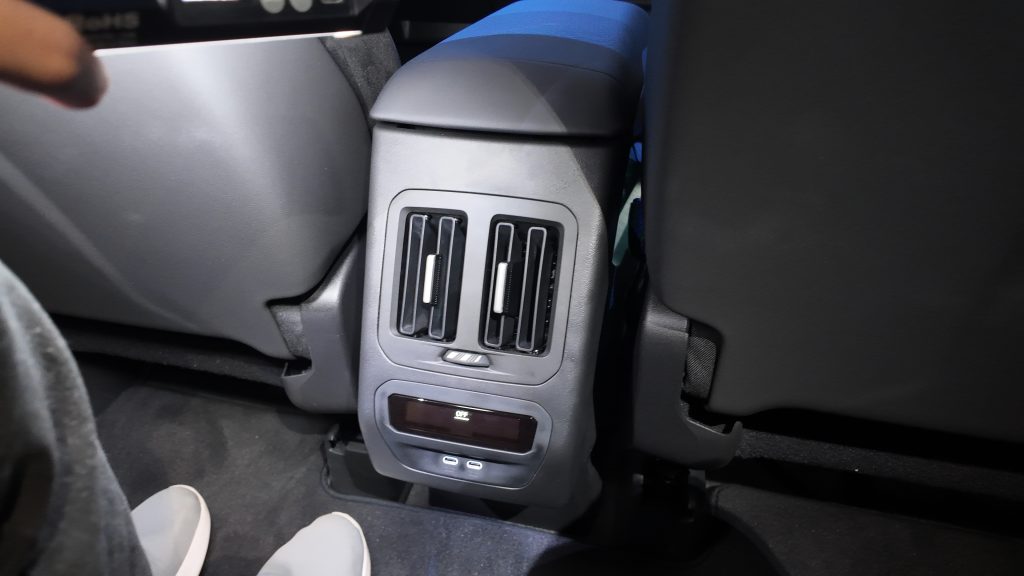
The back surfaces of the driver and front passenger seats are no longer covered in soft, padded leather or fabric upholstery. Instead, they feature a molded hard-case shell.
Engineering Justification vs. Real-World Practicality
- Why It Was Built This Way: Every kilogram saved on interior trim translates directly to extended battery range. Slim, hard-shell seats reduce overall vehicle mass, maximize rear legroom, and maintain the clean, architectural look of the cabin.
- Impact on Rear Passengers: On long journeys, this hard surface is far less forgiving on rear passengers’ knees. If you frequently carry family members—especially young children who tend to lean forward or kick the front seats—this hard-case finish is noticeably firmer than traditional luxury upholstery.
For a premium electric SUV priced near the RM400,000 mark, this ergonomic trade-off is something you should test for yourself at the showroom with your family before making a final buying decision.
5️⃣ Unique Design Detail Novelties — Signature Neue Klasse Identifiers
This final point gathers the small, unique visual and functional details that make the iX3 50 xDrive M Sport Pro stand out from any other EV on the road today.
Key Visual & Functional Details
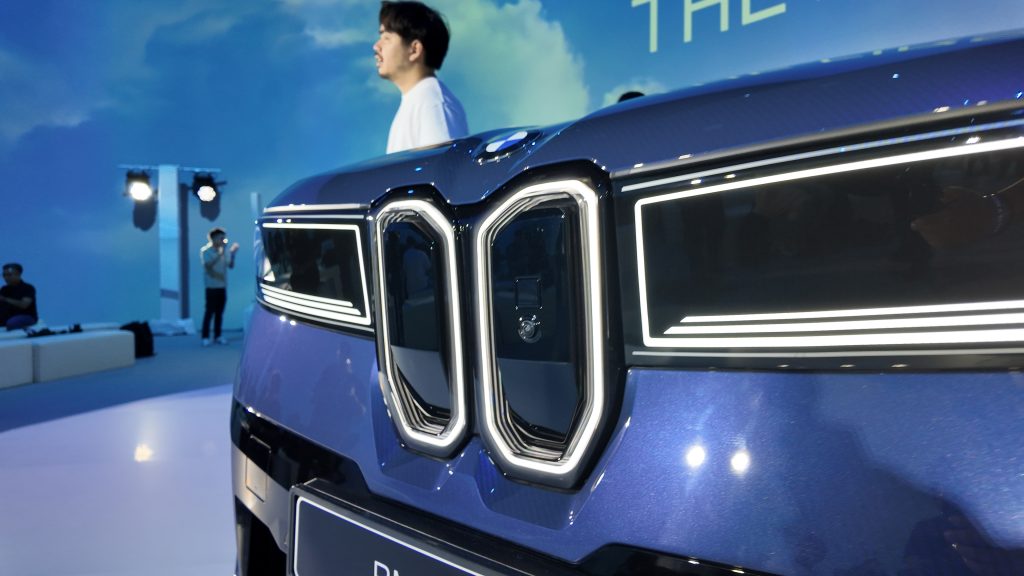
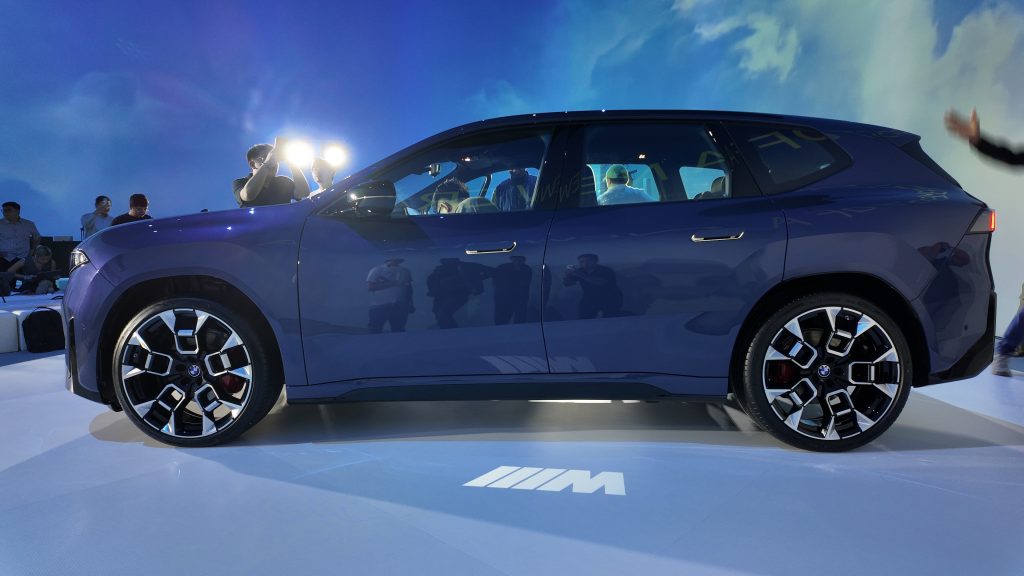
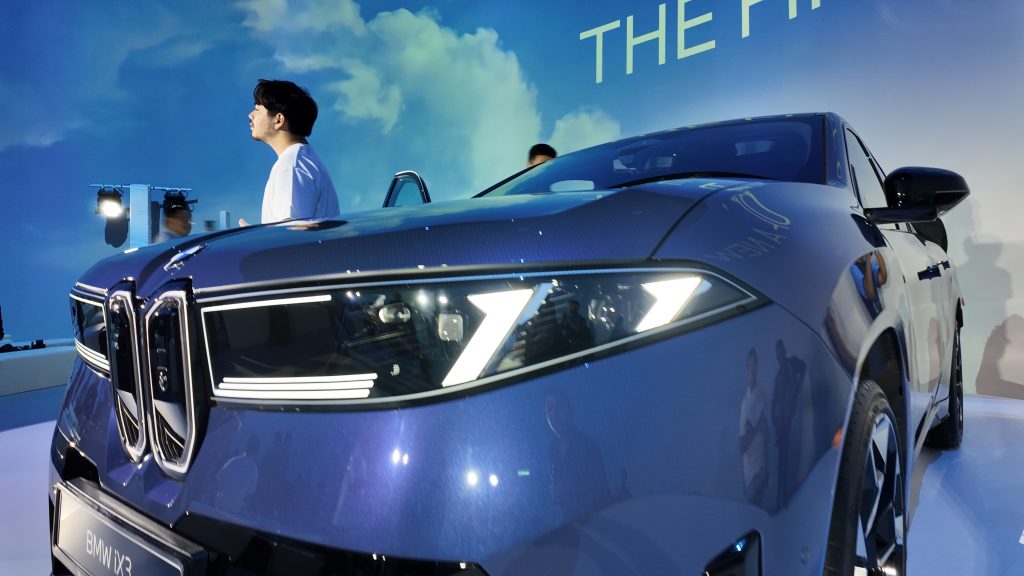
- Next-Gen Kidney Grille: Drawing inspiration from classic vertical BMW grilles of the 1960s, this modern interpretation is wider, more upright, and features integrated LED lighting signatures.
- Illuminated Slide-Back Door Handles: The flush door handles feature surrounding ambient lighting. The opening mechanism is also unique—instead of pulling outward or lifting up, you slide the handle backward.
- Textured Body Paint: The exterior paintwork features a subtle “streak effect” texture that subtly resembles a carbon fiber weave under direct light, giving the color striking visual depth.
- 22-Inch Aero Wheels & Red Brake Calipers: Rugged, aerodynamic 22-inch alloy wheels pair with vibrant red M Sport brake calipers for a bold, athletic stance.
- Functional Rear Diffuser: Because this is a dedicated EV platform without exhaust pipes, the rear bumper houses a true functional aerodynamic diffuser designed to channel underbody airflow, rather than cosmetic fake vents.
- Upright Charging Flap: The motorized charging port door lifts straight upward vertically rather than swinging open on a standard side hinge.
Market Comparison & Final Verdict
Priced between MYR 378,800 and MYR 399,800, the BMW iX3 50 xDrive M Sport Pro enters a fiercely competitive segment of the Malaysian premium EV landscape.
Primary Competitors
- Mercedes-Benz EQE SUV: Focuses primarily on plush ride comfort and vault-like cabin quietness, though the iX3 leads significantly in WLTP range and driver engagement.
- Audi Q6 e-tron: A formidable rival built on the 800V PPE platform, though the iX3 offers a more radical interior reset and unified computing architecture via the “Heart of Joy.”
- Porsche Macan Electric: Delivers unmatched track-capable driving dynamics and sports car prestige, but commands a significantly higher price tag.
Final Verdict
The BMW iX3 50 xDrive M Sport Pro is far more than just another electric crossover. It serves as BMW’s rolling manifesto, proving that an electric vehicle can deliver extreme efficiency (an 805 km range) without sacrificing the dynamic driving DNA that defines the brand.
It comes with clear trade-offs—reduced rear visibility due to aggressive aerodynamic tailoring and firm hard-case front seatbacks. However, if your top priorities are pioneering software tech, anxiety-free driving range, cutting-edge processing architecture, and an unmistakable design statement, the new iX3 stands as one of the most compelling and benchmark-setting premium EVs on the market today.