 Akmal Azhar
Long before the rise of modern gearboxes like CVTs and dual-clutch systems, engineers were already experimenting with ways to automate the driving experience. The journey began in 1904 with the Sturtevant “horseless-carriage gearbox,” an early attempt that automatically shifted between high and low gears based on engine speed. However, it was mechanically fragile and prone to failure.
The Rise of Planetary Gearboxes
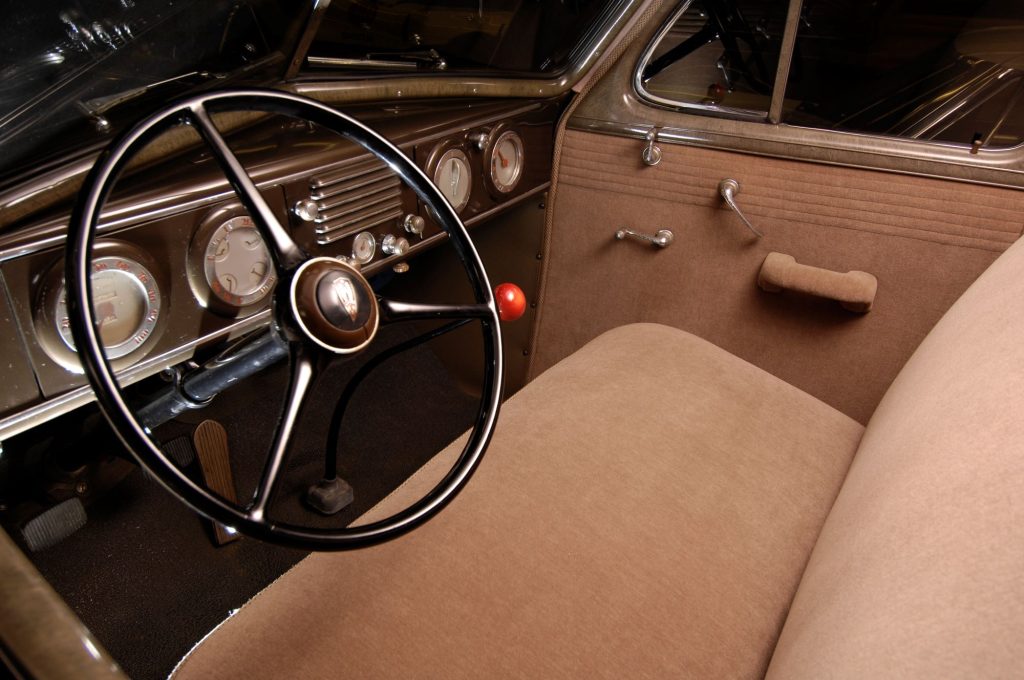
Early 20th-century vehicles like the Wilson-Pilcher (1901–1904) and Ford Model T (1908 onward) used planetary gearsets.
These designs were innovative for the time, offering multiple gears and easier shifting. However, drivers still had to manually engage a clutch and operate levers to control the gears.
Early Semi-Automatic Innovations
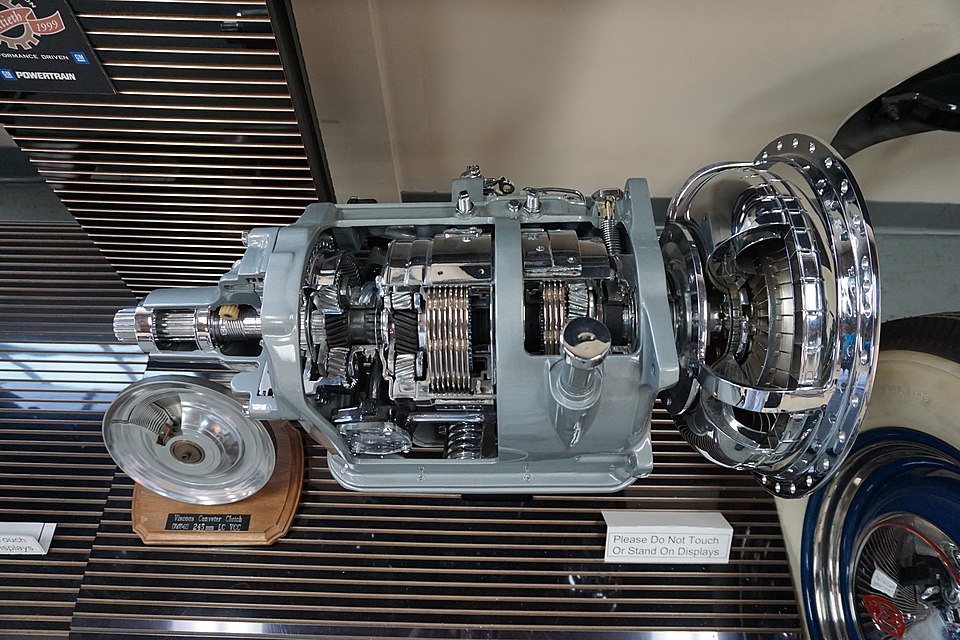
In 1923, Canada’s Alfred Munro patented a compressed air-powered automatic gearbox, which lacked practical hydraulic application and never reached success. A more promising breakthrough came in 1932 when Brazilian inventors José Braz Araripe and Fernando Lehly Lemos created a hydraulic automatic transmission, a fundamental building block of future designs.
The Predecessors to Full Automatics
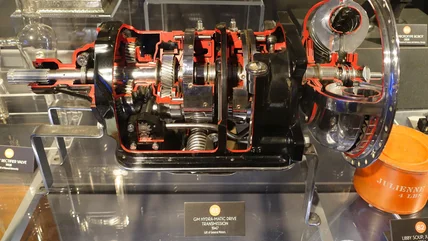
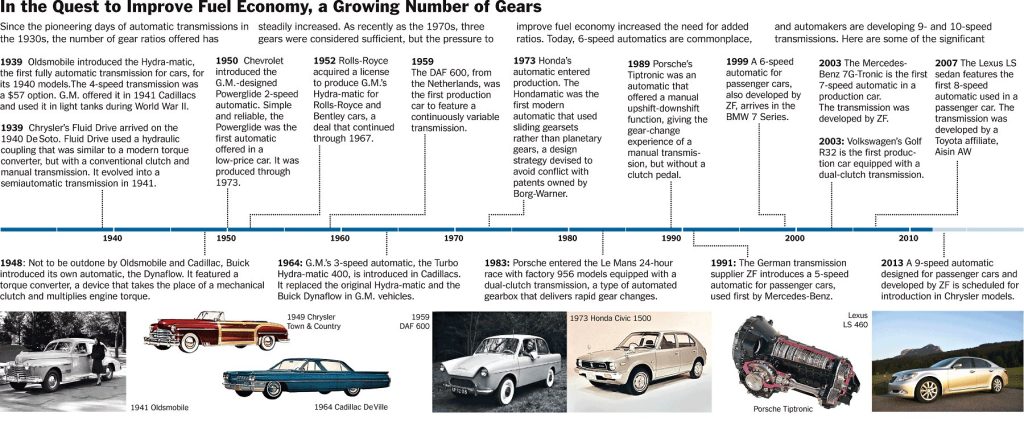
During the 1930s, manufacturers like REO and Oldsmobile introduced semi-automatic systems. REO’s “Self-Shifter” (1933–1935) could change between two gears automatically once the lever was set to “Forward.” Oldsmobile followed in 1937 with the “Automatic Safety Transmission,” which used a planetary setup but still required clutch operation at standstill.
Chrysler’s Fluid Drive Innovation
In 1939, Chrysler introduced the Fluid Drive system. While not a true automatic, it was a major leap forward, eliminating the need for a clutch pedal by using a fluid coupling instead of direct mechanical connection between the engine and gearbox.
The Breakthrough: Hydra-Matic in 1940
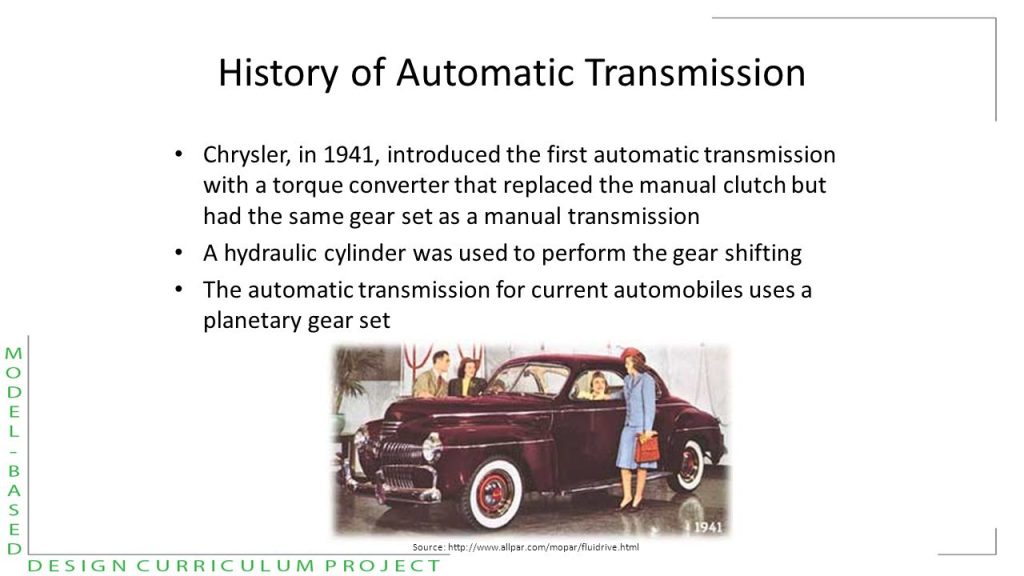
The true revolution came with General Motors’ Hydra-Matic, launched in 1940. Developed by Earl A. Thompson’s team, it became the first mass-produced fully automatic transmission. It used a fluid coupling and planetary gearsets to deliver four forward speeds without any clutch pedal. The first car to feature this was the 1940 Oldsmobile, making it the first widely sold car with a full automatic gearbox.
Post-War Growth and Innovation
After World War II, automatic transmissions became increasingly popular. Buick launched the Dynaflow in 1948, which operated in high gear only using torque converter multiplication. Chrysler entered the market with its PowerFlite in 1954 and later the highly successful TorqueFlite in 1956. These systems further advanced the smoothness and reliability of automatic gearboxes.
Legacy and Modern Transmission Systems
The development of the automatic transmission set the foundation for modern drivetrains. Today’s systems—ranging from 10-speed automatics to seamless CVTs and lightning-fast dual-clutch transmissions—are all descended from the ideas pioneered during the first half of the 20th century.

 Zakirin