 Zakirin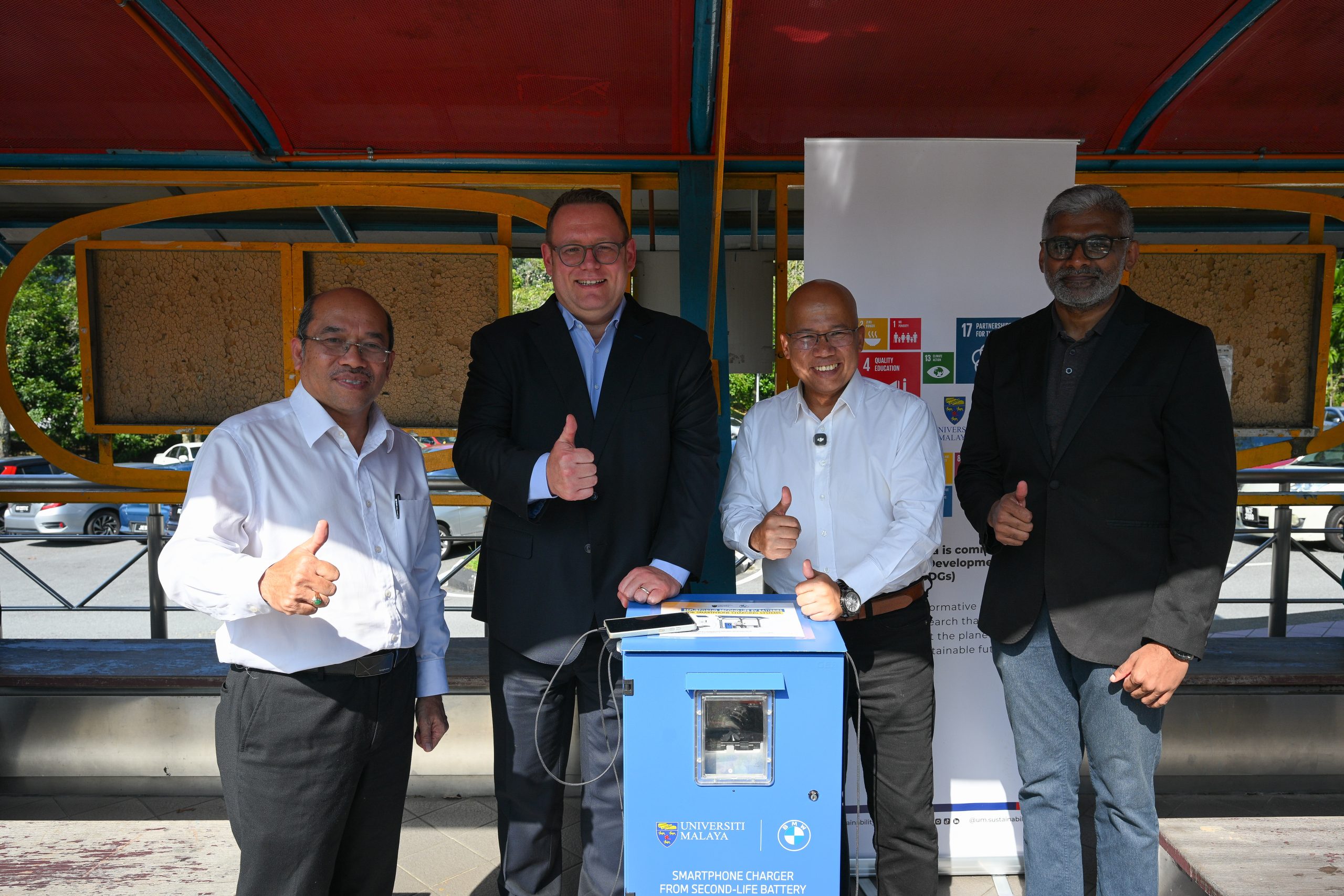
KUALA LUMPUR, 11 August 2026 — BMW Group Malaysia and Universiti Malaya (UM) have installed a solar-powered mobile device charging station powered by second-life electric vehicle (EV) batteries at the UM Central bus hub. Developed under the “RE:GENERATE x Universiti Malaya” initiative, the station represents the first deployed project resulting from over two years of laboratory research led by Associate Professor Dr. Tan Chia Kwang and researchers at the UM Power Energy Dedicated Advanced Centre (UMPEDAC).The facility serves a campus hub with an estimated daily foot traffic of over 3,000 users.
Technical Specifications and System Configuration
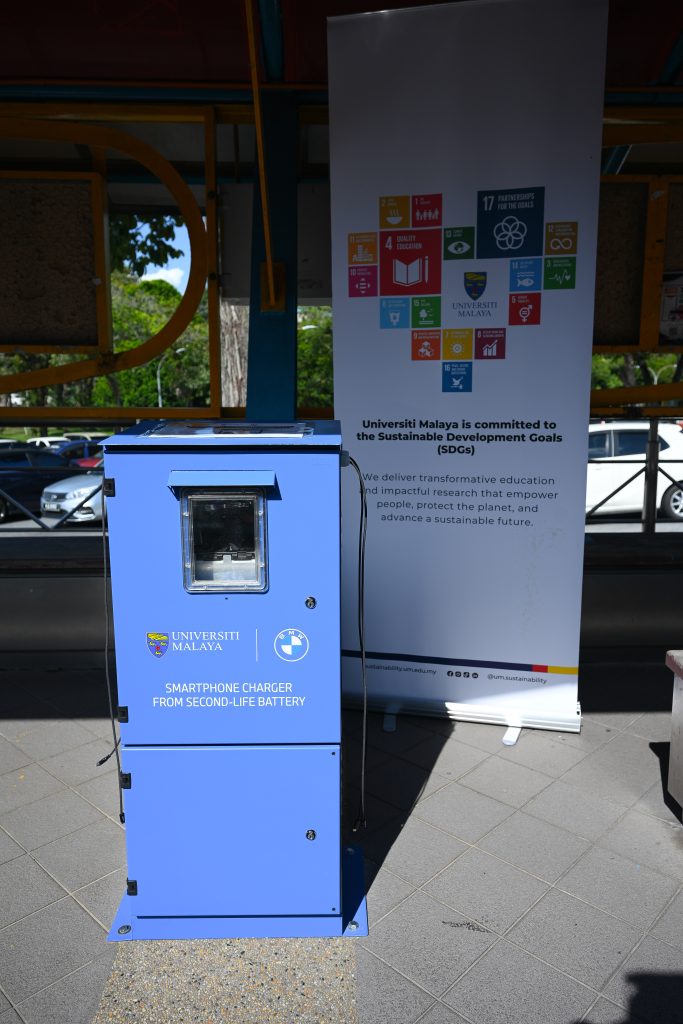
The stationary charging unit integrates repurposed EV batteries with a solar photovoltaic (PV) array to store and discharge energy for mobile devices.
| Feature / System Parameter | Specification / Detail |
| Battery Storage Capacity | 1.5 kWh system assembled from three ~10-year-old BMW battery modules |
| State of Health / Capacity Retention | 30% to 40% recovered capacity following grading and re-assembly |
| Power Output | 200W total combined output (maximum 100W per individual port) |
| Charging Ports | 4 ports (3× USB-C, 1× Lightning) |
| Primary System Components | Repurposed solar panels, solar charge controller, PV inverter, Battery Management System (BMS), USB fast chargers |
| Projected Operational Lifespan | Minimum 5 years (subject to usage patterns and depth of discharge) |
System Monitoring and Dual-Deployment Strategy
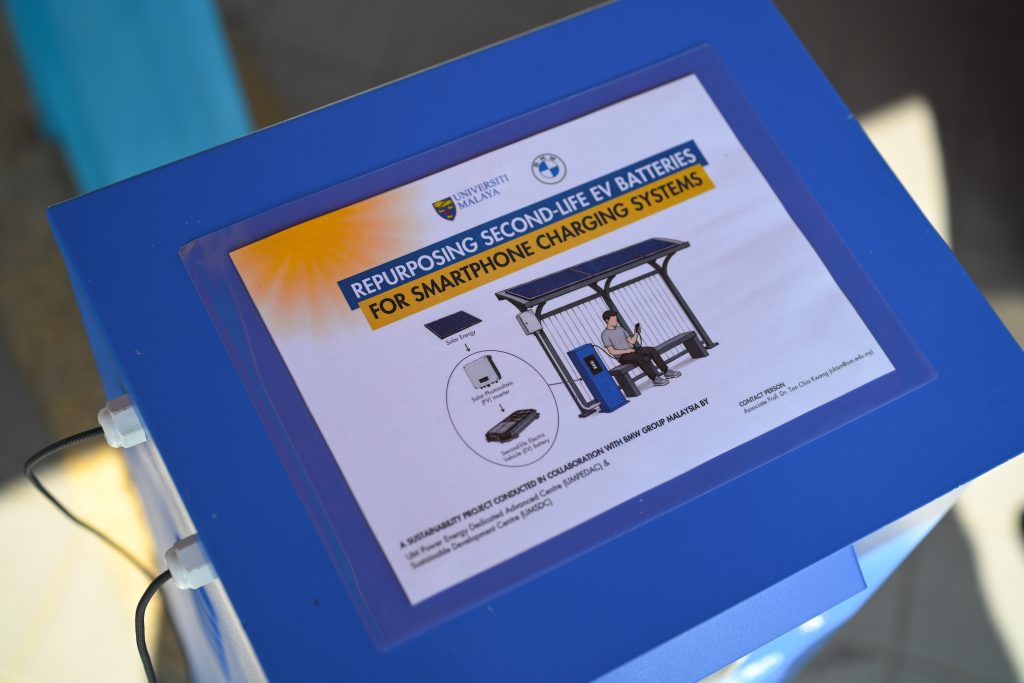
The installation includes integrated data loggers to track real-time battery health parameters, temperature, and usage patterns. Ongoing system monitoring and visual inspections are managed by trained student researchers from UM.
The campus charging station forms part of a broader dual-deployment research strategy that categorizes retired EV batteries by their remaining capacity:
- Lower-Capacity Modules (30%–40% retained capacity):Allocated to lower-demand public applications, such as the campus smartphone charging station.
- Higher-Capacity Modules (Up to 80% retained capacity):Reserved for an off-grid rural electrification project in Pos Sinderut, Kuala Lipis, Pahang, intended to power household lighting, fans, and refrigeration for a Semai Orang Asli community.
Lifecycle Framework
The project outlines a multi-stage lifecycle model for EV batteries. Modules deployed to Pos Sinderut for rural electrification will undergo further testing at the end of their secondary service life. Modules that retain sufficient stability will subsequently be repurposed into third-life mobile device charging stations, transitioning the battery cells from vehicular use to home energy storage, and finally to public charging infrastructure.