 Zakirin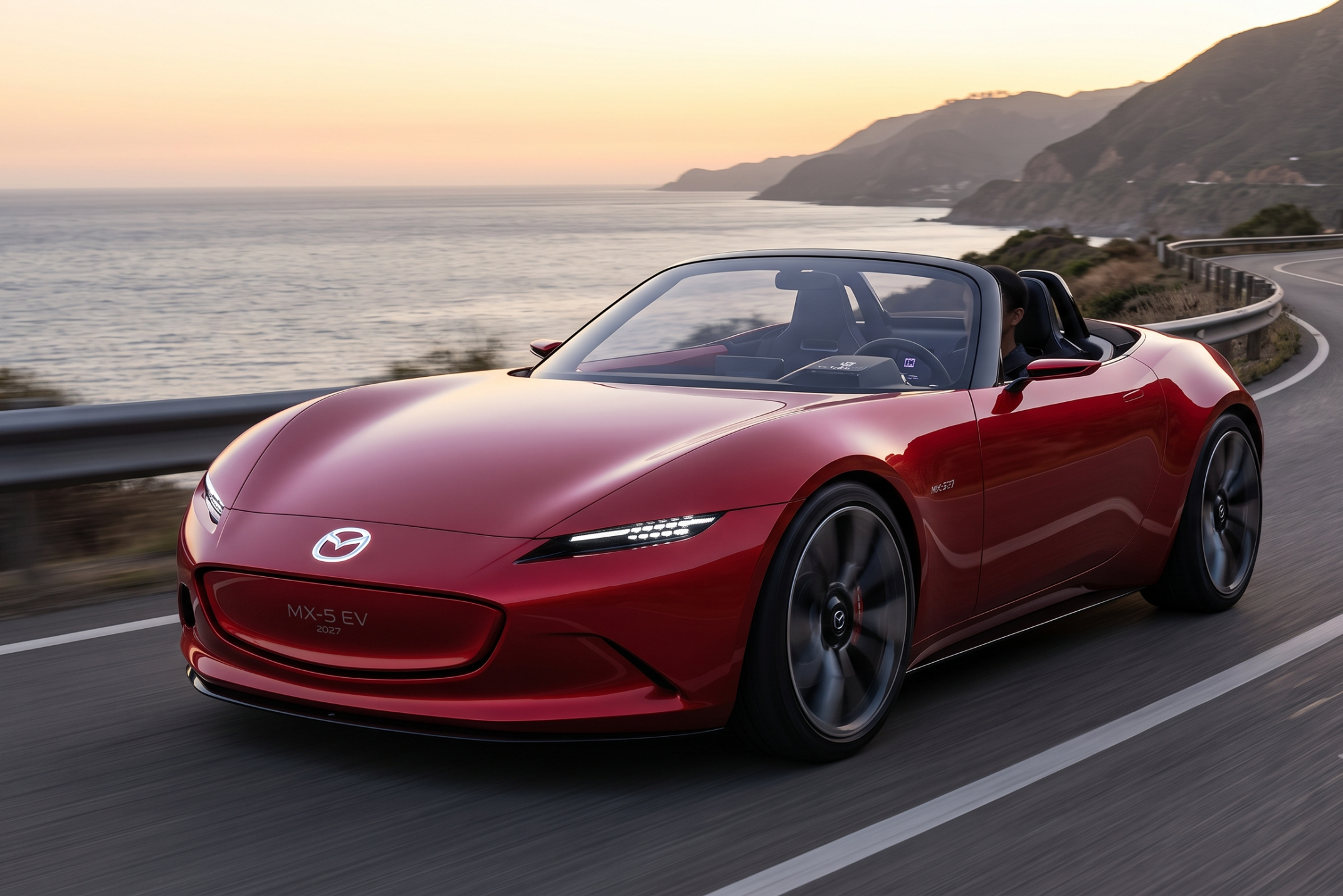
The future of the world’s best-selling two-seater roadster has finally been clarified. Mazda CEO Masahiro Moro has confirmed that the next-generation Mazda MX-5, internally codenamed “NE”, is being engineered from the ground up to accommodate a fully electric powertrain.
However, purists can breathe a sigh of relief—internal combustion isn’t entirely dead just yet.
The Challenge: Keeping the EV Light
The biggest enemy of any sports car is weight, and this is especially true for the MX-5, which has built its legendary reputation on being a featherweight corner-carver. Battery packs are inherently heavy, presenting a massive engineering hurdle for the EV variant.
Despite this, Mazda’s CEO insists that the NE generation will retain its lightweight character. The engineering team has set a strict weight target of 1,000 to 1,200 kg for the new model. Crucially, Mazda aims to achieve this packaging and weight balance through clever engineering and compact batteries, explicitly avoiding the extensive use of expensive materials like carbon fiber, which would push the roadster’s price tag out of reach for its traditional fan base.
The goal isn’t to build a tire-shredding straight-line EV, but rather to ensure the electric MX-5 still feels alive and agile on twisting mountain roads.
Internal Combustion Will Live On
While the electric model is being prepared to meet increasingly stringent global emissions regulations, the initial launch of the NE generation is expected to cater to traditional enthusiasts.
- Skyactiv-Z Engine: The next-generation MX-5 will debut with Mazda’s newly developed 2.5-litre Skyactiv-Z naturally aspirated four-cylinder engine.
- Hybrid Possibilities: A hybrid variant is also under serious consideration. Reports suggest it could deliver up to 164 kW (around 220 hp) of maximum output, provided the hybrid components do not compromise the strict weight targets.
Expected Timeline and a New Flagship
Because the next-generation NE model is still in its developmental infancy, it is not expected to make its global debut until at least 2028. This means the current ND generation, which recently received the ND3 update, will enjoy an exceptionally long lifecycle exceeding 13 years.
Alongside the MX-5 news, Mazda’s CEO also confirmed that the brand is planning to launch a new, premium flagship sports car positioned above the MX-5. Designed to embody Mazda’s core values, this halo model will not be driven by sheer sales volume and could potentially be produced using bespoke, hand-built manufacturing methods.