 Akmal Azhar
In a bold move underscoring its commitment to safety and innovation, Chery has successfully completed the second phase of its Global Safety Challenge in Indonesia, setting a new benchmark in hybrid battery resilience for tropical regions. The test, centered on the Chery Super Hybrid (CSH) battery, was designed to simulate real-world hazards common in flood-prone environments like Southeast Asia, particularly Malaysia and Indonesia.
Seawater Submersion: A Radical Test for Tropical Safety
The highlight of this rigorous campaign was the dramatic submersion of two CSH batteries in a 1-metre-deep tank filled with seawater for over 53 hours. This test was more than just a spectacle—it replicated the harsh, corrosive, and high-pressure conditions typical of tropical flooding. Upon completion, the battery was reinstalled into a TIGGO 8 CSH hybrid SUV and driven by Chery executives, demonstrating its flawless operation post-submersion. This real-time test was witnessed by media and officials alike, offering transparent validation of the battery’s safety and durability.
Exceeding Conventional Safety Metrics
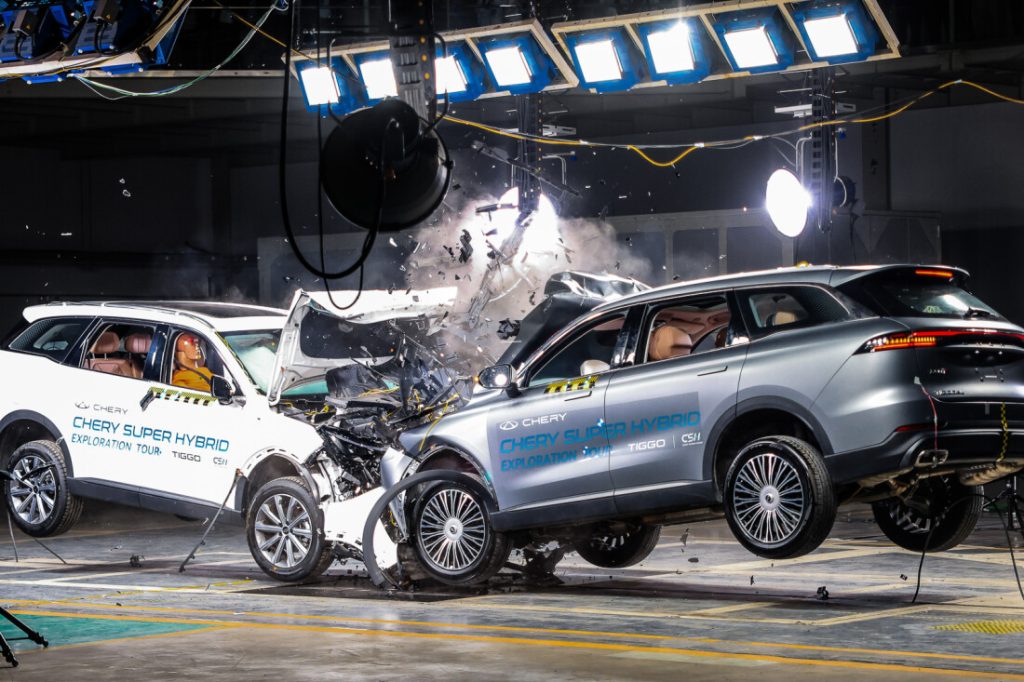
According to Rifkie Setiawan, Head of Chery’s Brand Department in Indonesia, the seawater test significantly outstripped standard waterproofing benchmarks, thanks to seawater’s higher conductivity and corrosiveness compared to regular rainwater. The results confirmed the battery’s superior seal integrity, structural resilience, insulation performance, and reliable charge-discharge behavior. The success eliminates fears of short circuits, leaks, or fire hazards even under prolonged immersion in highly conductive liquid.
Guardian Battery Technology: Built to Withstand the Extremes
At the heart of this resilience is Chery’s advanced Guardian Battery Technology, which powers the TIGGO 8 CSH. The 18.3 kWh Lithium Iron Phosphate (LFP) battery is already trusted by over a million families globally. Certified with an IP68 waterproof rating, the battery performs across a vast temperature range from -35°C to 60°C and delivers up to 90 kilometers of electric-only driving range. With support for fast charging from 30% to 80% in only 20 minutes via CCS2, it combines convenience with confidence.
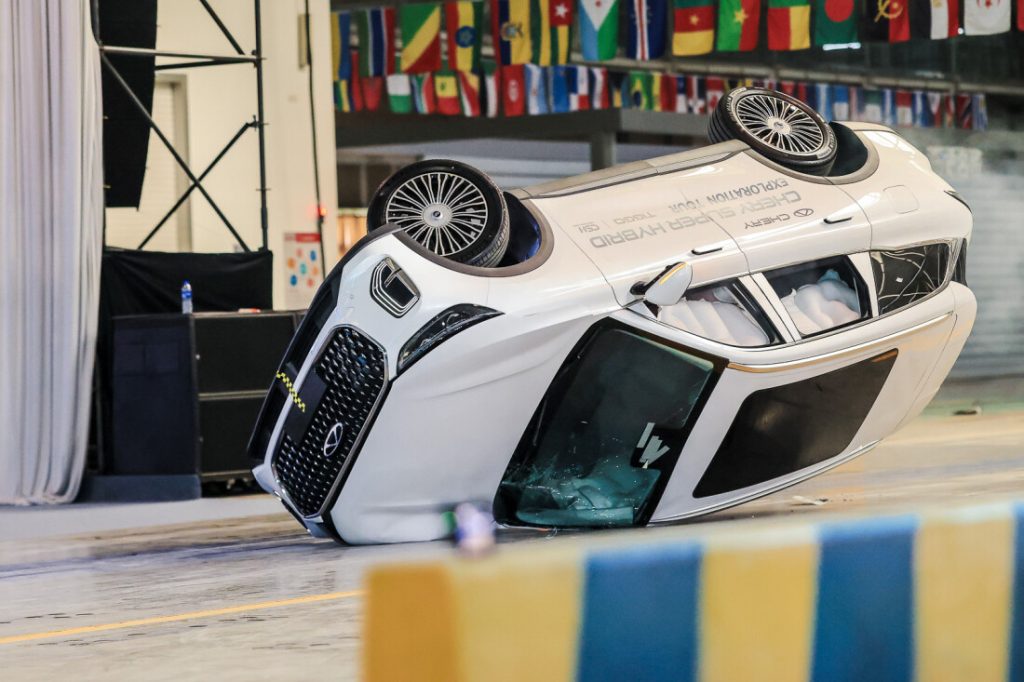
One standout feature is the battery’s Chainmail Safety Structure, a 14-point safety anchoring design that increases chassis strength by 7% and resists up to 200 kN of extrusion force. Its insulation system includes 10 layers at the base, 15 on the sides, and 16 thermal layers for maximum protection. This system has already been proven in extreme safety challenges conducted in China, which included drop tests, vehicle stacking, rollover simulations, and salt spray exposure lasting over 720 hours.
Localized Engineering for Southeast Asia’s Unique Climate Risks
The tropical climates of Malaysia and Indonesia pose significant challenges to battery technology, with issues like high humidity, sudden downpours, and recurring floods often overwhelming conventional EV systems. Chery’s real-road and seawater tests directly address these concerns, ensuring its vehicles are not just safe but also suitable for the region’s climate. This strategy aligns with Chery’s localized engineering approach under the “In Somewhere, For Somewhere” philosophy, which tailors global innovations to regional needs.
Looking Ahead: Mexico, Brazil, and Beyond
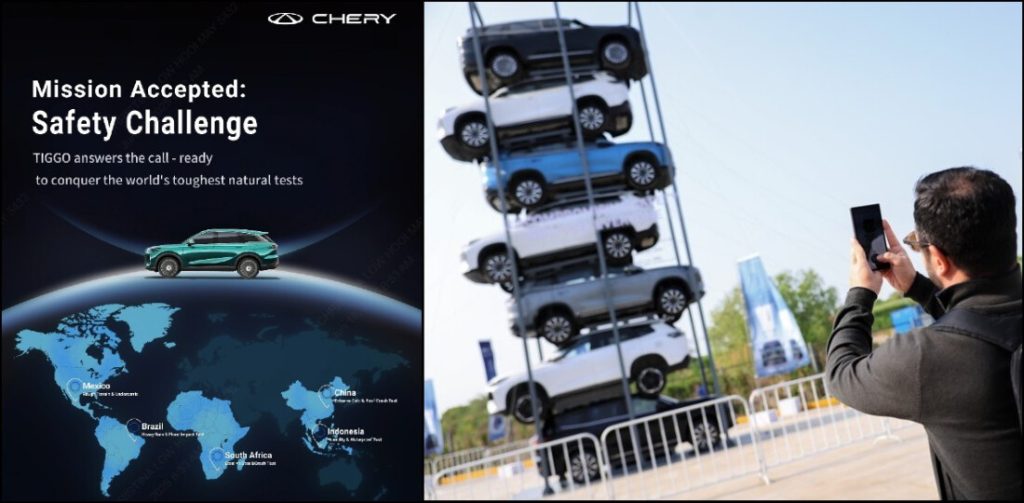
With the Indonesia test concluded, the next phase of Chery’s Global Safety Challenge moves to Mexico. There, the TIGGO 7 CSH will undergo an underbody scraping test on rugged highland roads to evaluate battery protection under mechanical stress and high-altitude conditions. This global campaign aims to test and adapt Chery’s electrified vehicles under various environmental extremes. Future test locations include South Africa and Brazil, where Chery intends to continue pushing the envelope in EV safety across multiple climatic and geographic scenarios.
A Broader Vision of Global Safety Leadership
Chery’s commitment to electrification and safety is part of a broader ambition to lead the global new energy vehicle segment. Its ability to integrate rigorous real-world testing, advanced battery architecture, and local environmental adaptation is fast positioning it as a frontrunner in EV innovation, particularly in emerging markets. With the CSH battery system proving its resilience across varied terrain and climate challenges, consumers can expect safer, more robust hybrid options in the near future.

 Zakirin