 Zakirin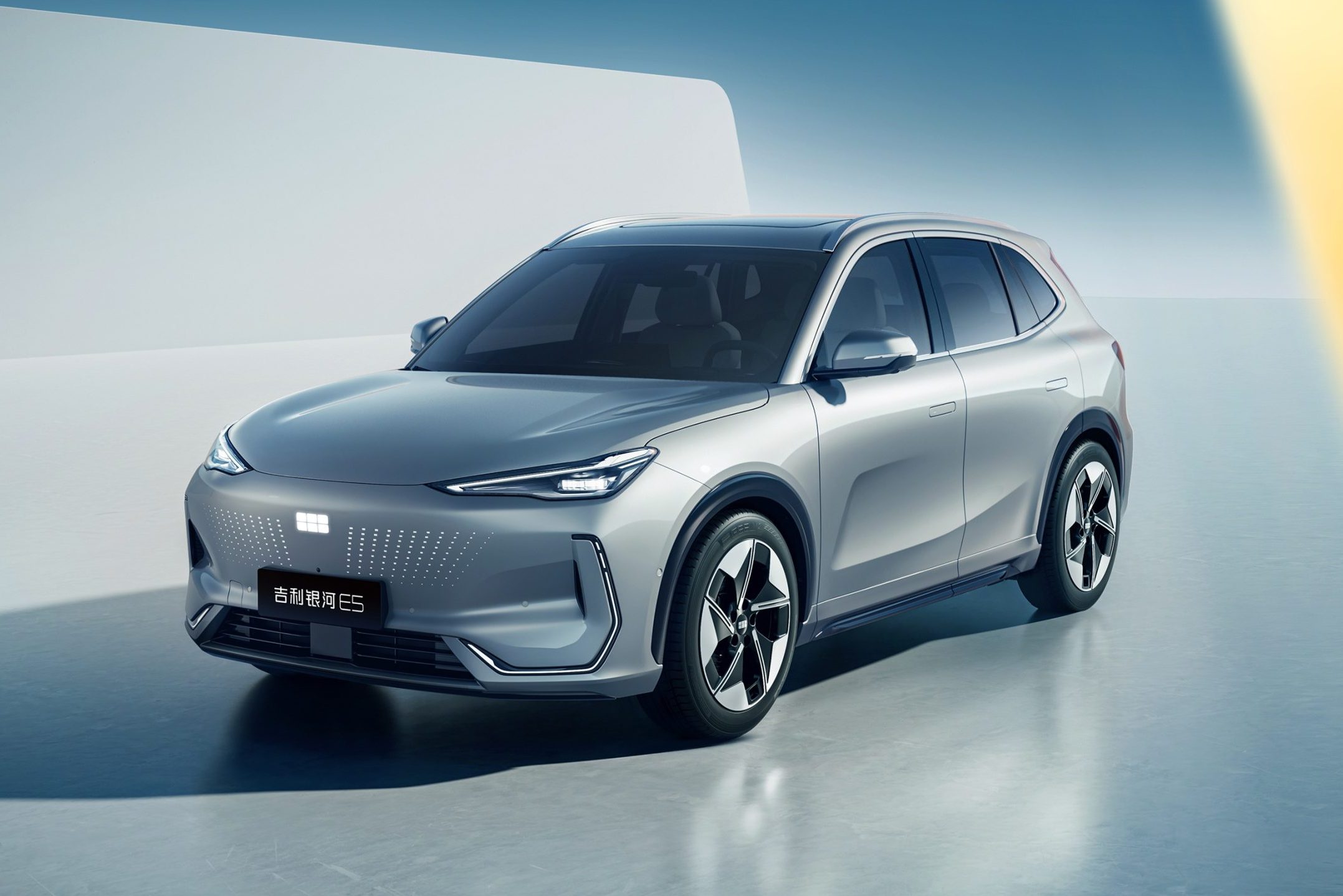
Geely has officially revealed the facelifted 2027 Geely Galaxy E5—known globally as the EX5—ahead of its scheduled commercial release in China on 23 September 2026, showcasing subtle exterior cosmetic refinements alongside an extensive engineering overhaul that shifts the electric SUV to a high-output rear-wheel-drive (RWD) platform.
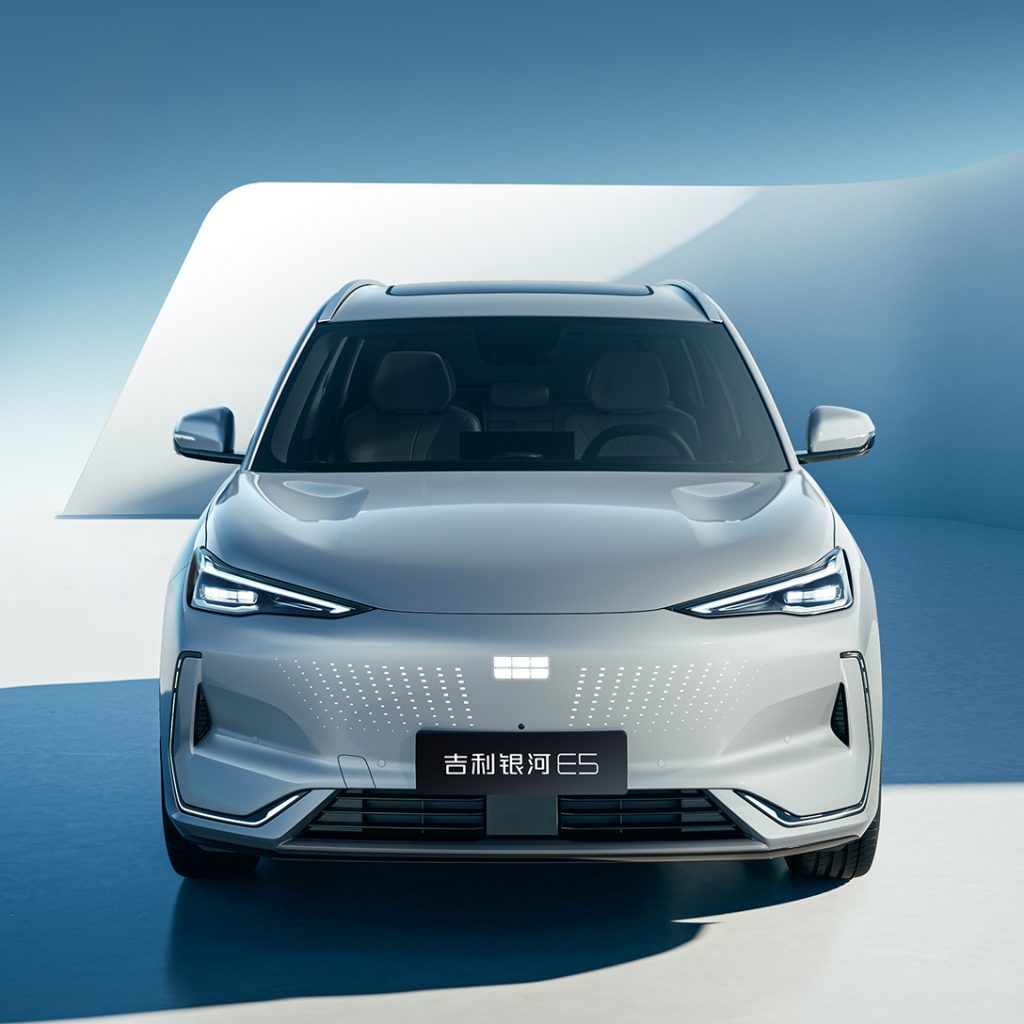
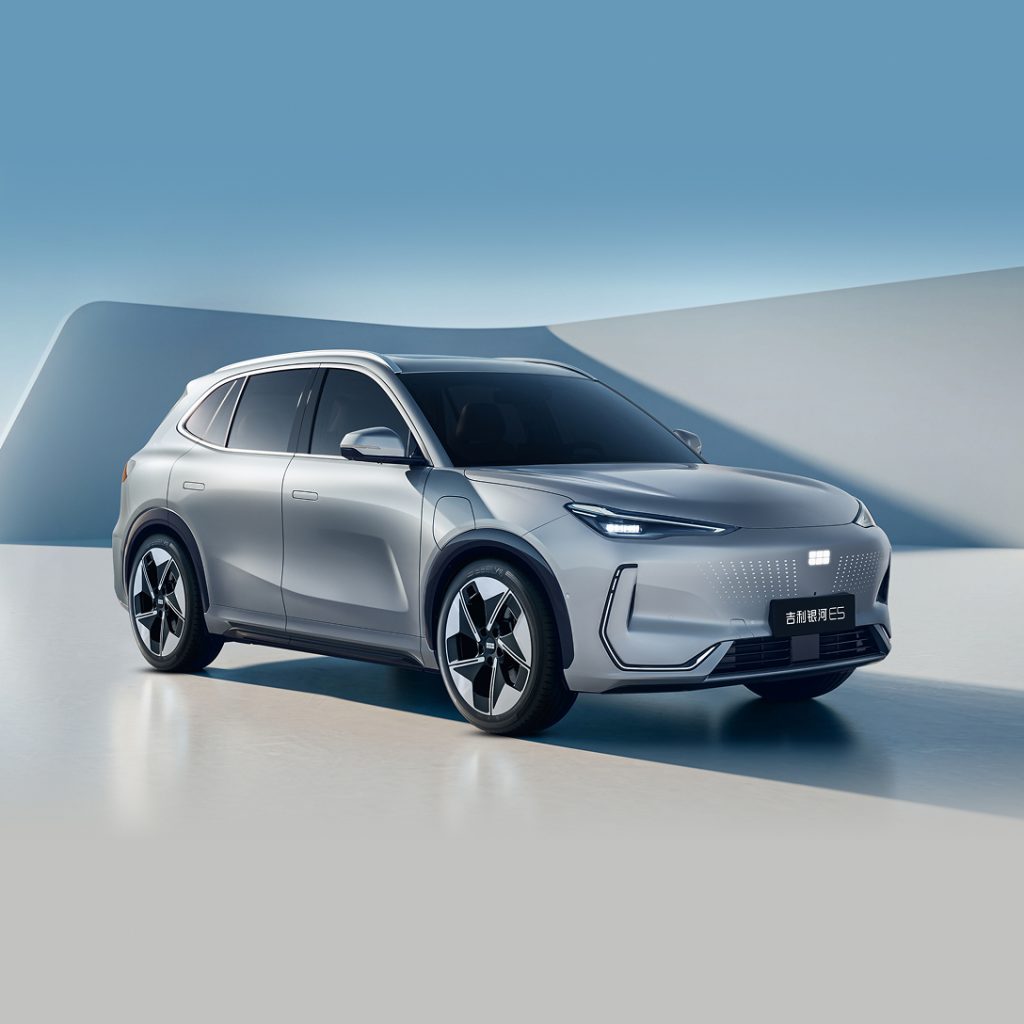
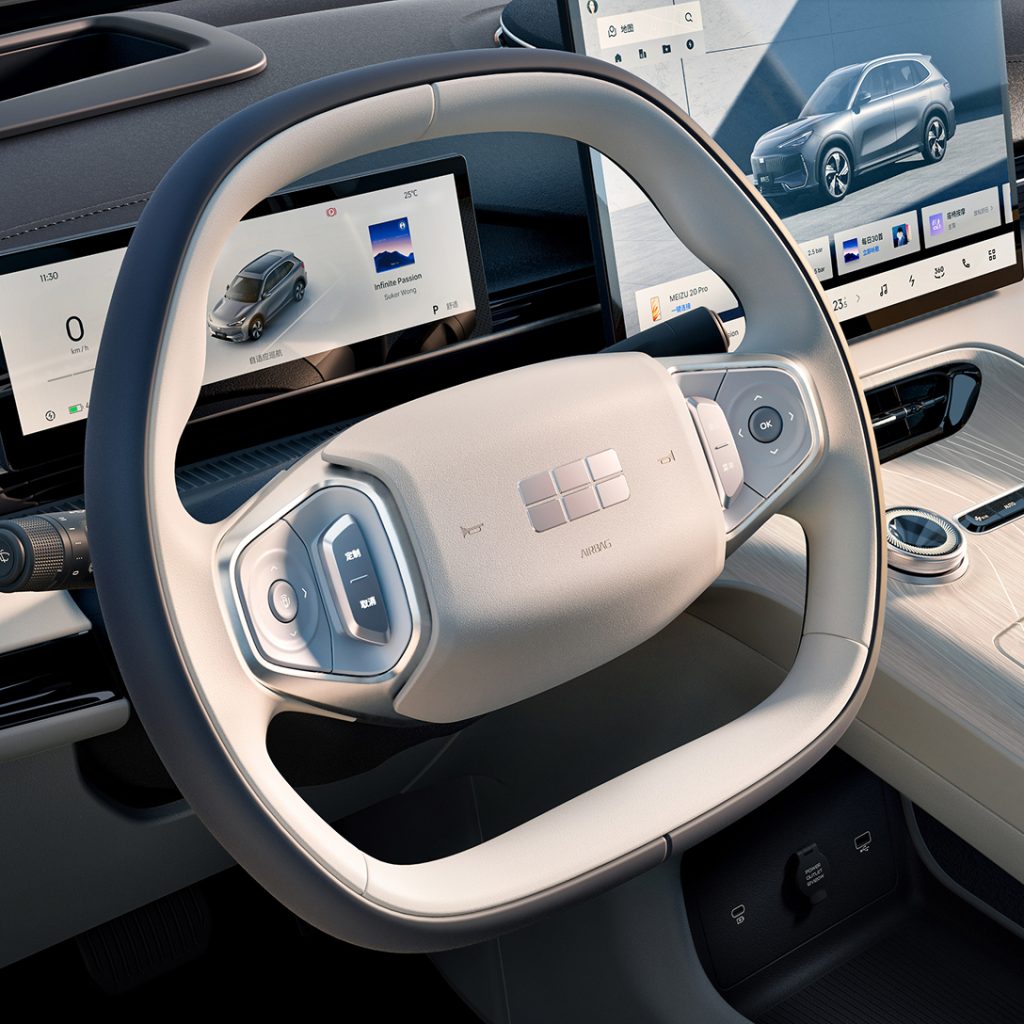
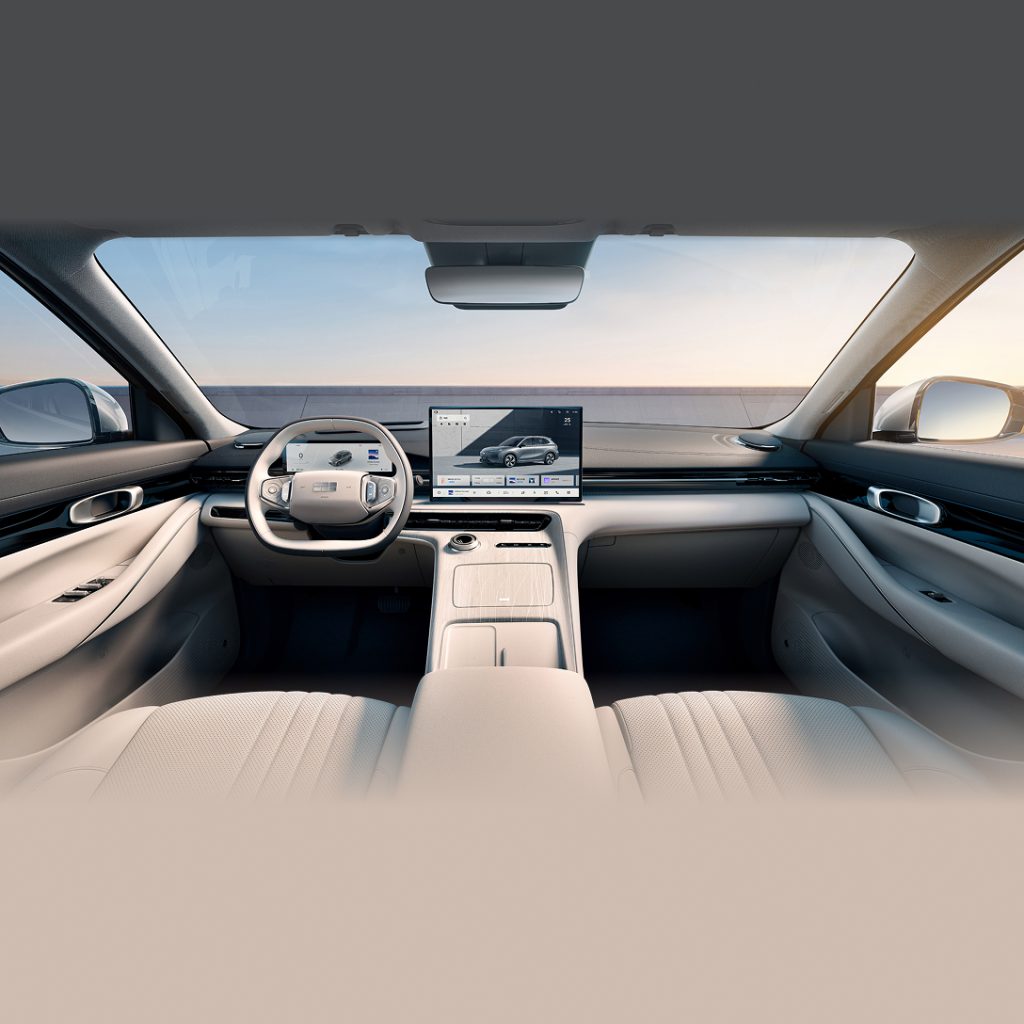
- The refreshed Geely Galaxy E5—the sister model to the Proton e.MAS 7—receives a subtle visual update with a restyled front bumper, new aero wheel designs, and a conventional three-spoke steering wheel.
- Mechanical underpinnings undergo a major transformation, switching to a rear-wheel-drive layout with an electric motor developing 245 kW (333 PS)—a 115 PS increase over the previous front-wheel-drive model.
- Re-engineering the front bay enables the addition of a front luggage compartment (frunk), while regulatory filings indicate the inclusion of roof-mounted LiDAR for advanced urban navigation assistance.
The mid-lifecycle update comes roughly two years after the Galaxy E5 first entered production and three months after preliminary documentation surfaced on China’s Ministry of Industry and Information Technology (MIIT) database. While visual changes are measured, the underlying mechanical architecture has been substantially revised to elevate driving dynamics, straight-line performance, and high-speed electrical capability.
| Engineering & Dimensional Parameter | Current / Outgoing Specification (FWD) | 2027 Facelift Specification (RWD) | Change / Variance |
| Drivetrain Layout | Single-motor Front-Wheel Drive (FWD) | Single-motor Rear-Wheel Drive (RWD) | Driven axle moved to rear |
| Peak Power Output | 160 kW (218 PS) | 245 kW (333 PS) | +85 kW (+115 PS) |
| Peak Torque | 320 Nm | High-output rear drive unit | Enhanced low-end delivery |
| 0–100 km/h Acceleration | 6.9 seconds | Approx. 5.0 seconds (Targeted) | ~1.9 seconds quicker |
| High-Voltage Architecture | 400-volt (115 kW DC maximum) | Upgraded high-voltage platform | Capable of >200 kW DC fast charging |
| Front Storage | None (Occupied by front inverter/drive unit) | Dedicated front luggage compartment (Frunk) | Added storage utility |
| Overall Length | 4,615 mm | 4,636 mm | +21 mm |
| Overall Width | 1,901 mm | 1,920 mm | +19 mm |
| Overall Height | 1,670 mm | 1,670 mm | Unchanged |
| Wheelbase | 2,750 mm | 2,750 mm | Unchanged |
Subtle Exterior and Dimensional Revisions
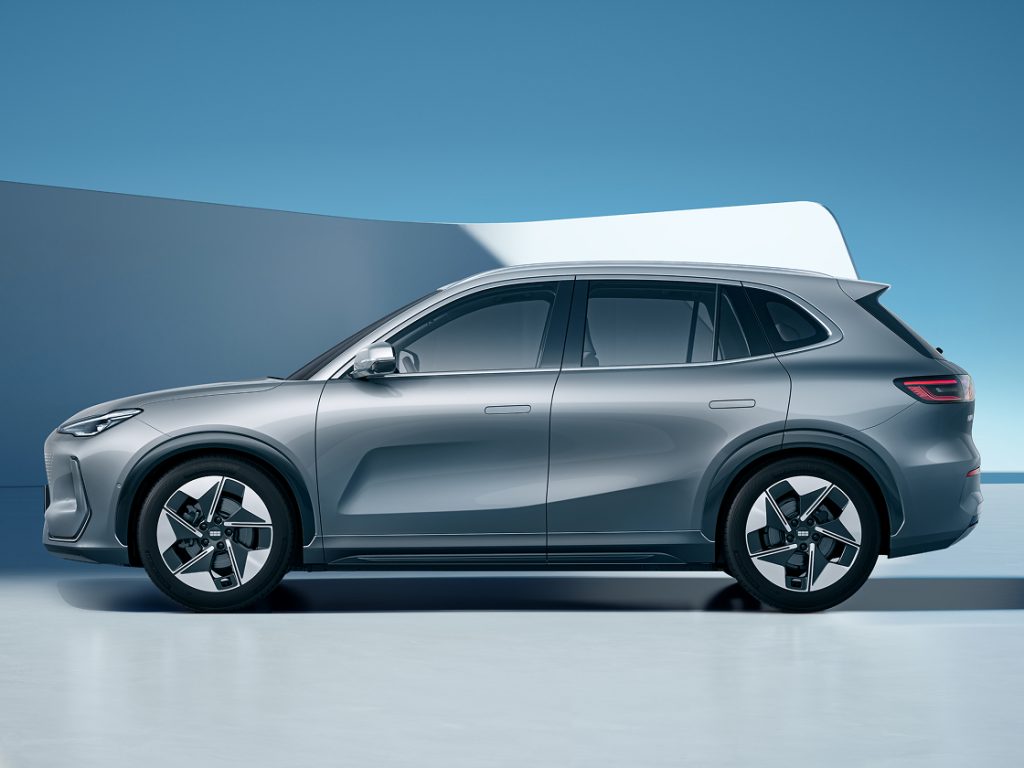
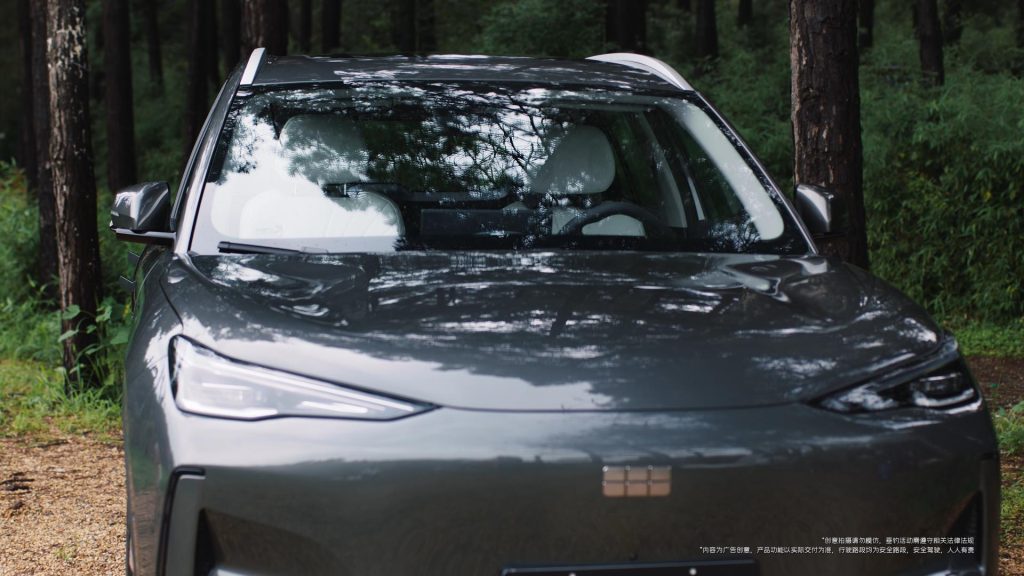
The exterior retains the clean profile of the original model while adopting revised lower body treatments. The front bumper has been completely redesigned, featuring a full-width gloss-black insert that sweeps upward at the outer edges to frame functional air curtain ducts. The lower apron incorporates an enlarged silver protective chin element enclosing the central radiator intake.
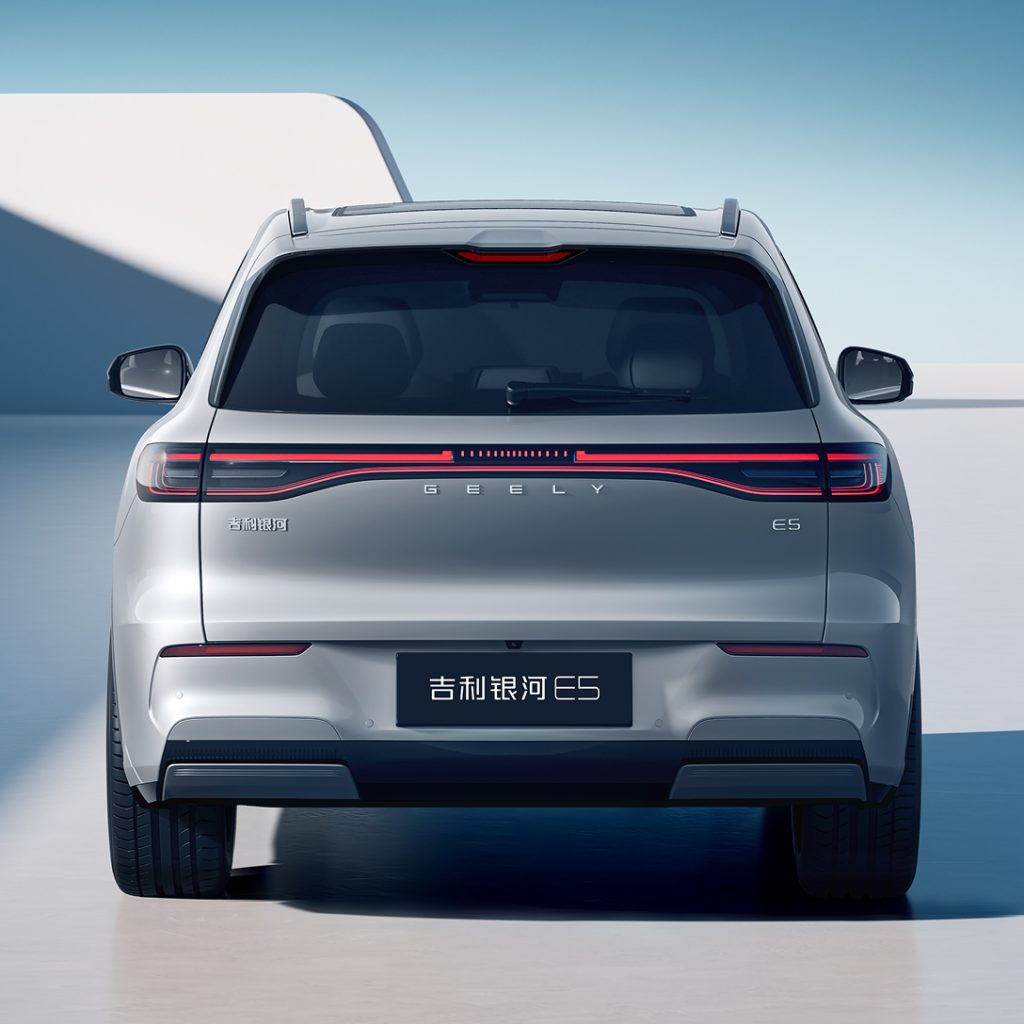
In profile, the SUV gains newly styled 18-inch and 19-inch aerodynamic multi-spoke alloy wheels. Dimensional adjustments see the vehicle length increase by 21 mm to 4,636 mm and overall width expand by 19 mm to 1,920 mm, while the 1,670 mm roofline and 2,750 mm wheelbase carry over unchanged. At the rear, the high-voltage charging port has been relocated from the front fender to the rear quarter panel, directly reflecting the powertrain shift to the rear axle.
Interior Ergonomics and Equipment Updates
Inside, the cabin layout introduces key ergonomic adjustments while preserving the core digital interface:
- Steering Control: The previous two-spoke oblong steering wheel has been replaced with a conventional three-spoke wheel featuring a flat-bottom rim, sharing its switchgear layout with the Monjaro EM-i.
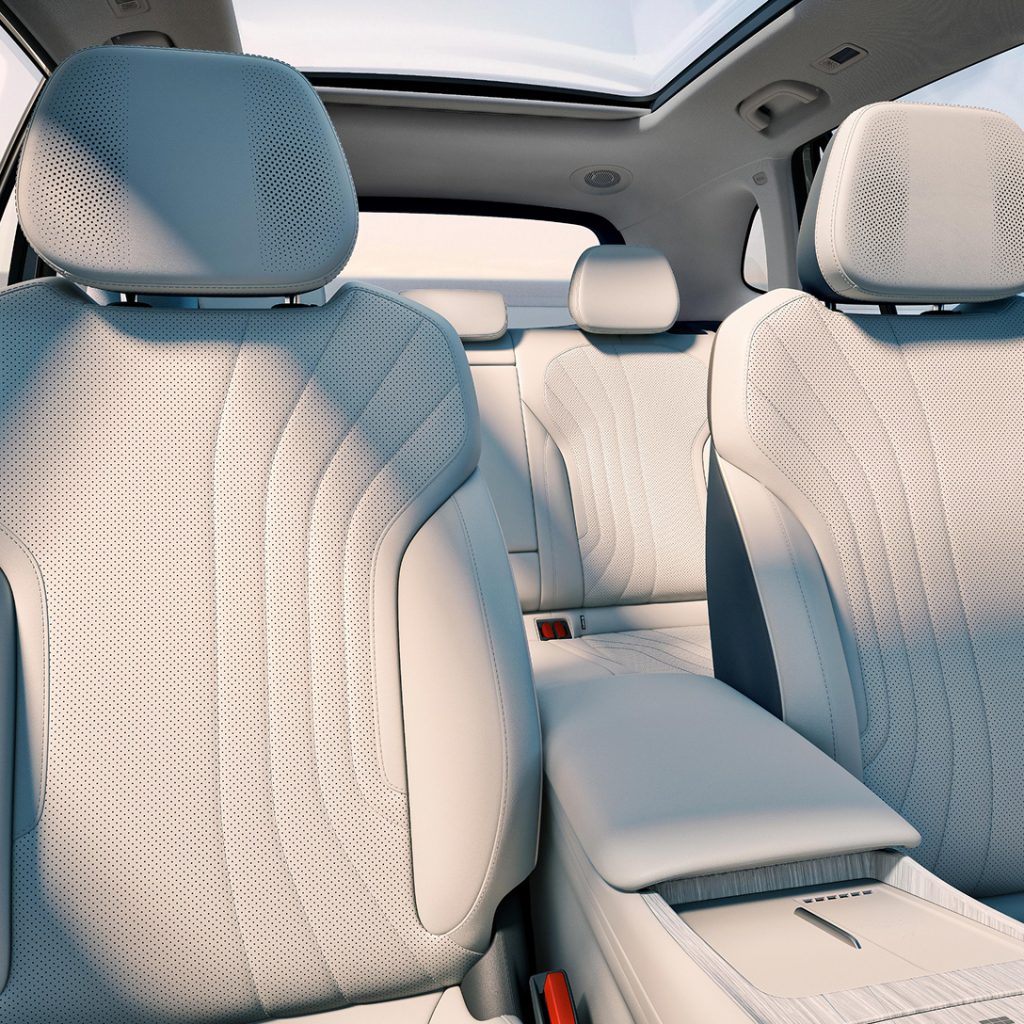
- Upholstery & Trims: The seats receive a restyled symmetrical upholstery pattern that eliminates the previous silver metallic pin accents on the upper backrests.
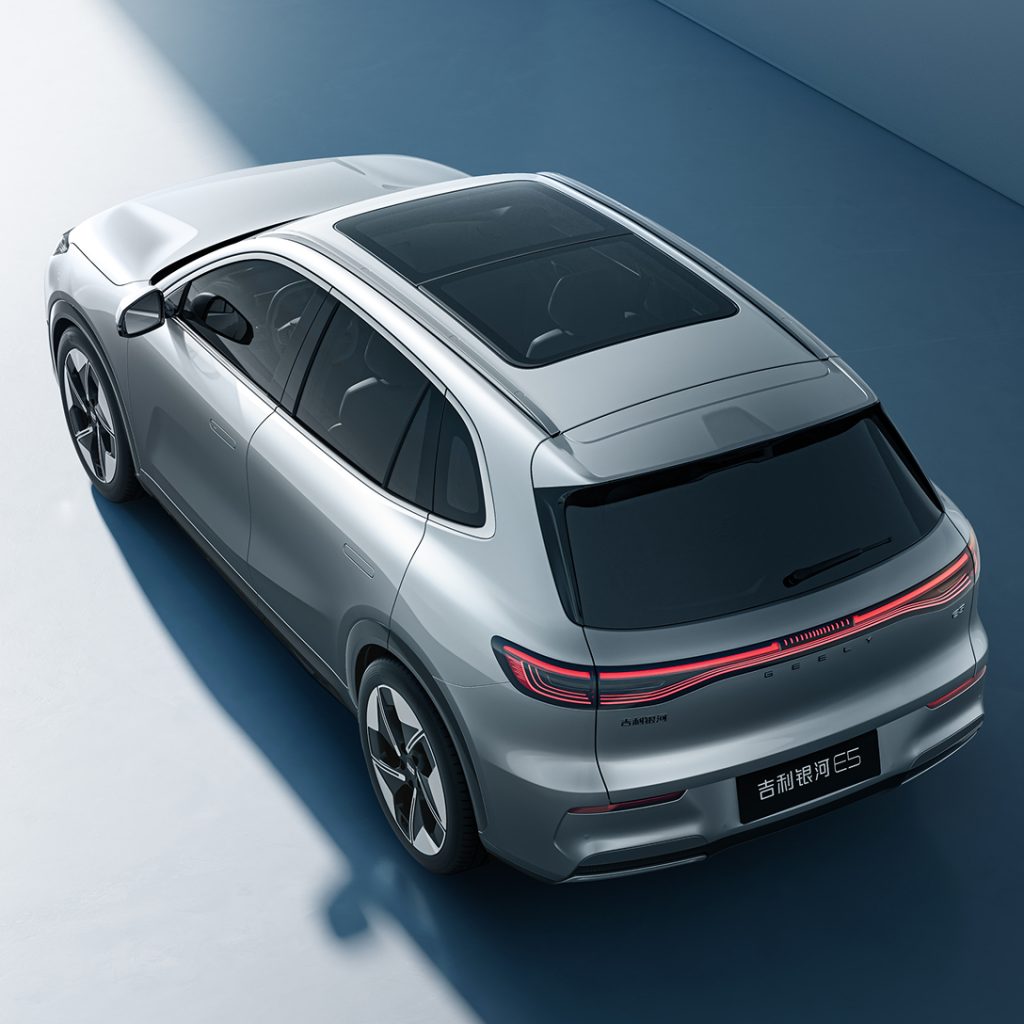
- Carried-Over Amenities: The interior retains a 15.4-inch 2.5K central touchscreen running Flyme Auto, a 10.2-inch digital instrument cluster, a head-up display, a one-touch reclining passenger seat with an integrated power ottoman, a 50W wireless charging cradle, and a panoramic glass roof with a motorized sunshade.
Rear-Wheel-Drive Conversion and Powertrain Upgrades
The most significant update occurs beneath the GEA (Global Intelligent New Energy Architecture) platform. By swapping the front-mounted 160 kW motor for a rear-mounted permanent magnet synchronous drive unit producing 245 kW (333 PS), the E5 gains a 53% increase in total power. The reconfiguration is projected to lower the 0–100 km/h acceleration time from 6.9 seconds down to roughly 5.0 seconds.
Moving the drive motor to the rear axle also clears the front engine compartment, allowing Geely to package a deep front luggage compartment (frunk). The powertrain is expected to utilize next-generation Aegis Short Blade LFP battery cells with improved energy density to surpass the 475 km WLTP range delivered by the current 68.39 kWh pack. Operating voltage is anticipated to shift to an 800-volt standard, lifting peak DC fast-charging capacity beyond 200 kW, compared to the 115 kW peak of the outgoing model.
Driver Assistance and Malaysian Market Outlook
In domestic Chinese trim, the facelifted model incorporates Geely’s mid-tier G-Pilot H5 active driver assistance suite. Visual hardware additions include a roof-mounted forward LiDAR sensor pod, supplementary optical cameras on the front fenders, and a rearward-facing camera integrated into the roof spoiler, enabling highway and urban navigate-on-autopilot (NOA) along with automated remote park assist.
For the Malaysian market, the introduction of this facelift to the Proton e.MAS 7 is unlikely in the immediate term. Local assembly (CKD) of the e.MAS 7 commenced earlier this year at Proton’s dedicated EV facility in Tanjong Malim alongside the recent debut of the range-topping Premium Plus variant, indicating that the domestic model line will retain its current front-wheel-drive architecture before considering future generational platform updates.