 Zakirin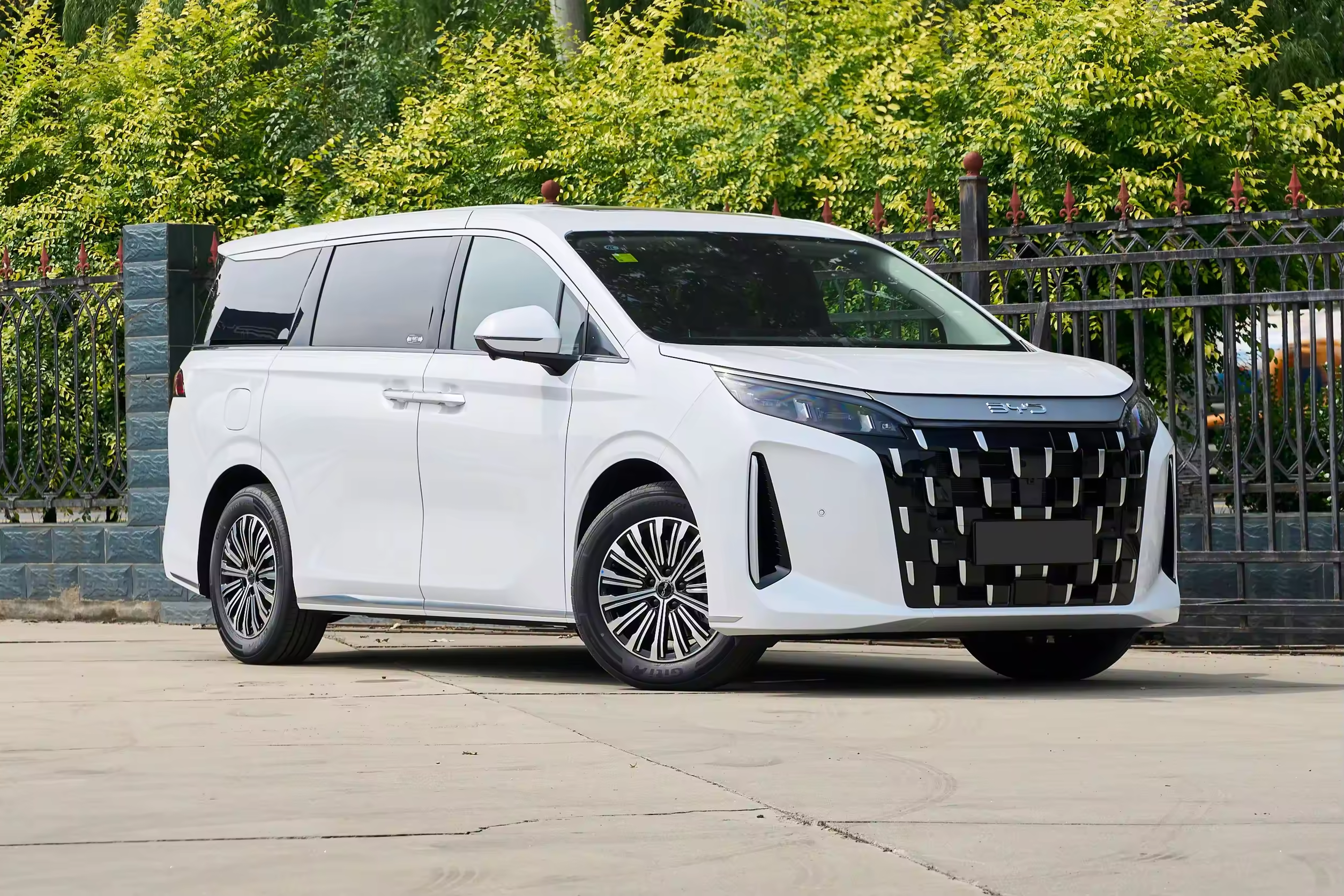
BYD is expanding its footprint in the electrified people-mover segment, officially confirming the release of the M9 plug-in hybrid electric vehicle (PHEV) for right-hand-drive markets, starting with Australia. Known domestically in China as the Xia, the M9 is strategically positioned as a more accessible alternative to the luxury-tier Denza D9. Unlike its larger sibling, which prioritises a battery-electric architecture in some markets, the M9 relies entirely on a plug-in hybrid powertrain to balance zero-emission urban driving with extended cross-country capabilities. With Australian showrooms set to receive the model in the fourth quarter of the year, industry observers speculate that a Malaysian launch could follow closely, adding another contender to the region’s increasingly competitive multipurpose vehicle (MPV) market.
Key Points
- The BYD M9 features a fifth-generation Dual Mode Intelligent plug-in hybrid powertrain capable of delivering up to 145 kilometres of pure electric range and a combined 850 kilometres.
- Australian buyers will initially receive the Premium seven-seater variant equipped with second-row captain’s chairs, while an eight-seater Dynamic trim is slated for a later release.
- A potential launch in Malaysia would likely be as a Completely Built-Up import, positioning it as a premium offering in the local automotive market.
Powertrain Specifications and Efficiency
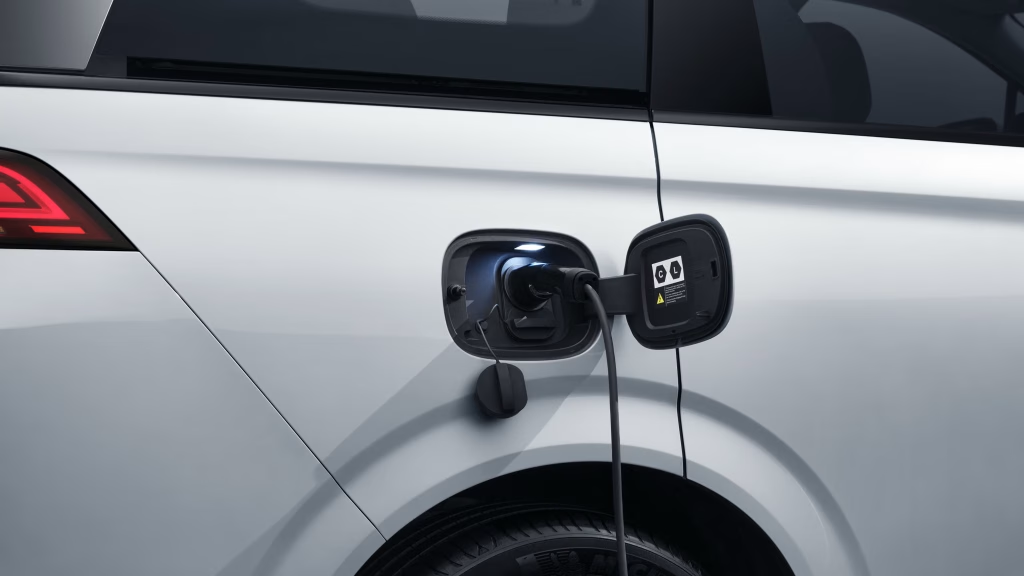
At the core of the BYD M9 is the automaker’s fifth-generation Dual Mode Intelligent (DM-i) plug-in hybrid system. This setup pairs a 1.5-litre turbocharged four-cylinder internal combustion engine with a front-mounted electric motor. Rather than functioning purely as an electric vehicle, the DM-i architecture relies on the combustion engine primarily as a generator to feed the electric motor, while also being capable of driving the wheels directly under certain high-load conditions. The strategic choice of a PHEV powertrain over a pure electric setup mitigates range anxiety, making it suitable for long-distance regional travel, such as frequent interstate journeys on Malaysia’s North-South Expressway.
Although BYD has yet to release final performance figures for export markets, the powertrain specifications are expected to mirror those of the Chinese domestic equivalent. The front electric motor provides the bulk of the propulsion, supported by the petrol engine for sustained performance and extended range. The M9 offers distinct battery configurations depending on the trim level, utilising BYD’s proprietary lithium iron phosphate (LFP) Blade battery technology.
The powertrain and battery specifications expected for the M9 are detailed below:
- Combustion Engine: 1.5-litre turbocharged four-cylinder (156 PS, 225 Nm of torque)
- Electric Motor: Front-mounted (272 PS, 315 Nm of torque)
- Dynamic Trim Battery: 20.39 kWh Blade LFP unit
- Premium Trim Battery: 36.6 kWh Blade LFP unit
- Maximum Electric Range: Up to 145 kilometres (WLTP cycle)
- Total Combined Range: Up to 850 kilometres
When it comes to charging infrastructure compatibility, the M9 supports both alternating current (AC) and direct current (DC) charging protocols. AC charging is anticipated to be standard at 7 kW. For rapid charging, the DC input varies by battery size, with the Dynamic trim accepting up to 41 kW and the Premium trim accommodating up to 73 kW. Furthermore, the vehicle incorporates a vehicle-to-load (V2L) function, allowing owners to power external appliances, which provides emergency backup power or supports outdoor activities.
Dimensions and Exterior Design
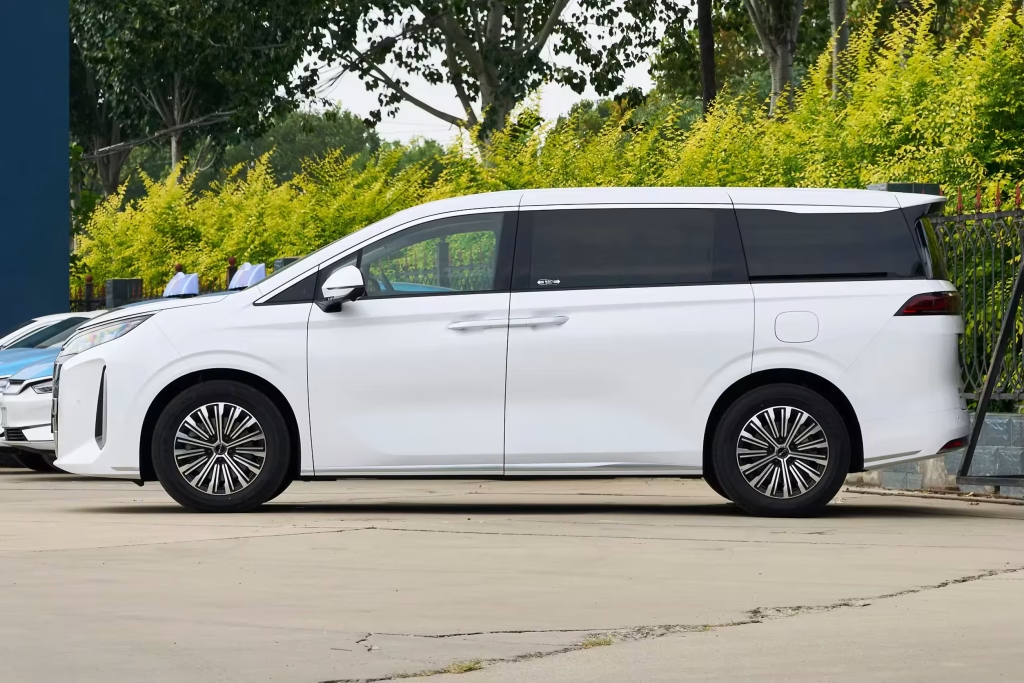
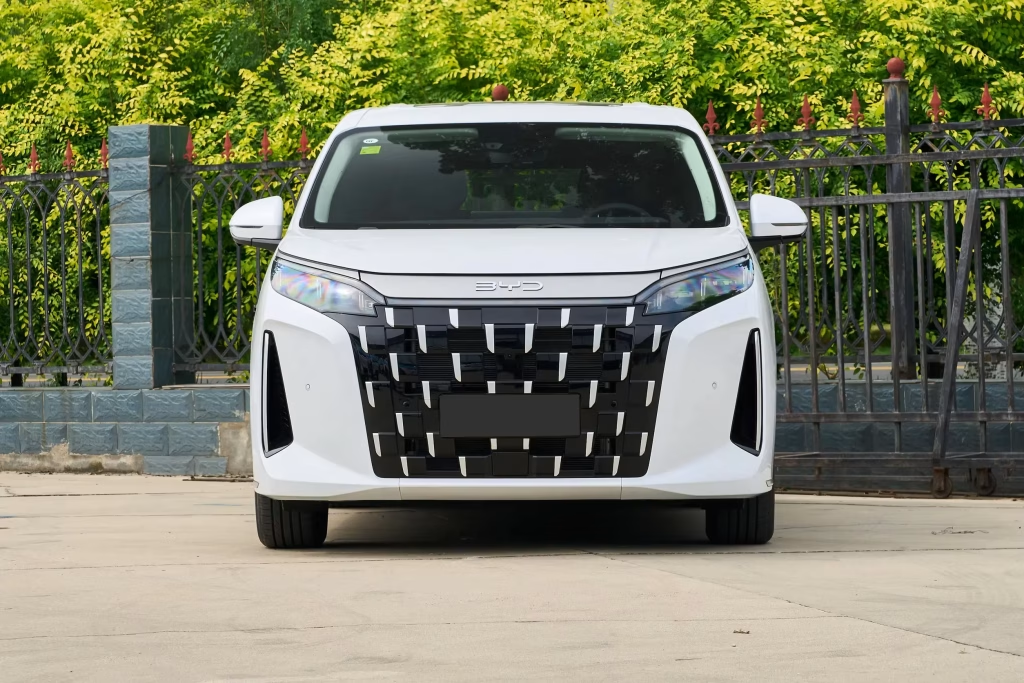
While it occupies a position below the Denza D9 in BYD’s growing MPV hierarchy, the M9 remains a substantial vehicle with a large road presence. The exterior styling reflects a conservative aesthetic, characterised by an upright body structure and a prominent, full-height grille. The front fascia adopts BYD’s signature “Dynasty” design language, featuring the brand logo mounted on a full-width silver bar that connects a pair of slim headlights. Along the flanks, sail-like D-pillars and generous silver trimmings visually break up the vehicle’s bulk, while the rear profile is distinguished by full-width taillights displaying cascading, S-shaped lighting graphics.
To contextualise the vehicle’s footprint, it is useful to compare its dimensions directly with its larger stablemate, the Denza D9. This size differentiation ensures the M9 is slightly more manageable in tight urban environments, such as the dense parking structures commonly found in Kuala Lumpur, without sacrificing interior volume.
The physical dimensions of the BYD M9 are outlined as follows:
| Dimension | BYD M9 | Difference vs. Denza D9 |
| Length | 5,145 mm | 105 mm shorter |
| Width | 1,970 mm | 10 mm wider |
| Height | 1,805 mm | 115 mm lower |
| Wheelbase | 3,045 mm | 65 mm shorter |
Despite the slightly reduced footprint compared to the luxury-focused D9, the M9 is still equipped with 18-inch multi-spoke alloy wheels. While arguably undersized given the vehicle’s large profile, they match the wheel dimensions utilised on the Denza, ensuring a uniform ride quality and standardising tyre replacement costs.
Interior Layout and Technology
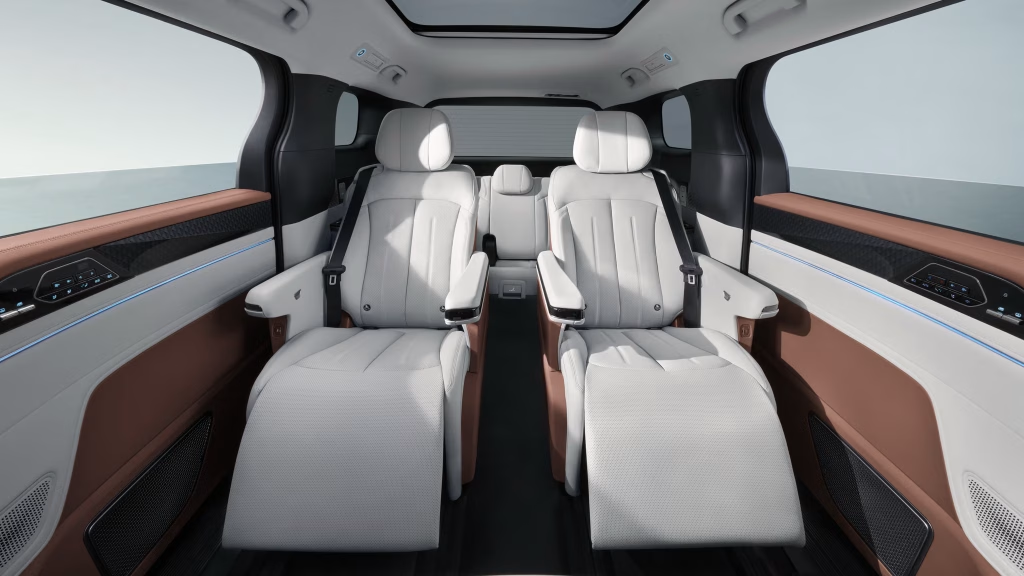
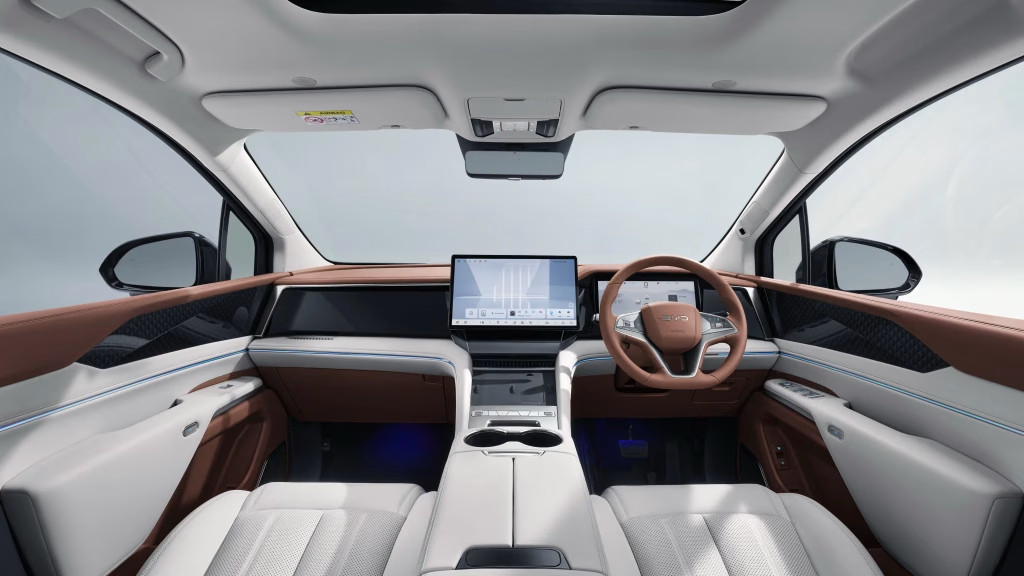
The cabin of the BYD M9 is designed to cater to both the chauffeur-driven executive market and large families requiring substantial passenger space. The dashboard architecture is imposing, dominated by a large swathe of gloss black panelling offset by silver decorative fillets. To prevent the interior from feeling overly dark or confined, BYD offers a two-tone brown and white colour scheme that lightens the cabin atmosphere.
In terms of digital integration, the M9 follows the contemporary automotive trend of centralising controls within high-definition displays. The technological suite includes multiple screens intended to assist the driver and provide access to the infotainment operating system.
The digital and technological highlights of the cabin include:
- Instrument Display: 12.3-inch digital cluster
- Infotainment System: 15.6-inch central touchscreen
- Driver Assistance: 26-inch head-up display (HUD)
- Safety Sensors: Eight ultrasonic sensors, five radar sensors, and a 360-degree camera system
- Passive Safety: Up to nine airbags distributed throughout the cabin
For the initial launch phase in Australia, the M9 will exclusively be available in the flagship seven-seater Premium configuration. This layout features captain’s chairs in the second row, providing a premium travel experience. Both the first and second rows are equipped with heating and ventilation functions. The second-row passengers benefit further from built-in ottomans and a one-touch “zero gravity” reclining mechanism. An eight-seater Dynamic variant is planned for subsequent release. Practicality is maintained even at maximum passenger capacity, with BYD claiming 470 litres of boot space when all seats are deployed.
Market Availability and Malaysian Prospects
The debut of the M9 in Australia during the fourth quarter of 2026 marks a critical step in BYD’s strategy to capture the multi-tiered MPV segment. Combined with the Europe-only D9 DM-i and the Indonesian-market M6 DM, BYD has positioned a plug-in hybrid MPV across nearly every demographic and pricing sector globally.
For the Malaysian automotive market, the eventual arrival of the M9 remains highly probable. Local consumers have shown a strong and consistent appetite for large, premium people movers, a segment historically dominated by grey-import Toyota Alphard and Vellfire models that frequently trade above RM300,000, alongside official offerings like the Kia Carnival and Nissan Serena. The arrival of modern electrified alternatives indicates a shifting landscape where buyers are increasingly open to new propulsion technologies.
Industry analysts suggest that prospective Malaysian buyers should anticipate a premium price tag. There are currently no indications that BYD plans to establish completely knocked-down (CKD) local assembly operations for the M9 in Malaysia. Consequently, the vehicle would enter the market as a completely built-up (CBU) import. Under current local tax structures, imported hybrid vehicles do not benefit from the same aggressive excise duty exemptions granted to pure battery electric vehicles. Therefore, while the M9 sits below the Denza D9 in the global hierarchy, its positioning in Malaysia will reflect the standard duties applied to imported internal combustion-equipped vehicles.