 Zakirin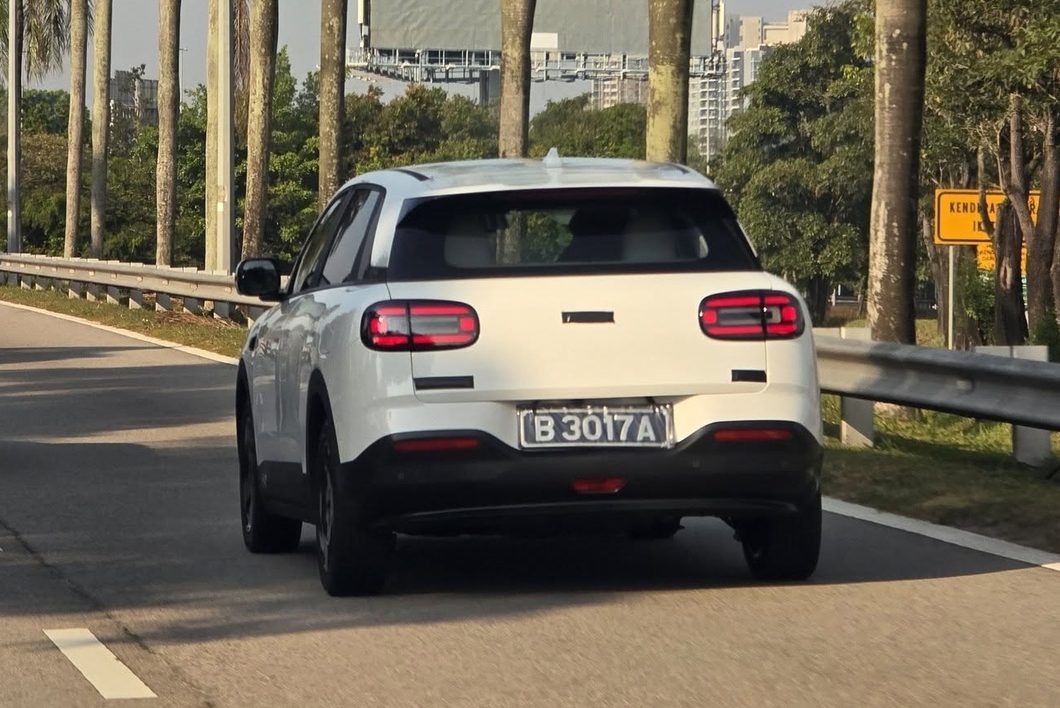
The Malaysian affordable electric vehicle segment is heating up. A right-hand-drive (RHD) test mule of the Chery Q EV (known in China as the third-generation Chery QQ3 EV) was recently spotted undergoing road trials on local roads.
With camouflaged badges and commercial trade plates, this sighting suggests that Chery Malaysia is actively evaluating or homologating the compact electric hatchback for an imminent local debut.
1. Exterior & Design: Not Just a Micro Car
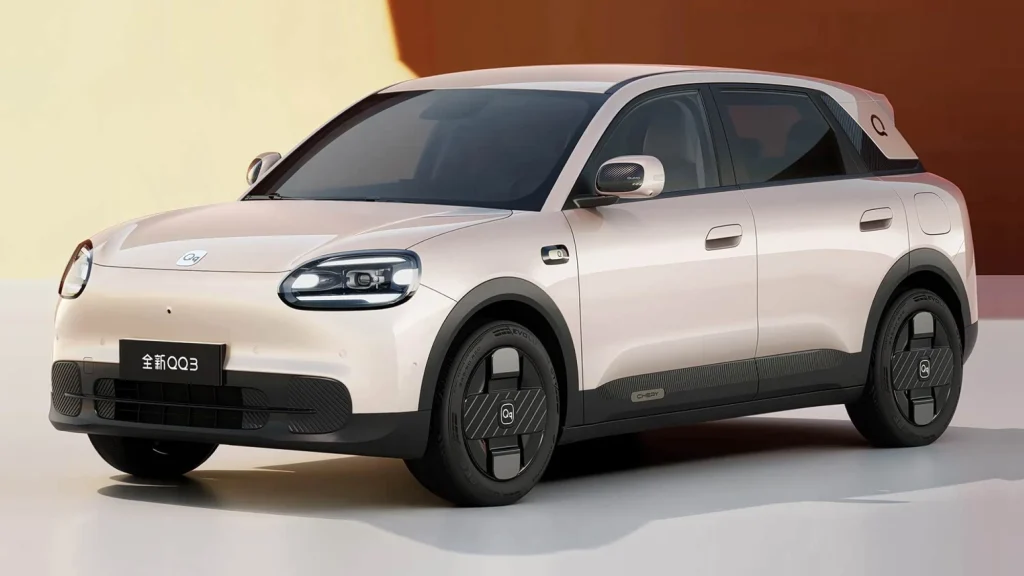
Despite carrying the lineage of the iconic “QQ” city car badge, the Chery Q is considerably larger than older micro-EVs.It adopts a modern, rounded, crossover-like silhouette with clean surfaces, aerodynamic alloy wheels, and sleek LED lighting.
- Segment Size: B-segment footprint comparable to compact crossovers like the Toyota Yaris Cross.
- Dimensions:
- Length:4,195 mm
- Width:1,811 mm
- Height:1,573 mm
- Wheelbase:2,700 mm
The expansive 2,700 mm wheelbase is built on a dedicated EV skateboard platform, pushing all four wheels to the corners to maximize cabin room.
2. Interior Tech & Practicality
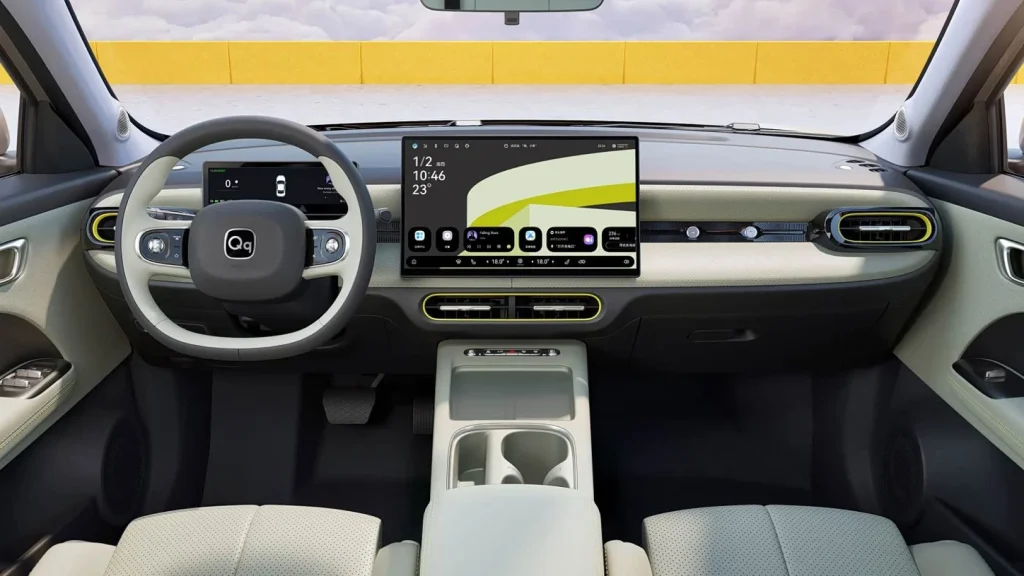
Inside, the Chery Q departs from basic budget-car aesthetics, opting for a clean, minimalist layout with tech-forward features seen in Chery’s latest vehicle lineups:
- Displays:An 8.0 to 8.8-inch digital driver cluster paired with a floating 12.8 to 15.6-inch infotainment screen equipped with Apple CarPlay and Android Auto support.
- Interior Packaging:A column-mounted electronic gear shifter frees up center console real estate for dual cup holders, wireless phone charging pads, and floating lower trays.
- Storage Space:
- Boot Capacity:375 litres (expandable up to 1,450 litres with rear seats folded).
- Front Trunk (Frunk):70 litres.
- Safety & ADAS:Overseas top-spec trims feature Chery’s Falcon 500 ADAS suite powered by Horizon Robotics hardware, enabling Level 2 semi-autonomous driving features such as Adaptive Cruise Control (ACC), Lane Keep Assist (LKA), and Autonomous Emergency Braking (AEB).
3. Specifications (Regional Benchmark)
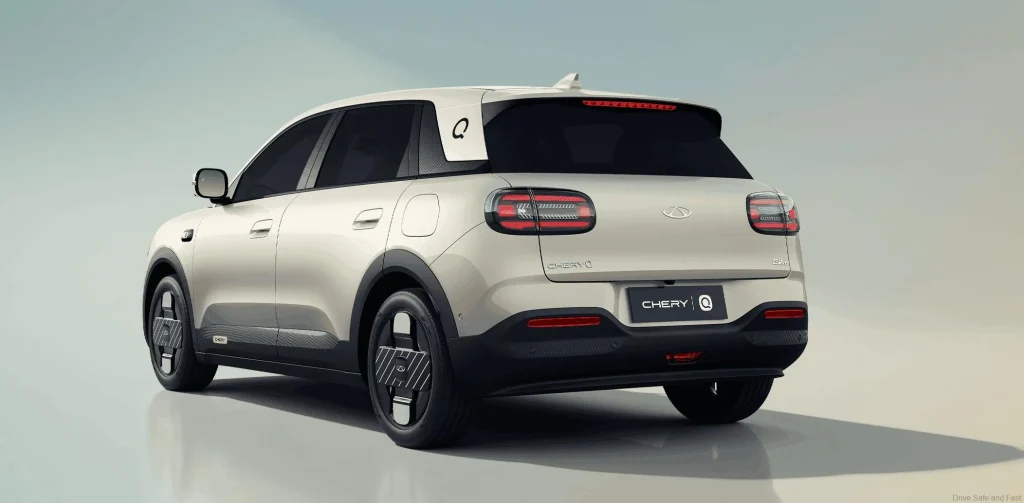
Based on models launched in Thailand, Indonesia, and China, the ASEAN-spec Chery Q uses a rear-wheel-drive (RWD) single-motor setup:
| Specification | Standard Trim (China Baseline) | Long Range / ASEAN Spec (Thailand / Indo) |
| Drivetrain | Single Motor (Rear-Wheel Drive) | Single Motor (Rear-Wheel Drive) |
| Power Output | 79 PS (58 kW) / 90 Nm | 122 PS (90 kW) / 115 Nm |
| Battery Type | LFP (Lithium Iron Phosphate) | LFP (Gotion High-Tech) |
| Battery Capacity | 29.5 kWh | 41.3 kWh – 42.7 kWh |
| Claimed Range | 310 km (CLTC) | 400 km (NEDC) / ~340 km (WLTP) |
| DC Fast Charging | Up to 85 kW (30–80% in ~16 mins) | Up to 85 kW (30–80% in ~16 mins) |
| AC Charging | 6.6 kW | 6.6 kW |
| V2L Functionality | 3.3 kW | 6.6 kW |
| Top Speed | 120 km/h | 139 km/h |
Key Highlight: Its 85 kW DC fast-charging capability allows a 30% to 80% charge in just 16 minutes, significantly quicker than many other entry-level EVs that hover between 30–50 kW DC charging caps.
4. Key Competitors in Malaysia
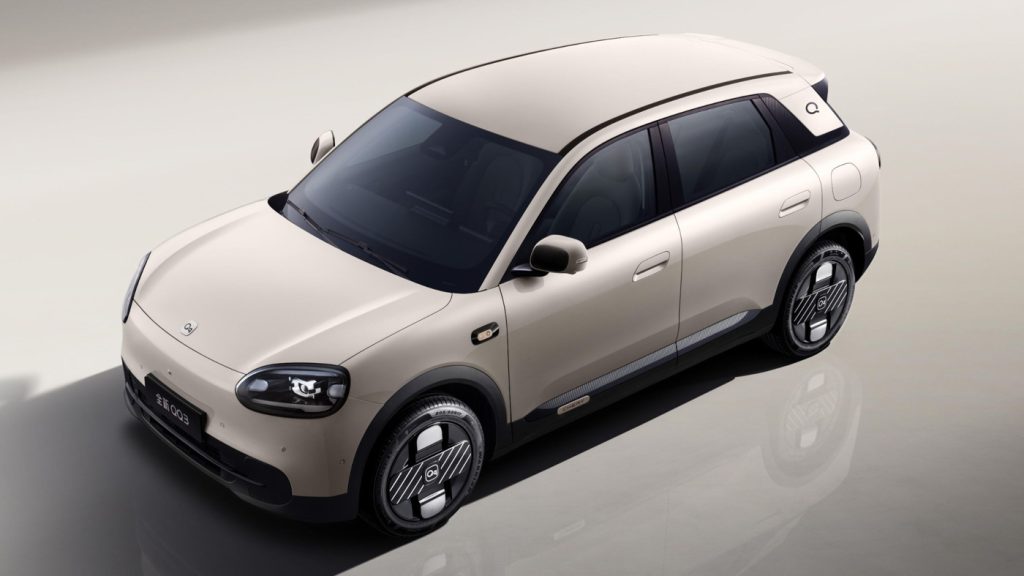
If brought to the Malaysian market, the Chery Q will fight for market share in the sub-RM100k urban EV segment against several strong contenders:
+-------------------------------------------------------------------+
|                     CHERY Q EV COMPETITIVE SET                    |
+---------------------------------+---------------------------------+
| Proton e.MAS 5                  | Wuling Bingo                    |
| - Key domestic brand competitor | - Retro-styled city hatch       |
| - 30 kWh / 40.16 kWh batteries  | - 31.9 kWh / 37.9 kWh pack      |
| - Up to 71 kW DC charging       | - 50 kW DC charging             |
+---------------------------------+---------------------------------+
| BYD Dolphin / Atto 1            | Neta V-II                       |
| - Strong brand equity in MY     | - Budget alternative            |
| - 44.9 kWh Blade Battery        | - 36.1 kWh battery              |
| - Premium tech ecosystem        | - Simple, no-frills layout      |
+---------------------------------+---------------------------------+
(Proton e.MAS 5, Wuling Bingo, BYD Dolphin, Neta V-II)
Chery Q vs. Proton e.MAS 5
The most direct rivalry will be with the upcoming Proton e.MAS 5. While both share an identical 2,700 mm wheelbase, the Chery Q offers slightly higher horsepower (122 PS vs. 116 PS), a faster DC charging rate (85 kW vs. 71 kW), and a substantially more capable 6.6 kW V2L external power output compared to Proton’s 3.3 kW.
5. Expected Price and Launch Strategy
[ Thailand Price Range ] --------> THB 449,900 – 519,900 (~RM 56k – RM 64k)
[ Malaysia CBU Policy ] ---------> Minimum threshold for sub-RM100k entry
[ Viable Strategy ] -------------> Local Assembly (CKD) at Chery Malaysia Plant
[ Estimated MY Selling Price ] --> RM 75,000 – RM 89,000
(Thailand Price Range, Malaysia CBU Policy, Viable Strategy)
- The CKD Necessity:Under Malaysia’s vehicle framework, fully imported (CBU) electric vehicles face a floor-price restriction aimed at shielding domestic development.To sell the Chery Q at an accessible price point below RM 100,000, Chery Malaysia must assemble it locally (CKD)—likely through their manufacturing footprint in Malaysia (such as the Chery Smart Auto facility in Selangor or Inokom Kulim).
- Price Expectation:Given its pricing across Thailand (starting around RM 56,000 equivalent) and Indonesia, a localized CKD version in Malaysia is projected to sit comfortably between RM 75,000 and RM 89,000, positioning it as one of the most accessible family-sized electric runabouts in the country.