 Zakirin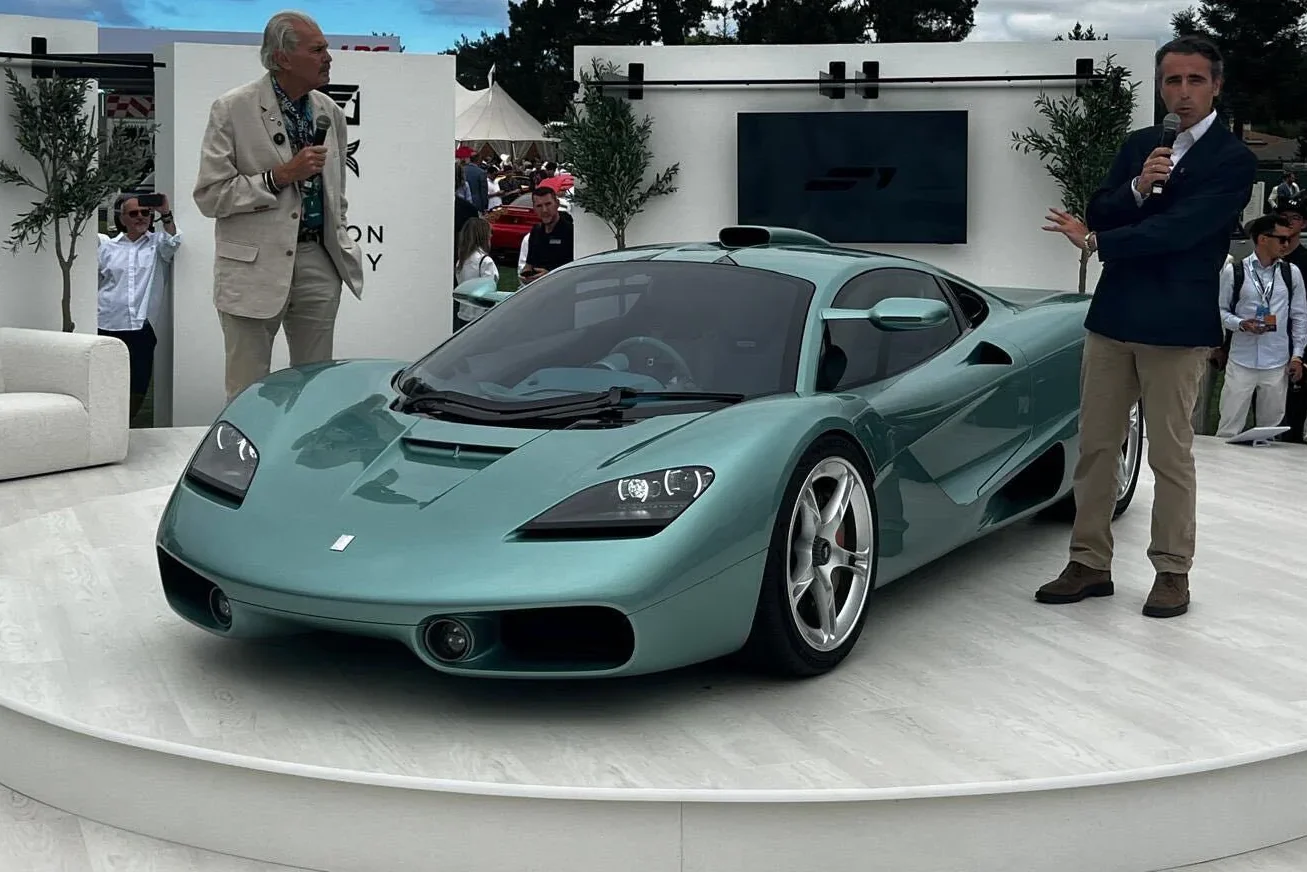
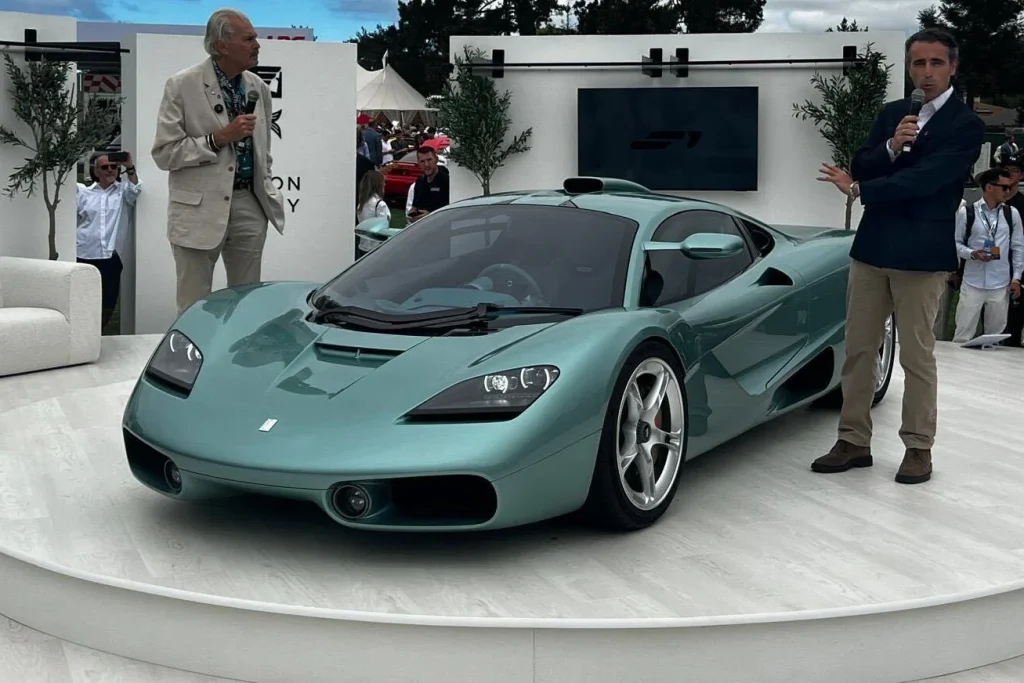
If there is one place on earth where automotive excess, engineering purity, and staggering wealth consistently collide, it is The Quail, A Motorsports Gathering. As the Californian sun beat down on Monterey Car Week 2026, the automotive world once again gathered to witness the latest marvels from the industry’s most revered minds. Among the glittering hypercars and priceless classics, Gordon Murray Special Vehicles (GMSV) pulled the covers off its latest creation: the S1.
Touted as a touring-focused sibling to the extreme, track-only S1 LM that debuted at the same event a year prior, the S1 is a celebration of analog driving.It boasts a naturally aspirated Cosworth V12, a six-speed manual gearbox, and an unmistakable central driving position. It is, by every measurable metric, a masterpiece of modern engineering. Yet, as the silk dropped and the applause echoed across the manicured lawns, a quiet but persistent question lingered in the minds of some enthusiasts: Is Gordon Murray just playing the same brilliant chord over and over again?
From Le Mans Fantasy to Long-Distance Reality

To understand the S1, we must first look back at the car that birthed it. At Monterey Car Week 2025, GMSV introduced the S1 LM—a wildly aggressive track weapon limited to just five units. It was built to celebrate the 30th anniversary of Professor Gordon Murray’s landmark 1995 win at the 24 Hours of Le Mans with the McLaren F1 GTR. The reception was nothing short of staggering, highlighted by one of the five allocations selling at auction for an eye-watering $20.63 million. The demand was clear, but a five-car run leaves too many billionaires empty-handed.
Enter the Gordon Murray Special Vehicles S1. Rather than simply stripping the racing decals off the LM, Murray’s team approached the project with fresh eyes.The goal was to pivot from maximum downforce and track times to long-distance touring and real-world drivability.The S1 retains the carbon-fiber monocoque and fundamental proportions of its track-focused sibling, but it is planned for a much larger production run of 64 units. It’s a car designed not just to sit in a climate-controlled garage, but to be driven across continents—assuming its owners are brave enough to put miles on a seven-figure piece of art.
The Heart of the Machine: A V12 Swan Song
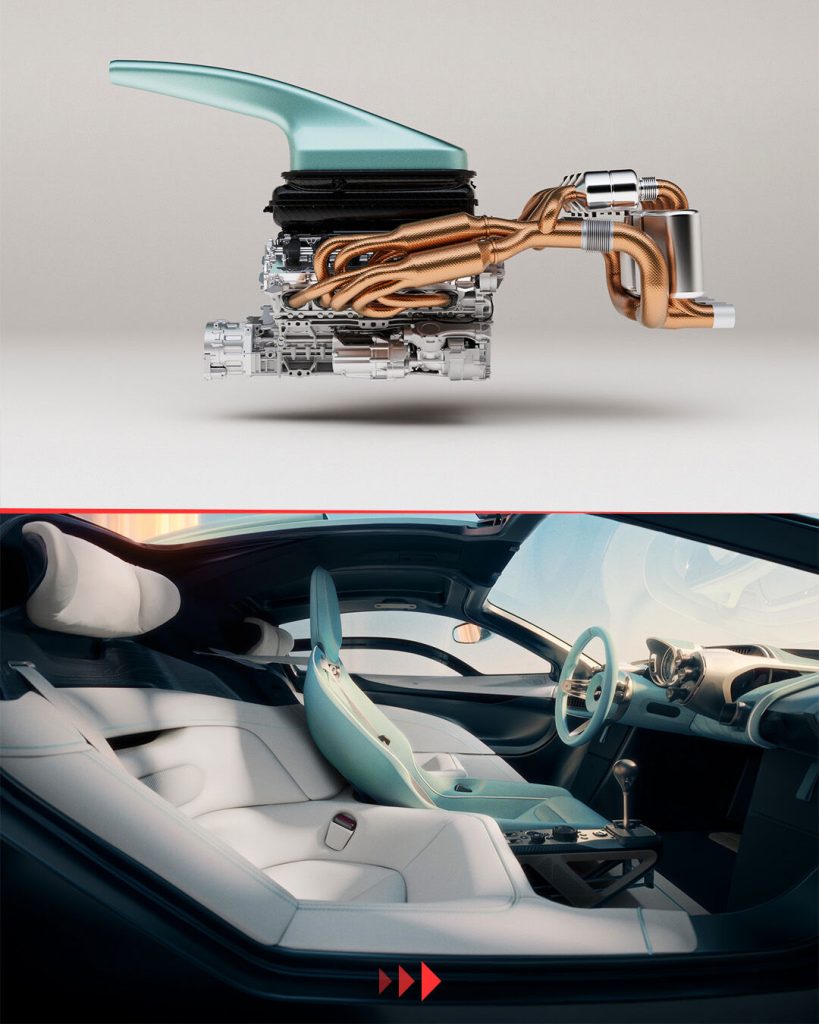
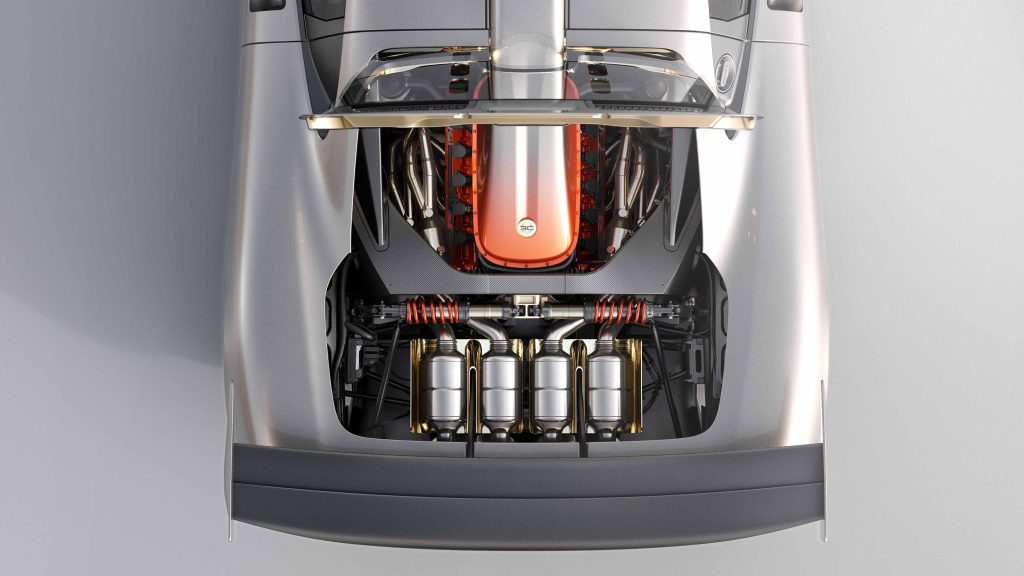
In an era where the automotive industry is hurtling toward electrification and heavy hybrid systems, Gordon Murray continues to fly the flag for the naturally aspirated internal combustion engine. At the heart of the S1 sits a bespoke 4.2-liter Cosworth V12 engine.It is a mechanical symphony that produces 690 PS (approximately 681 horsepower) without relying on a single turbocharger or electric motor.
But the headline figure isn’t just the horsepower; it’s where that power lives. The S1’s engine redlines at an astonishing 12,100 rpm.To achieve this, the engine is packed with competition-grade components, including titanium connecting rods, titanium valves, lightweight silicon-carbide-coated pistons, and a dry-sump lubrication system.
Perhaps the most impressive feat of engineering is how Cosworth and Murray have tuned this engine for the road. High-revving engines typically suffer from a lack of low-end grunt, but GMSV claims that the S1 produces roughly 500 Nm (369 lb-ft) of torque at 7,000 rpm, with a remarkable 80 percent of that torque available from just 2,500 rpm. This makes the S1 far more tractable in everyday traffic than a peaky track car.
Power is sent exclusively to the rear wheels through a six-speed manual transmission.Recognizing the S1’s grand touring brief, engineers revised the shifter cable routing for a more direct feel and equipped the gearbox with a taller, touring-oriented sixth gear. This overdrive gear allows the engine to settle down during highway cruising, transforming the S1 from a screaming track monster into a refined continent-crosser.
Redefining the Silhouette

Visually, the S1 and the S1 LM look further apart than their shared lineage might suggest.While the carbon-fiber tub remains the same, every single exterior body panel has been redesigned for the road-going S1.
Gone is the colossal fixed rear wing, the extended front splitter, and the deep side skirts that defined the S1 LM.In their place, GMSV has introduced much cleaner, more elegant surfaces integrated with a sophisticated active rear aerodynamic system.Murray’s objective was clear: prioritize mechanical grip, chassis balance, and long-distance usability over the pursuit of maximum aerodynamic downforce.
To make the car livable in the real world, the suspension has been fundamentally reworked. The S1 features relaxed dampers and a ride height that has been raised by 10 millimeters (about four-tenths of an inch) compared to the LM. It might sound like a minuscule change, but in the realm of supercars, that extra clearance is the difference between gracefully navigating a driveway entrance and suffering a catastrophically expensive scrape.
A Familiar Cabin
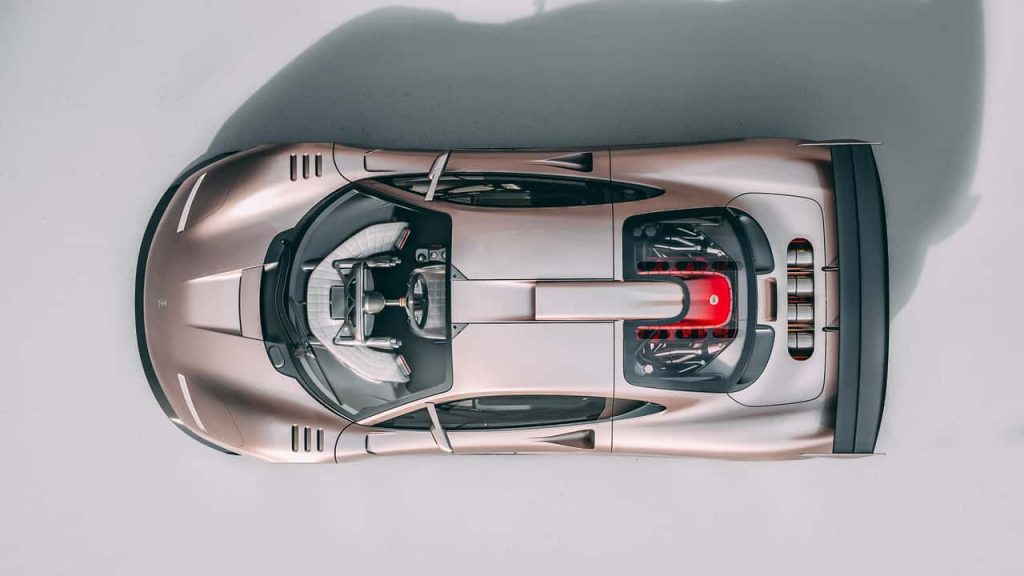
Open the dramatic scissor doors, and you are greeted by an interior that is quintessentially Gordon Murray. The defining feature of the S1—much like the McLaren F1 and the recent GMA T.50—is its three-seat layout, with the driver positioned dead center.
This central driving position is often hailed as the ultimate setup for driver engagement, offering perfect symmetry and unparalleled visibility. The driver is flanked by two passenger seats, slightly set back. Unlike the stripped-out LM, the S1’s cabin leans heavily into luxury.It features a minimalist aesthetic but utilizes high-end leathers, premium fabrics, and modern digital displays, ensuring that the occupants remain comfortable during long-distance journeys.
The “But…”: Are We Witnessing F1 Fatigue?
There is no denying that the Gordon Murray Special Vehicles S1 is a triumph of automotive engineering. It is light, analog, and powered by one of the greatest engines ever conceived. However, as the automotive community dissected the car following its Monterey debut, a recurring critique began to surface across enthusiast forums and social media.
The S1 relies on a naturally aspirated V12, a manual transmission, a central driving position, and a carbon-fiber monocoque.It features a roof-mounted air intake, gold-plated heat shielding in the engine bay, and scissor doors.If this formula sounds incredibly familiar, it’s because it is exactly the same formula that made the 1992 McLaren F1 a legend.
Critics argue that Murray has essentially been remaking the McLaren F1 for the past decade. First came the GMA T.50, which was explicitly billed as the spiritual successor to the F1, complete with the V12, manual gearbox, and three-seat layout. Then came the slightly more accessible T.33 (which swapped to a two-seat layout but kept the V12 and manual). Then came the S1 LM, celebrating the F1 GTR. Now, we have the S1.
As one Reddit commenter aptly noted following the reveal, “When you are a master guitarist, but you only know 3 chords… it just feels like we are doing F1 2.0, 3.0, 4.0, with every subsequent car only leaning more and more into the original”.
This sentiment begs a fascinating question about the nature of automotive design. Is Gordon Murray suffering from a lack of new ideas, or is he simply perfecting the ultimate blueprint?
Defenders of the S1 argue that the “McLaren F1 formula” is not a gimmick; it is the definitive, mathematically correct answer to the question of how to build the ultimate driver’s car. If low weight, a central driving position, and a high-revving naturally aspirated engine yield the best driving experience, why should Murray artificially change the recipe just for the sake of being different? In a world where heavy, numb, digitally-augmented hypercars are the norm, Murray’s refusal to deviate from his analog philosophy is seen by many as an act of heroic defiance.
The Verdict
Ultimately, the Gordon Murray Special Vehicles S1 represents a spectacular refinement of a legendary concept. With only 64 units planned for production, each tailored specifically to its owner’s exact desires, the S1 is destined to be an ultra-exclusive unicorn.While official pricing has not been announced, it is guaranteed to comfortably exceed the $1 million mark, placing it firmly in the stratosphere of the ultra-wealthy.
Yes, the S1 is another verse of a song we have heard before. It doesn’t rewrite the rulebook, and it doesn’t push into uncharted technological territories. But when the song is this good—when it features a 12,100 rpm Cosworth V12, a manual gearbox, and the purest driving position in existence—perhaps we shouldn’t complain that the artist refuses to change their tune. In an industry rushing toward a silent, automated future, the S1 is a loud, mechanical, and glorious reminder of the peak of analog driving.