 Zakirin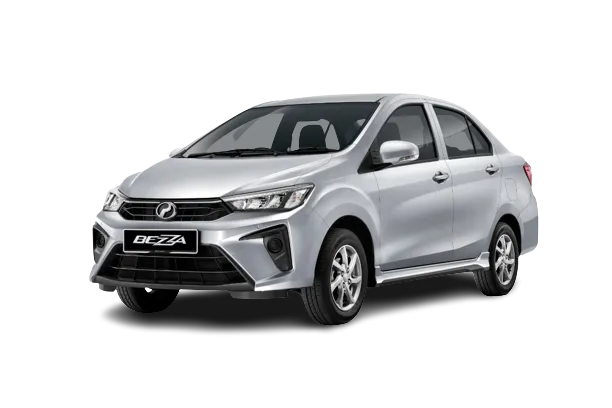
Executive Overview & Vehicle Identity
- Segment: A-Segment Entry Sedan
- Platform Architecture: Daihatsu Global A-Segment Platform
- Assembly / Origin: Rawang, Selangor, Malaysia (CKD)
- Trim Level: 1.0 G AT (Automatic Transmission Variant)
1. Powertrain & Combustion Architecture
The Bezza 1.0 G AT is powered by the naturally aspirated 1KR-VE 3-cylinder engine, utilizing an under-square combustion geometry to maximize thermal efficiency and low-end torque for urban stop-and-go driving.
- Engine Code: Toyota / Daihatsu 1KR-VE
- Cylinder Configuration: In-line 3-cylinder, transverse front-mounted
- Displacement: 998 cc (1.0 Litre)
- Bore x Stroke: 71.0 mm x 84.0 mm (Long-stroke geometry)
- Bore-to-Stroke Ratio: 0.85
- Compression Ratio: 11.5:1
- Valvetrain: Double Overhead Camshaft (DOHC), 4 valves per cylinder (12 valves total), timing chain driven with Variable Valve Timing (VVT-i) on the intake camshaft
- Fuel Delivery: Multi-Point Electronic Fuel Injection (EFI)
- Cylinder Block / Head Material: Die-cast aluminum alloy block / Aluminum alloy head
- Maximum Power Output: 50 kW (68 PS / 67 bhp) @ 6,000 RPM
- Maximum Torque Output: 91 Nm (67.1 lb-ft) @ 4,400 RPM
- Specific Power Output: 50.1 kW/L (68.1 PS/L)
- Specific Torque Output: 91.18 Nm/L
2. Transmission & Driveline Kinematics
Unlike the newer D-CVT architecture found in the DNGA-based Axia, the Bezza 1.0 G AT uses a conventional, robust 4-speed torque-converter automatic transmission.
- Transmission Type: 4-Speed Electronic Automatic Transmission (4E-AT)
- Torque Transfer: Hydraulic torque converter with lock-up clutch mechanism
- Manufacturer: Akashi-Kikai / Daihatsu Motor Company
- Drivetrain Configuration: Front-Engine, Front-Wheel Drive (FF layout)
- Gear Selector Pattern: Gated shifter layout (P-R-N-D-3-2) for manual gear retention on inclines/declines
3. Chassis, Suspension & Braking Dynamics
The chassis setup balances everyday urban road absorption with high structural rigidity to manage luggage loads over the rear axle.
| Subsystem | Engineering Specification |
| Front Suspension | Independent MacPherson Strut with coil springs, lower wishbones, and integrated stabilizer bar |
| Rear Suspension | Semi-independent Torsion Beam axle with separate coil springs and dampers |
| Front Brakes | 230 mm Ventilated discs with single-piston floating calipers |
| Rear Brakes | 180 mm Leading-trailing mechanical self-adjusting drums |
| Parking Brake | Manual cable-actuated mechanical handbrake on rear drums |
| Steering System | Column-mounted Electric Power Steering (C-EPS), rack-and-pinion |
| Turning Radius | 4.5 m (Minimum turning circle: 9.0 m curb-to-curb) |
| Wheel Fitment | 14-inch 8-spoke painted cast alloy wheels |
| Factory Tire Spec | 175/65 R14 (Bridgestone Ecopia EP150 low rolling resistance compound) |
| Spare Wheel | Full-size 14-inch steel spare wheel (175/65 R14) |
4. Dimensions, Weights & Packaging
- Overall Length: 4,170 mm
- Overall Width: 1,620 mm
- Overall Height: 1,525 mm (Unladen)
- Wheelbase: 2,455 mm
- Track Width (Front / Rear): 1,410 mm / 1,405 mm
- Kerb Weight (DIN): 880 kg (15 kg heavier than 1.0 G Manual due to 4E-AT hardware)
- Gross Vehicle Weight (GVWR): 1,320 kg
- Fuel Tank Capacity: 36 Litres
- Cargo Capacity (VDA standard): 508 Litres (Fixed rear backrest layout)
- Tandem Seating Distance: 895 mm (Front H-point to Rear H-point)
5. Electrical Architecture, ADAS & Cockpit Electronics
The 1.0 G AT delivers essential modern conveniences and mandatory safety equipment, omitting the active sensor matrix reserved for the flagship 1.3 AV.
Safety & Active Systems
- Braking Systems: Anti-lock Braking System (ABS) with Electronic Brake Distribution (EBD)
- Passive Safety: 2 SRS Airbags (Dual front driver and passenger)
- Child Safety: ISOFIX tether and lower anchor points on outer rear seats
- Parking Sensors: Dual rear parking acoustic sensors
- Security: Engine immobilizer system with central door lock remote
Cockpit & Features
- Instrument Cluster: Backlit amber analogue dials with central multi-info LCD trip computer
- Audio System: Standard 2-DIN audio unit with Bluetooth, USB input, and 2-speaker front soundstage
- Lighting System: Reflector LED headlamps with manual beam leveler, bulb-type combination tail lamps
- Mirrors: Electric side mirrors with integrated LED turn signals (manual folding)
- HVAC: Manual dial-operated climate control system
6. Benchmarking & Efficiency Metrics
Calculated Engineering Metrics
- Power-to-Weight Ratio: 77.2 PS / Metric Ton (56.8 kW / Ton)
- Weight-to-Power Ratio: 12.94 kg / PS (17.6 kg / kW)
- Torque-to-Weight Ratio: 103.4 Nm / Metric Ton
Certified Efficiency Standards
- Rated Fuel Consumption (Claimed EEV): 21.3 km/L (4.7 L/100 km)
- Theoretical Cruising Range: Approximately 766 km on a single 36 L tank
7. Comparative Segment Matrix: Entry-Level Automatic Sedans
| Engineering Parameter | Perodua Bezza 1.0 G AT | Proton Saga 1.3 Standard AT | Perodua Axia 1.0 G (Reference) |
| Engine Configuration | 1.0L 3-Cyl NA (1KR-VE) | 1.3L 4-Cyl NA (CamPro VVT) | 1.0L 3-Cyl NA (1KR-VE) |
| Power Output | 68 PS @ 6,000 RPM | 95 PS @ 5,750 RPM | 68 PS @ 6,000 RPM |
| Torque Output | 91 Nm @ 4,400 RPM | 120 Nm @ 4,000 RPM | 91 Nm @ 4,400 RPM |
| Transmission Type | 4-Speed 4E-AT | 4-Speed Torque Converter AT | Split-Gear D-CVT |
| Kerb Weight | 880 kg | 1,065 kg | 870 kg |
| Power-to-Weight | 77.2 PS / tonne | 89.2 PS / tonne | 78.1 PS / tonne |
| Luggage Capacity | 508 Litres | 420 Litres | 265 Litres |
| Safety Equipment | 2 Airbags, ABS, EBD | 2 Airbags, ABS, EBD, ESC | 2 Airbags, ABS, ESC, TC |
| Rated Consumption | 21.3 km/L (4.7L/100km) | ~15.2 km/L (6.5L/100km) | 25.3 km/L (3.95L/100km) |