 Zakirin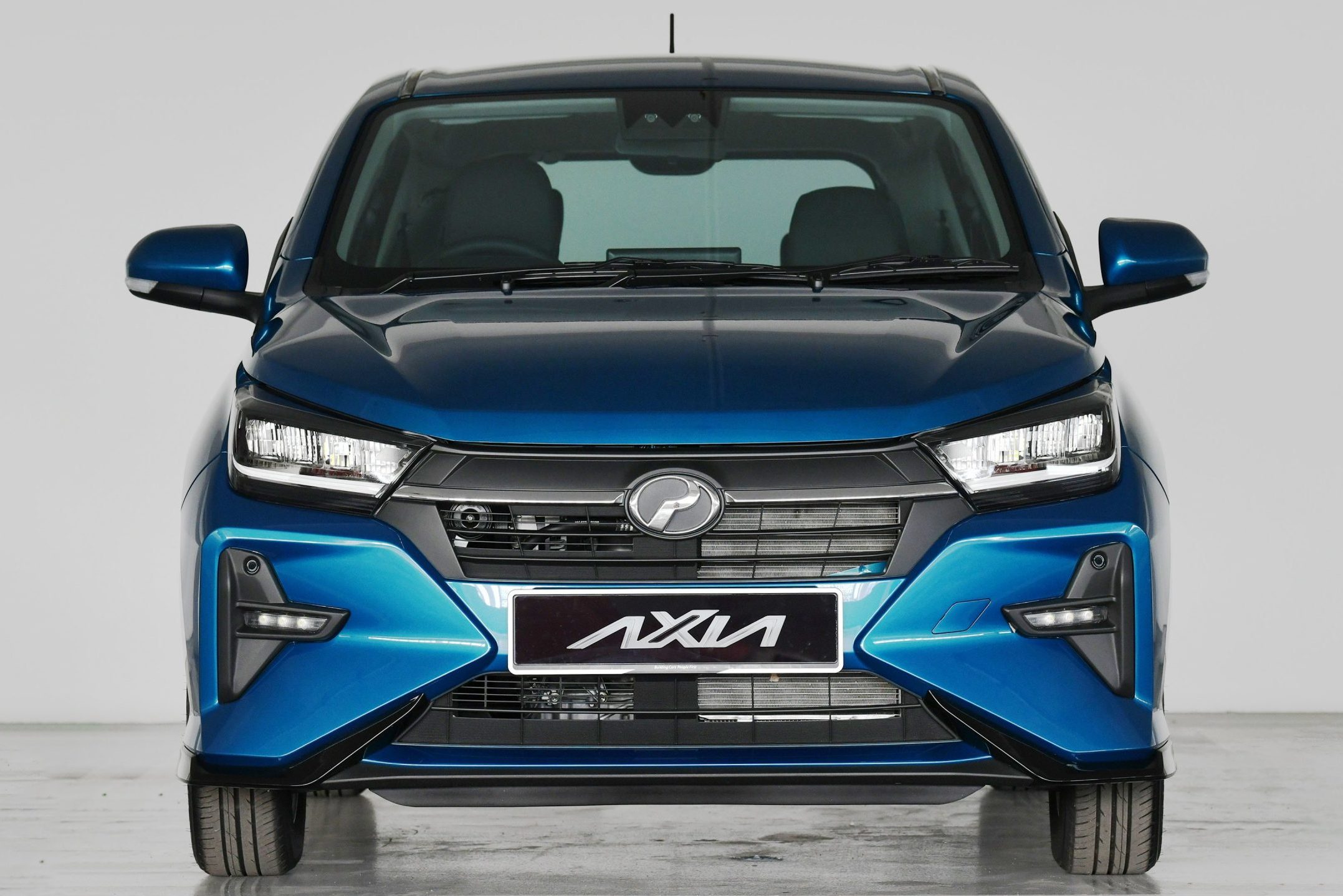
Executive Overview & Vehicle Identity
- Segment: A-Segment Hatchback (City Car)
- Platform Architecture: Daihatsu New Global Architecture (DNGA-A)
- Internal Generation Code: D74A
- Assembly / Origin: Rawang, Selangor, Malaysia (CKD)
- Trim Level: AV (Range-Topper)
1. Powertrain & Combustion Architecture
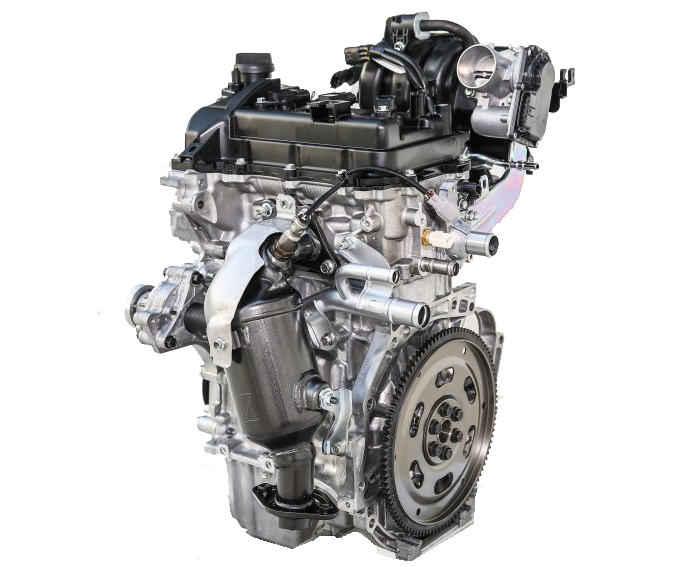
The Axia AV utilizes the naturally aspirated 1KR-VE 3-cylinder engine, engineered for high thermal efficiency and urban stop-and-go drivability.
- Engine Code: Toyota / Daihatsu 1KR-VE
- Cylinder Configuration: In-line 3-cylinder, transverse front-mounted
- Displacement: 998 cc (1.0 Litre)
- Bore × Stroke: 71.0 mm × 84.0 mm (Under-square / long-stroke geometry)
- Bore-to-Stroke Ratio: 0.85 (Optimized for low-end torque)
- Compression Ratio: 11.5:1
- Valvetrain: Double Overhead Camshaft (DOHC), 4 valves per cylinder (12 valves total), timing chain driven with Variable Valve Timing (VVT-i) on the intake camshaft
- Fuel Delivery: Multi-Point Electronic Fuel Injection (EFI)
- Cylinder Block / Head Material: Die-cast aluminum alloy block / Aluminum alloy head
- Maximum Power Output: 50 kW (68 PS / 67 bhp) @ 6,000 RPM
- Maximum Torque Output: 91 Nm (67.1 lb-ft) @ 4,400 RPM
- Specific Power Output: 50.1 kW/L (68.1 PS/L)
- Specific Torque Output: 91.18 Nm/L
2. Transmission & Driveline Kinematics
The D74A Axia AV features Daihatsu’s Dual-Mode Continuously Variable Transmission (D-CVT), which switches between a belt drive and a physical gear set.
- Transmission Type: Daihatsu D-CVT (Belt-driven CVT integrated with a planetary split-gear mechanism)
- Manufacturer: Akashi-Kikai / Daihatsu Motor Company
- Drivetrain Configuration: Front-Engine, Front-Wheel Drive (FF layout)
- Operating Logic:
- Belt Mode (Low-to-Mid Speeds): Traditional expanding/contracting pulleys provide infinitely variable ratios for smooth low-speed response.
- Gear Mode (High-Speed Cruise): At highway cruising speeds, a planetary gear set engages via a clutch pack to transfer drive mechanically, reducing friction losses and belt slip.
- Drive Mode Selector: Steering-mounted
PWR(Power) mode button (sharpens throttle response and holds higher virtual pulley ratios). - Start-Stop System: Perodua Eco Idle automatic engine stop/restart with dedicated auxiliary electrical circuit.
3. Chassis, Suspension & Braking Dynamics
Built on the DNGA-A modular platform, the chassis incorporates increased high-tensile steel content for higher torsional stiffness, sharper turn-in response, and reduced interior NVH.
| Subsystem | Engineering Specification |
| Front Suspension | Independent MacPherson Strut with coil springs, lower L-wishbones, and integrated stabilizer bar |
| Rear Suspension | Semi-independent Torsion Beam axle with integrated toe-correcting trailing arms and separate coil springs/dampers |
| Front Brakes | 230 mm Ventilated discs with single-piston floating calipers |
| Rear Brakes | 180 mm Leading-trailing mechanical self-adjusting drums |
| Parking Brake | Manual cable-actuated mechanical handbrake on rear drums |
| Steering System | Column-mounted Electric Power Steering (C-EPS), speed-sensitive rack-and-pinion |
| Turning Radius | 4.5 m (Minimum turning circle: 9.0 m curb-to-curb) |
| Steering Adjustability | Manual tilt-adjustable steering column |
| Wheel Fitment | 14-inch × 5.0J 8-spoke painted cast alloy wheels |
| Factory Tire Spec | 175/65 R14 82H (Toyo Proxes CR1 low rolling resistance compound) |
| Spare Wheel | Full-size 14-inch steel spare wheel (175/65 R14) |
4. Dimensions, Weights & Packaging
- Overall Length: 3,760 mm (+115 mm over 1st-generation Axia)
- Overall Width: 1,665 mm (+45 mm over 1st-generation Axia)
- Overall Height: 1,505 mm (Unladen)
- Wheelbase: 2,525 mm (+70 mm over 1st-generation Axia)
- Track Width (Front / Rear): 1,465 mm / 1,460 mm
- Ground Clearance: 150 mm
- Kerb Weight (DIN): 890 kg (AV Trim)
- Gross Vehicle Weight (GVWR): 1,400 kg
- Fuel Tank Capacity: 36 Litres
- Cargo Volume (VDA Standard): 265 Litres (Rear seats up, loaded to parcel shelf)
- Tandem Seating Distance: 910 mm (Front H-point to Rear H-point)
5. Electrical Architecture, ADAS & Cockpit Electronics
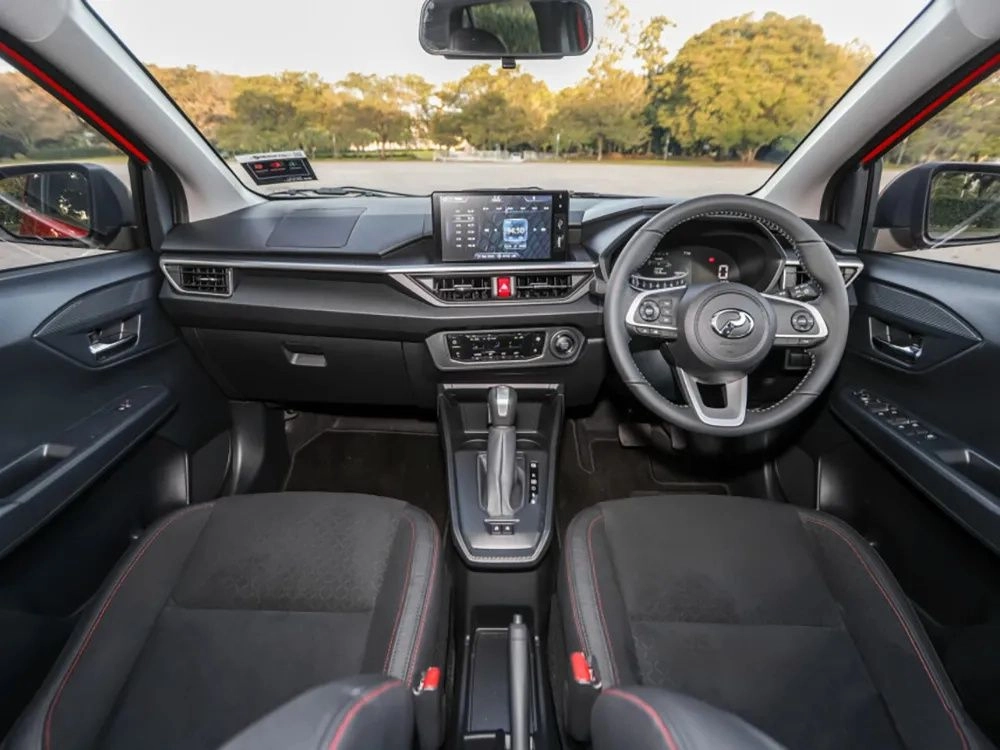
The Axia AV features the complete Perodua Smart Drive Assist (PSDA / ASA 3.0) active safety suite, utilizing a dual stereo optical camera setup and rear radar transceivers.
Sensor Hardware & ADAS Matrix
- Primary Optical Sensor: Roof-mounted, forward-facing Dual Stereo Camera suite
- Secondary Radar Sensors: 24 GHz Rear corner radar transceivers inside the rear bumper corners
- Autonomous Emergency Braking (AEB / Pre-Collision Braking): Active between 4 km/h – 120 km/h for vehicles; 4 km/h – 60 km/h for pedestrians
- Pre-Collision Warning (PCW): Forward collision audible and visual alert
- Pedal Misoperation Control (PMC): Front-facing throttle suppression against obstacles
- Front Departure Alert (FDA): Alerts when the vehicle ahead moves off by more than 3 metres
- Lane Departure Warning (LDW) & Lane Departure Prevention (LDP): Optical lane detection with electric steering corrective nudge
- Blind Spot Monitor (BSM) & Rear Cross Traffic Alert (RCTA): Optical wing mirror indicators with audible chime
- Auto High Beam (AHB): Automatic high/low beam switching for oncoming traffic
- Passive Safety: 6 SRS Airbags (Dual front, front-seat side thorax, full-length curtain airbags); ISOFIX anchors on outer rear seats
Cockpit & Connectivity
- Instrument Cluster: 7.0-inch TFT digital Multi-Info Display (MID) with 4 customizable visual themes
- Infotainment Head Unit: 9.0-inch capacitive touchscreen with Smart Link screen mirroring, HDMI input, Bluetooth 5.0, and USB connectivity
- Audio System: 4-speaker setup (front door woofers, rear door wide-band transducers)
- Climate Controls: Digital HVAC interface with dual-slot customizable memory presets
- Exterior Lighting: Multi-reflector LED headlamps with manual leveling and LED Daytime Running Lights (DRLs)
6. Benchmarking & Efficiency Metrics
Calculated Engineering Metrics
- Power-to-Weight Ratio: 76.4 PS / Metric Ton (56.2 kW / Ton)
- Weight-to-Power Ratio: 13.08 kg / PS (17.8 kg / kW)
- Torque-to-Weight Ratio: 102.25 Nm / Metric Ton
Certified Efficiency Standards
- Rated Fuel Consumption (MDC Cycle): 27.4 km/L (3.65 L/100 km) with Eco Idle enabled
- Rated Fuel Consumption (Non-Eco Idle): 25.3 km/L (3.95 L/100 km)
- Theoretical Cruising Range: Approximately 986 km on a full 36 L fuel tank
7. Comparative Segment Matrix: A-Segment Rivals
| Engineering Parameter | Perodua Axia 1.0 AV (D74A) | Proton Saga 1.3 Premium | Hyundai Grand i10 (Reference) |
| Engine Configuration | 1.0L 3-Cyl NA (1KR-VE) | 1.3L 4-Cyl NA (CamPro VVT) | 1.2L 4-Cyl NA (Kappa II) |
| Power Output | 68 PS @ 6,000 RPM | 95 PS @ 5,750 RPM | 83 PS @ 6,000 RPM |
| Torque Output | 91 Nm @ 4,400 RPM | 120 Nm @ 4,000 RPM | 114 Nm @ 4,000 RPM |
| Transmission Type | Split-Gear D-CVT | 4-Speed Torque Converter AT | 5-Speed AMT / Manual |
| Kerb Weight | 890 kg | 1,065 kg | 935 kg |
| Power-to-Weight | 76.4 PS / tonne | 89.2 PS / tonne | 88.7 PS / tonne |
| ADAS Safety Suite | Stereo Camera + Radar (AEB, LDP, BSM, RCTA) | Passive Safety Only (ESC / TCS) | Dual Camera (FCA, LKA) |
| Airbag Count | 6 Airbags | 2 Airbags | 6 Airbags |
| Rated Consumption | 27.4 km/L (MDC) | ~14.9 km/L | ~18.5 km/L |