 Zakirin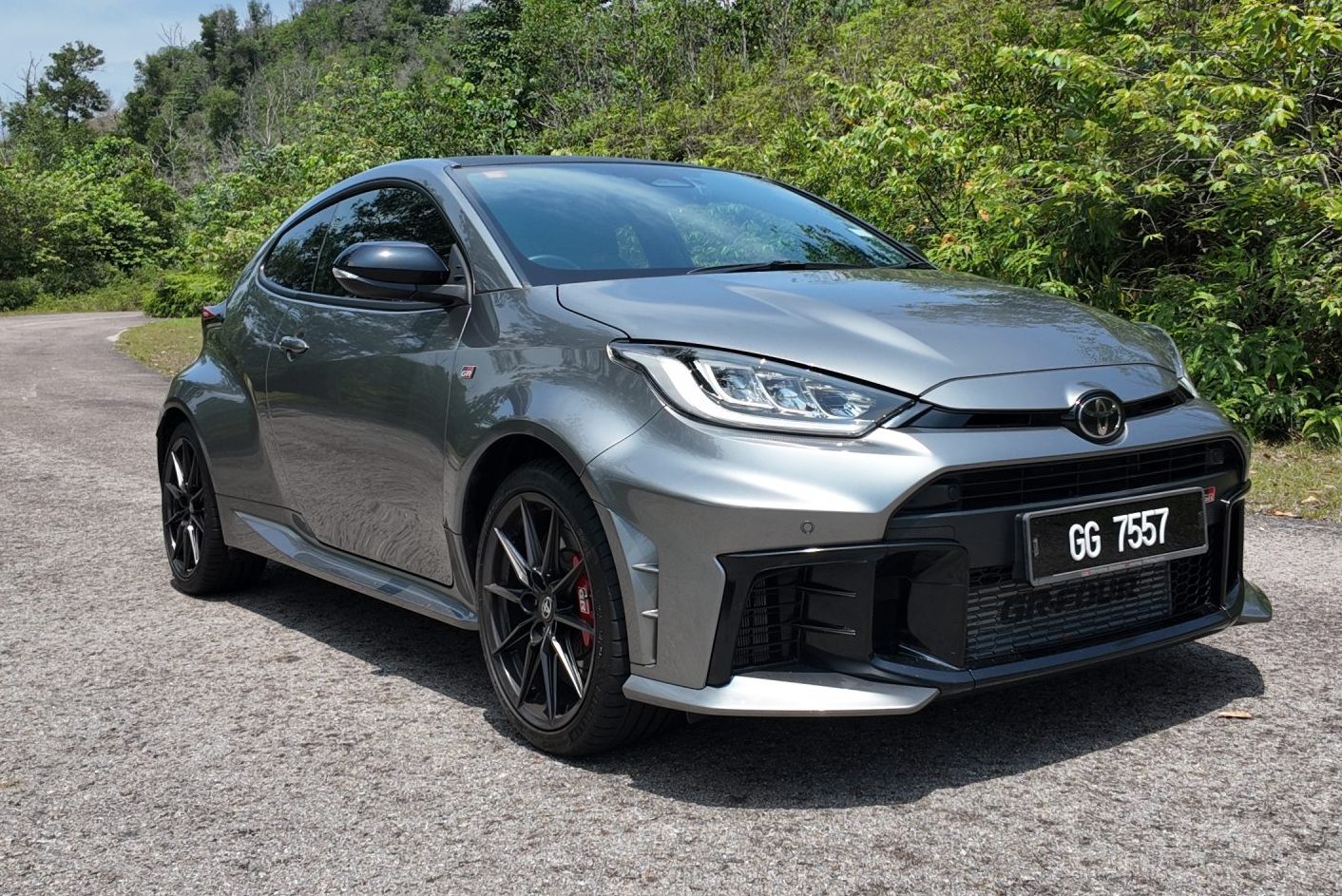
For decades, the hot hatch segment has been heavily dominated by the Europeans. Cars like the Volkswagen Golf R, Mercedes-AMG A35, and Audi S3 have set the benchmark for blending everyday practicality with blistering, all-weather performance. However, the landscape shifted dramatically when Toyota Gazoo Racing unleashed the original GR Yaris—a bespoke, rally-bred homologation special that played by its own rules.
Now, with the introduction of the 2026 Toyota GR Yaris facelift, Toyota has sharpened the knife. Bringing significant mechanical and interior updates—most notably the groundbreaking Direct Automatic Transmission (GR-DAT)—this Japanese pocket rocket is no longer just an alternative; it is a genuine “Conti Killer.”
At RM315,600 for the 6-speed manual and RM325,600 for the 8-speed GR-DAT, it positions itself as a serious contender. Based on an intense test drive and deep-dive analysis, here are the five core reasons why the facelifted GR Yaris has the firepower, character, and engineering depth to challenge the greatest names from Europe.
Core Specifications: The Numbers Game
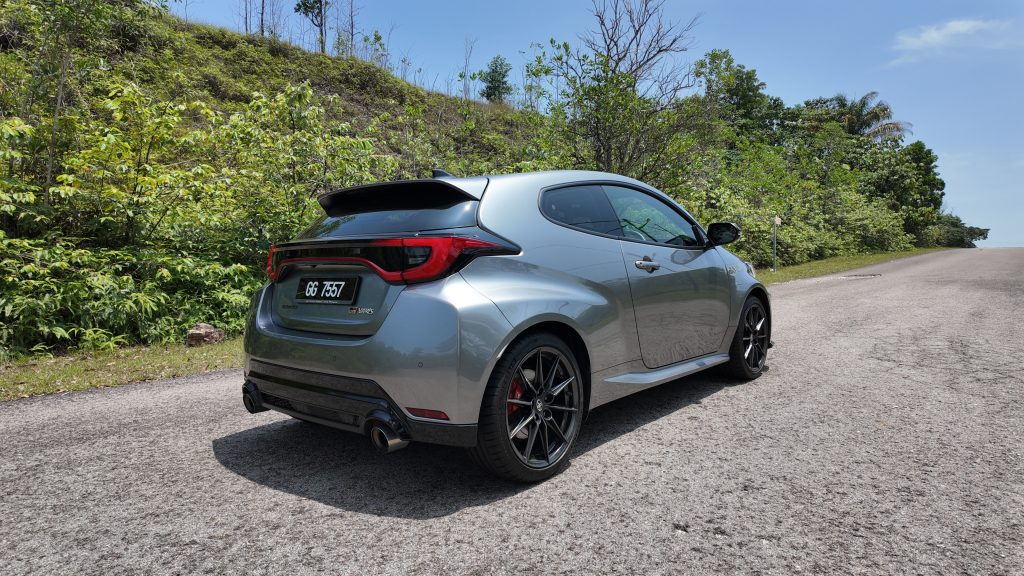
Before diving into the driving dynamics, it is crucial to understand the foundation of the 2026 GR Yaris. Toyota has extracted even more potential from their marvel of engineering, the G16E-GTS engine.
| Specification | Details |
| Engine | 1.6-litre Turbocharged 3-Cylinder (G16E-GTS) |
| Drivetrain | GR-Four All-Wheel Drive (AWD) |
| Transmission | 6-Speed Manual (6MT) or 8-Speed Direct Auto (GR-DAT) |
| Max Power | 300 PS |
| Max Torque | 400 Nm |
| 0-100 km/h | 5.2 seconds |
| Top Speed | 230 km/h |
| Price (Malaysia) | RM315,600 (6MT) / RM325,600 (GR-DAT) |
1. The Interior: An Instant Classic Redesign
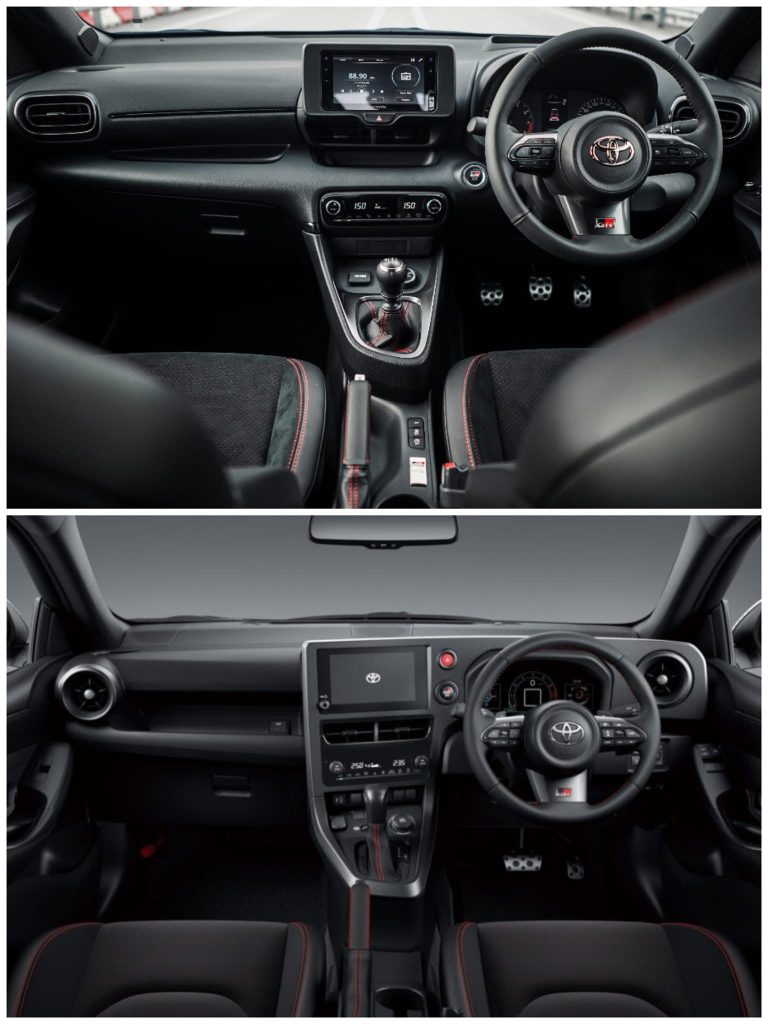
Step inside the 2026 GR Yaris, and the first thing you notice is a radical departure from its predecessor. The original model was heavily criticized for its parts-bin, standard-Yaris dashboard that felt at odds with its staggering price tag and performance capabilities. Toyota listened, and the result is nothing short of spectacular.
The new cockpit feels less like a commuter hatchback and more like a fighter jet. The entire center console, switches, and the new digital instrument cluster are aggressively angled toward the driver by 15 degrees. This driver-centric layout creates an incredibly immersive environment, ensuring that every crucial piece of data and every functional switch is just a glance or a fingertip away.
This is not merely a cosmetic update with new plastics; it is a fundamental redesign that prioritizes the pilot. The new digital cluster is crisp, highly legible under direct sunlight, and delivers critical telemetry without unnecessary visual clutter. In automotive design, true driver-focused interiors are becoming rare. This layout is an instant classic, and if Toyota implements this exact interior treatment across all future GR models, it would be a massive win for driving enthusiasts everywhere.
2. Seating Position: Lowered, Yet Defying European Conventions
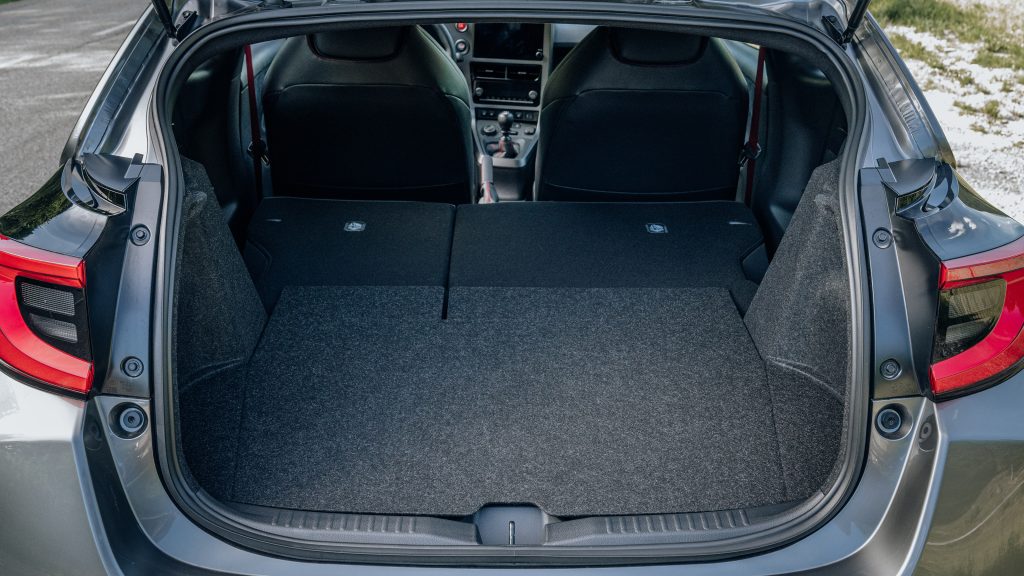
A glaring issue with the pre-facelift GR Yaris was the oddly high seating position, which made drivers feel like they were sitting on the car rather than in it. Toyota has rectified this for 2026 by lowering the seat height by 25mm and adjusting the steering column to match. This translates to a massive improvement in how connected you feel to the chassis.
However, while the seating is lowered, the car’s high-speed dynamics highlight a distinct difference in philosophy between Japanese rally cars and European hot hatches. During a high-speed pursuit of a Volkswagen Golf on the demanding, sweeping curves of the Karak Highway, a unique trait emerged.
- The European Feel: Cars like the Golf R are heavy, autobahn-tuned bruisers. At high speeds, they feel incredibly planted, vacuum-sucked to the tarmac.
- The GR Yaris Feel: Despite the lowered seating, the Yaris feels slightly more floaty at extreme velocities.
This is not to say the car is unsafe or unstable. Rather, it is a byproduct of its rally-bred DNA. The suspension is designed to absorb massive impacts and dance on loose surfaces, not just squat on perfectly smooth highways. It requires a more active, alert driver at high speeds compared to the point-and-shoot, relaxed nature of its heavier Continental rivals.
3. The GR-DAT: A Masterclass in Automatic Transmissions
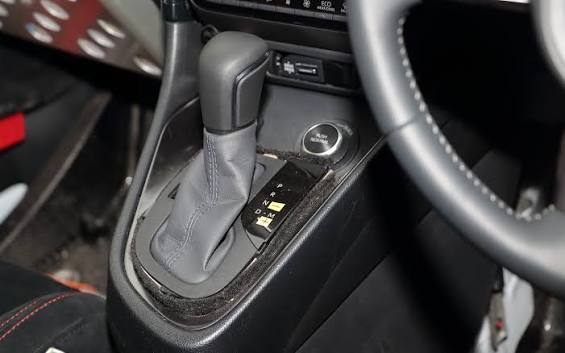
Perhaps the biggest headline for the 2026 facelift is the introduction of the 8-speed Gazoo Racing Direct Automatic Transmission (GR-DAT). Purists might scoff at the idea of an automatic GR Yaris, but this is not your average slushbox.
The GR-DAT is a torque converter automatic, but it has been engineered with software that reads brake and accelerator inputs to anticipate the driver’s intentions, rather than just reacting to G-forces. The result is a transmission tuned specifically for engaged driving.
The standout feature of this gearbox is its aggressive downshifting capability. Unlike many modern autos that lock you out of aggressive downshifts to protect the drivetrain, the GR-DAT allows you to drop all the way down to first gear under heavy braking. When you do, the gearbox executes a phenomenal, visceral rev-match. It perfectly mimics the sensation of a professional racing driver blipping the throttle during a heel-and-toe maneuver.
Why it beats a DCT (Dual-Clutch Transmission):
- Feel: The shifts are sharp but retain a mechanical robustness that some hyper-smooth DCTs lack.
- Durability: For long-term ownership, especially in a car expected to see track days and hard driving, the thermal management and traditional reliability of a heavily reinforced torque converter offer superior peace of mind over highly complex dual-clutch systems.
At RM325,600, the GR-DAT model is the one to get for those who want relentless, uninterrupted boost and lightning-fast shifts without sacrificing mechanical engagement.
4. Exhaust Note: The Missing Drama
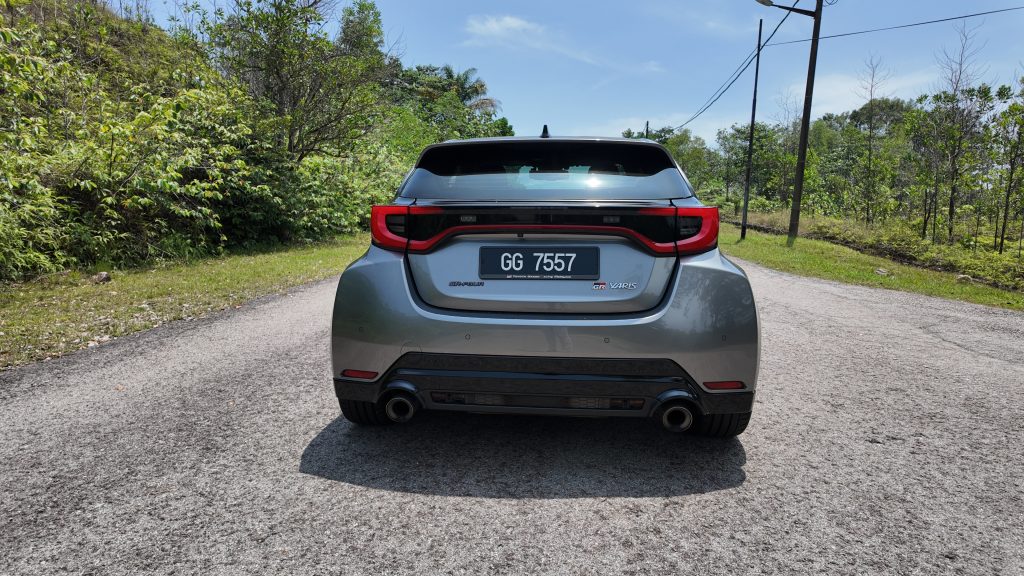
No car is perfect, and if there is one glaring flaw in the 2026 GR Yaris, it is the auditory experience. For a vehicle dripping with World Rally Championship (WRC) heritage, the stock exhaust note is surprisingly subdued.
When you compare it to its bigger sibling, the GR Corolla (which utilizes a slightly modified version of the same G16E-GTS engine), the difference is stark. The GR Corolla barks, pops, and delivers a raw, aggressive tone that perfectly matches its muscular stance. In contrast, the GR Yaris sounds heavily muffled straight from the factory.
In a segment where European rivals utilize active exhaust valves to manufacture pops and bangs, the GR Yaris feels a bit too polite. The three-cylinder engine has a unique, off-beat thrum that deserves to be heard. For most enthusiasts, an aftermarket exhaust system will likely be the very first modification to unlock the auditory drama that this spectacular chassis deserves.
5. Power-to-Weight Ratio: The Ultimate Weapon
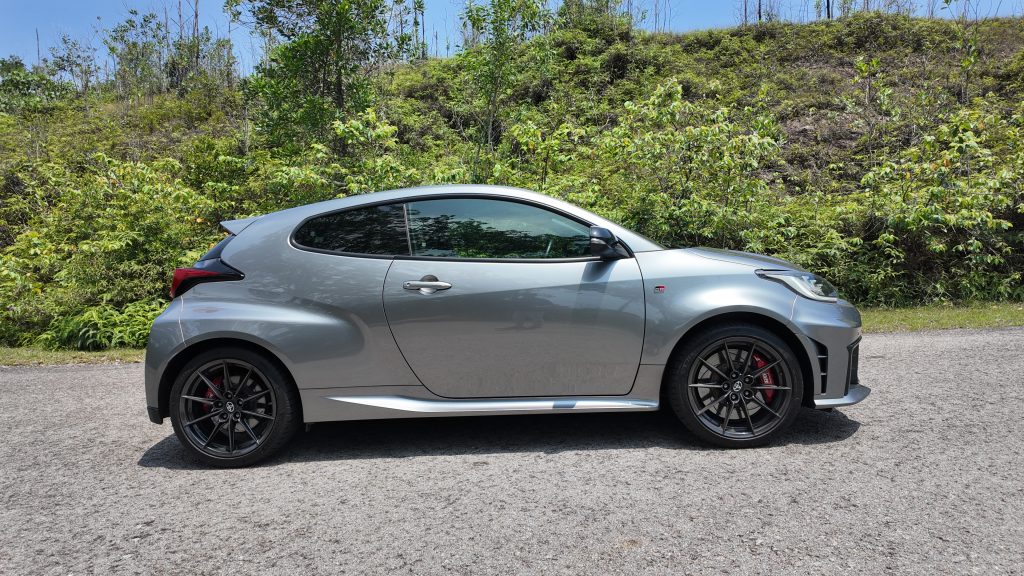
If you look purely at spec sheets, you might wonder how the GR Yaris competes with European titans. The G16E-GTS produces 300 PS. While incredibly impressive for a 1.6L three-cylinder, it falls short of cars like the current Volkswagen Golf R, which easily surpasses the 320 PS mark.
However, horsepower is only half the equation; the other half is gravity. The GR Yaris weighs in at a featherlight 1,280 kg. A modern Golf R tips the scales at over 1,470 kg.
The Power-to-Weight Advantage
| Metric | Toyota GR Yaris (GR-DAT) | Volkswagen Golf R (Mk8) |
| Horsepower | 300 PS | 320 PS |
| Curb Weight | ~1,280 kg | ~1,470 kg |
| Power-to-Weight | 234 PS per Tonne | 217 PS per Tonne |
This weight advantage fundamentally transforms the way the car behaves. On a tight, twisting mountain road, the GR Yaris is vastly more agile. It changes direction with a frantic eagerness that heavier cars simply cannot replicate without relying on heavy electronic intervention.
Furthermore, less mass means less inertia. The Yaris brakes later, tires wear out slower, and the mechanical grip generated by the GR-Four AWD system is maximized. It doesn’t need 350+ horsepower to be fast because it doesn’t have to carry around the equivalent of two extra adult passengers in curb weight. This power-to-weight superiority is exactly what makes it a hyper-responsive, corner-carving monster capable of leaving heavier, more powerful European rivals in its rear-view mirror on a technical road.
The Verdict: A Genuine Hot Hatch Heavyweight
The 2026 Toyota GR Yaris facelift is a masterclass in continuous improvement. Toyota didn’t just add a new bumper and call it a day; they addressed the interior complaints, lowered the seating, bumped the power to 300 PS, and engineered one of the most exciting automatic transmissions currently on the market.
Yes, the exhaust is too quiet, and yes, it might lack the heavy, planted feel of a German autobahn cruiser at triple-digit speeds. But those are minor quirks in what is otherwise an absolute triumph of automotive engineering.
With a price tag of RM325,600 for the GR-DAT variant, the GR Yaris is not a cheap car. However, it perfectly justifies its asking price. It is not a pretender trying to force its way into the conversation with the European elite; it is a bespoke, rally-bred weapon that brings a completely different, highly effective philosophy to the hot hatch war. It is, without a doubt, a true Conti killer.