 Akmal Azhar
In the ever-evolving world of automotive technology, Ferrari has consistently pushed boundaries. One of the most iconic yet understated innovations to emerge from the brand’s quest for performance and driver connection is the Manettino—a small rotary dial on the steering wheel that encapsulates Ferrari’s racing heritage and engineering brilliance.
Born from Formula 1 DNA
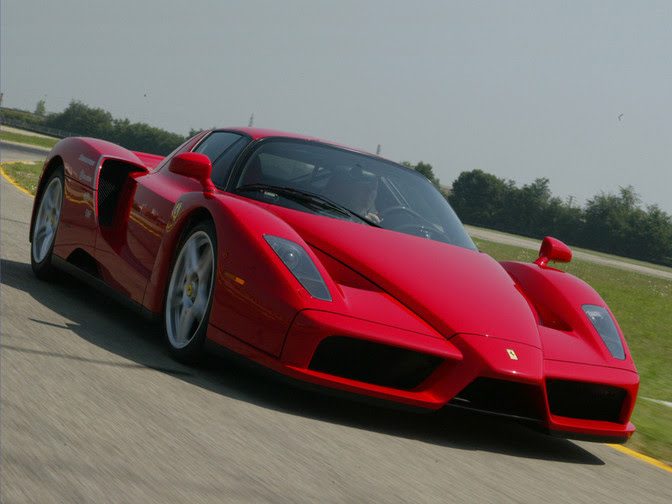
The inspiration behind the Manettino finds its roots in Formula 1, where driver focus and real-time control are paramount. F1 drivers manipulate countless vehicle parameters while traveling at breakneck speeds—without taking their hands off the wheel or their eyes off the track. Ferrari brought this concept to the road, first testing the waters with the Enzo Ferrari (produced between 2002 and 2004).
This supercar featured a groundbreaking steering wheel design that integrated buttons for indicators, ride height, damper settings, traction control, and even reverse gear selection. This configuration introduced a revolutionary ergonomic philosophy:
“Eyes on the road, hands on the wheel.”
The Debut of the Manettino in the F430
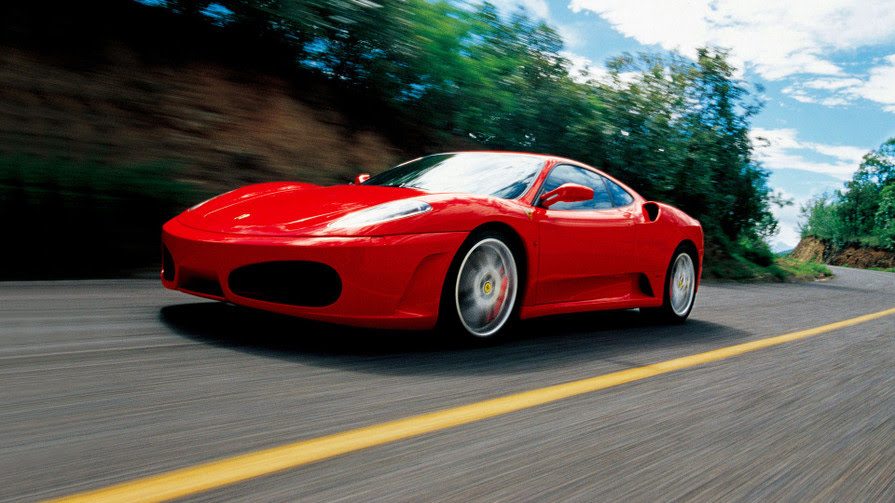
In 2004, Ferrari took a bold step with the launch of the F430, the first road car to feature the Manettino dial. Positioned prominently on the steering wheel, this anodized aluminum switch allowed drivers to effortlessly toggle between five driving modes:
- Ice – maximum stability for extreme low-grip conditions
- Wet – optimized control on slippery roads
- Sport – a balanced setting for spirited driving
- Race – track-focused performance with sharper responses
- CST-Off – disabling traction and stability controls for full driver control
These settings dynamically adjusted key vehicle systems, such as the suspension stiffness, gearbox shift timing, traction/stability controls, and E-Diff (an electronic differential that uses inputs like steering angle, yaw rate, and wheel speed to optimize grip and agility).
The F430’s Manettino was not just a gimmick; it gave drivers instantaneous access to the car’s full performance potential, tailored to road or track conditions with a flick of a switch.
Continued Evolution: The Manettino in Modern Ferraris
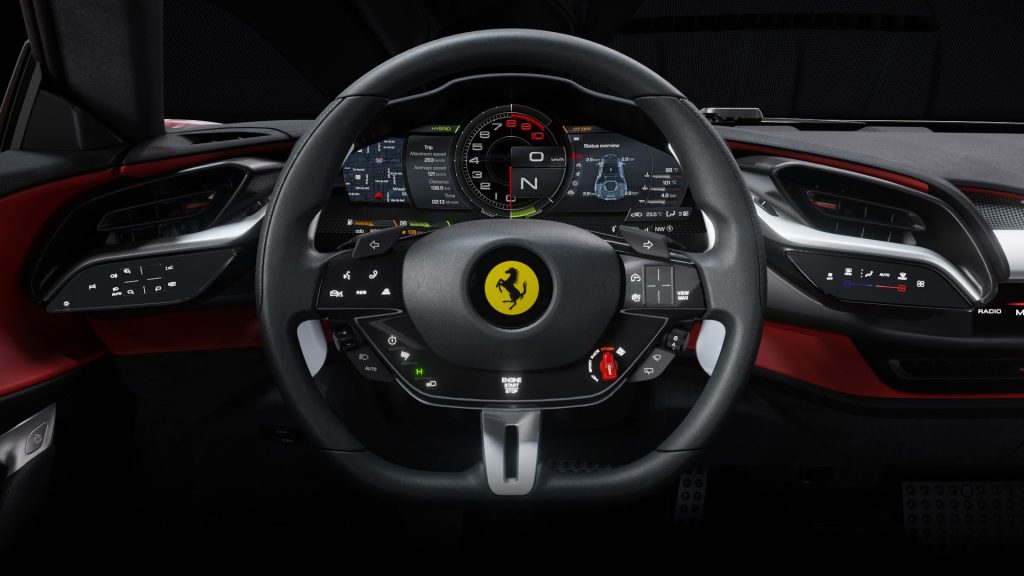
Since then, the Manettino has become a hallmark of Ferrari interiors. It has evolved alongside the brand’s increasingly complex and capable cars. In modern hybrid models such as the 296 GTB and SF90 Stradale, the Manettino goes even further with six settings, each managing multiple layers of vehicle behavior:
- Wet – maximum safety in the rain
- Sport – for dynamic everyday driving
- Race – track-optimized but retains some electronic aids
- CT-Off – turns off traction control but keeps stability
- ESC-Off – full control to the driver, all aids off
- Bumpy Road Mode – activated via a separate button, softens suspension for uneven terrain
These modes coordinate with a suite of advanced software systems that manage torque distribution, regenerative braking (in hybrids), power delivery, and even how the car transitions between electric and internal combustion power.
Why the Manettino Matters
The Manettino is more than a driving mode selector—it represents Ferrari’s vision of seamless interaction between man and machine. It turns the driver into a pilot, offering fine-tuned control over the car’s dynamic responses, just like in an F1 car. Unlike competitors that bury settings in touchscreen menus, Ferrari places its most vital controls right at the driver’s fingertips.
In a world increasingly filled with complex interfaces, the Manettino remains a model of simplicity and precision, a physical connection between the driver and one of the world’s most advanced driving machines.

 Zakirin