 Zakirin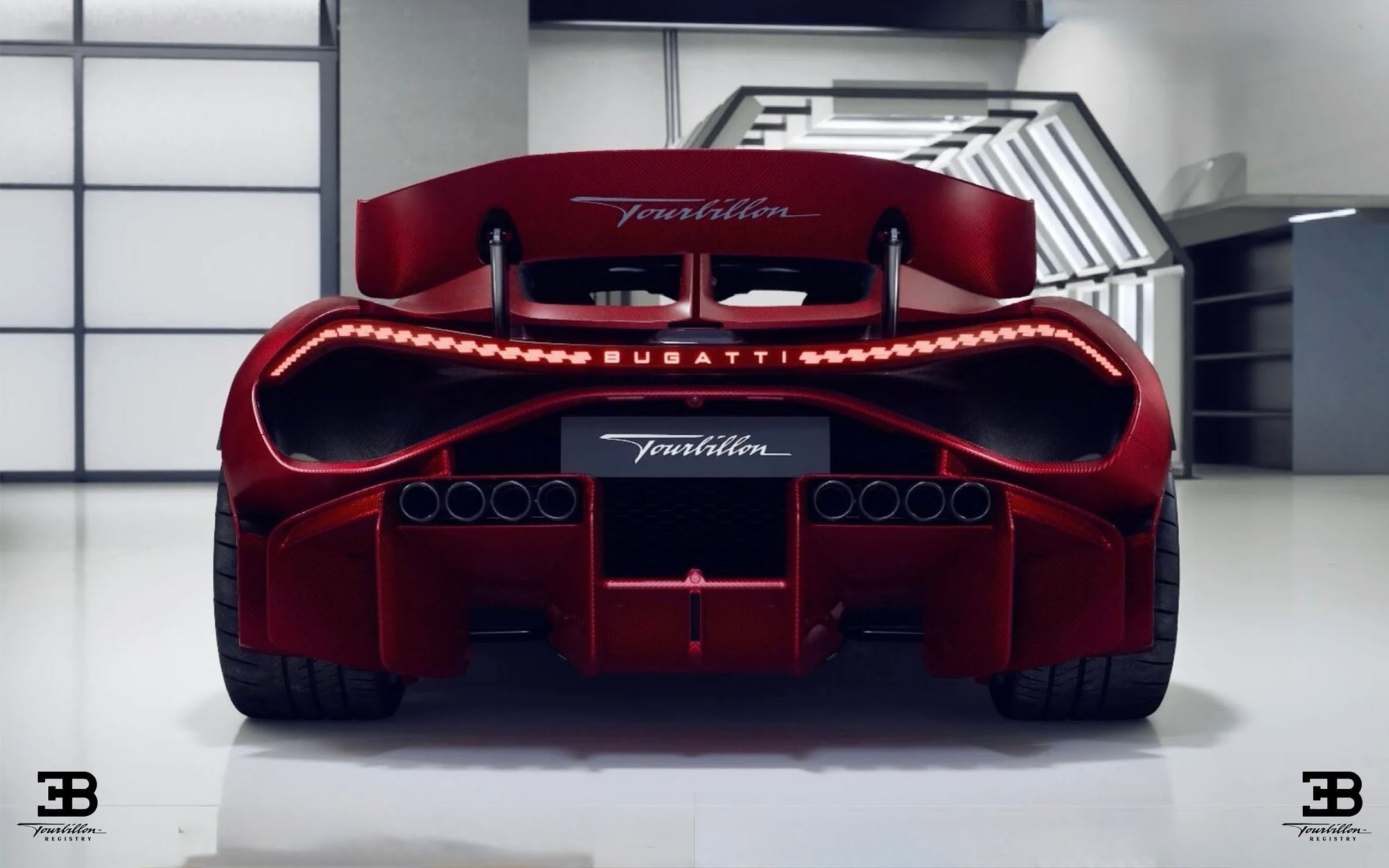
The automotive world has long been a stage for engineering marvels and artistic expression, but few names resonate with the same intensity as Bugatti, a brand synonymous with opulence, performance, and uncompromising innovation. The recent unveiling of the Bugatti Tourbillon has reignited conversations about the intersection of haute horology and hypercar design, a fusion that transcends traditional automotive boundaries.
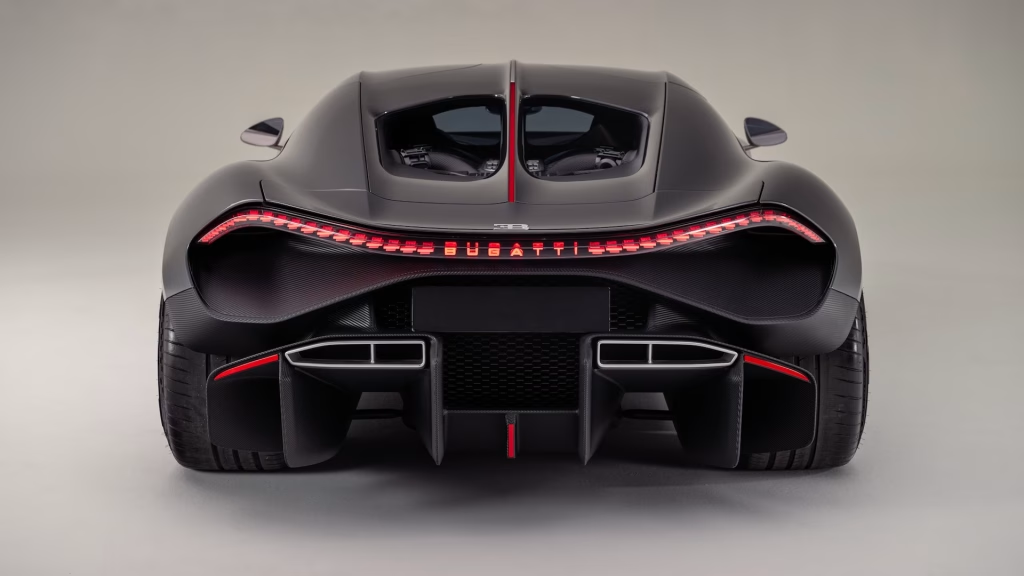
At the heart of this discussion is an optional $240,000 package that equips the Tourbillon with eight meticulously crafted tailpipes, a feature that serves as both a visual spectacle and a testament to Bugatti’s relentless pursuit of perfection. This package, while ostensibly a design element, encapsulates the ethos of a brand that has consistently redefined the limits of automotive excellence, blending form and function in ways that challenge conventional expectations. The Tourbillon itself is a bold departure from Bugatti’s recent lineage, marking the end of an era dominated by the quad-turbocharged W16 engine and the dawn of a hybridized future, yet it retains the brand’s DNA of excess and exclusivity, now channeled through a lens of technical sophistication borrowed from the world of high-end watchmaking.
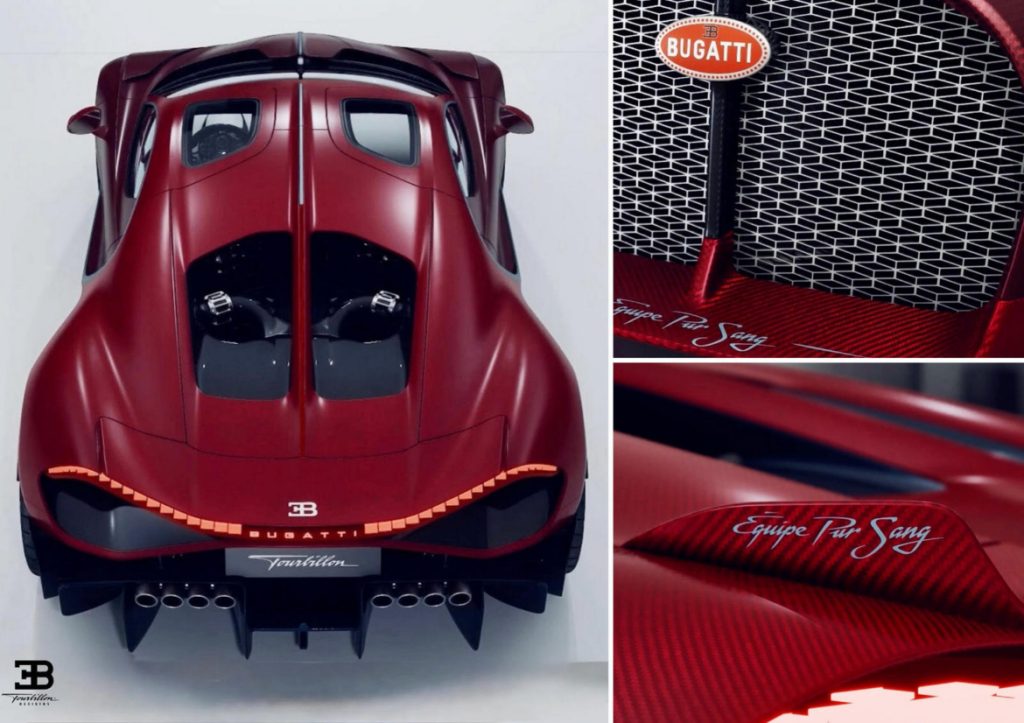
The inspiration for the Tourbillon’s design, as its name suggests, is deeply rooted in horology, specifically the tourbillon mechanism—a complex component in luxury watches designed to counteract the effects of gravity on precision timekeeping. This analogy extends beyond mere nomenclature; the hypercar’s engineering philosophy mirrors the intricate balance and precision of a Swiss timepiece. The eight tailpipes, arranged in a symmetrical configuration reminiscent of a tourbillon’s rotating cage, are not merely aesthetic flourishes but emblematic of Bugatti’s commitment to harmonizing mechanical complexity with visual elegance.
Each tailpipe is crafted from lightweight, high-grade titanium, polished to a mirror finish that reflects light with the same brilliance as the polished components of a luxury watch. The decision to offer this feature as part of a standalone package underscores Bugatti’s understanding of its clientele—individuals for whom exclusivity and personalization are paramount, and for whom cost is a secondary consideration to the pursuit of automotive art.
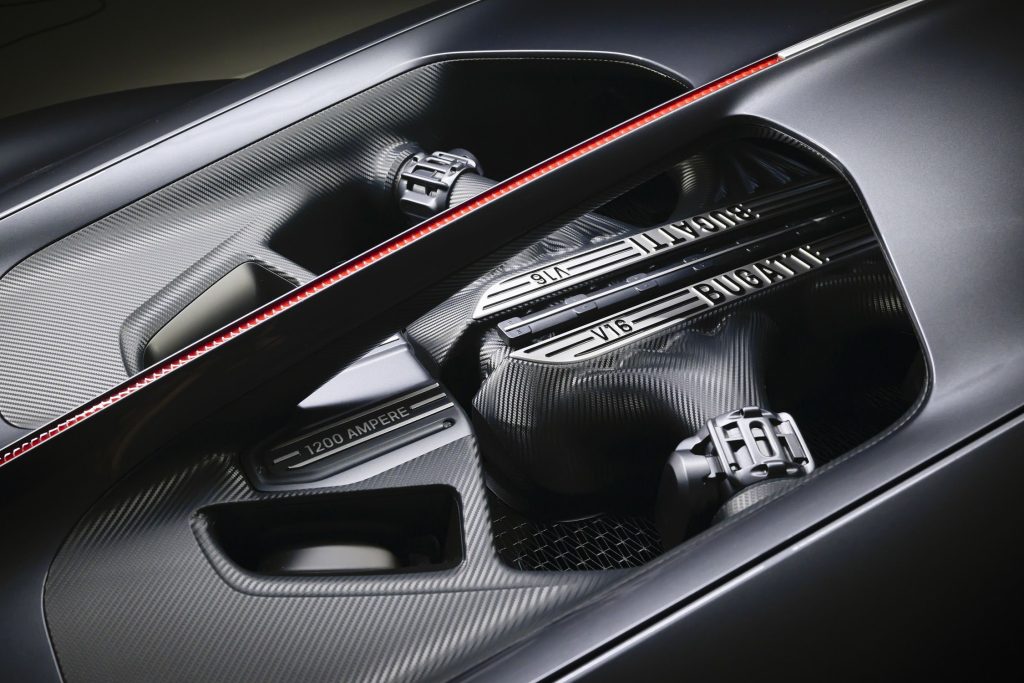
Beyond the tailpipes, the Tourbillon represents a seismic shift in Bugatti’s engineering strategy. For the first time, the marque has embraced hybrid propulsion, pairing a newly developed 8.3-liter naturally aspirated V16 engine with three electric motors, two of which are integrated into the front axle, and a third nestled between the engine and the eight-speed dual-clutch transmission. This hybrid system delivers a combined output of 1,800 horsepower, a figure that cements the Tourbillon’s place in the upper echelons of hypercar performance.
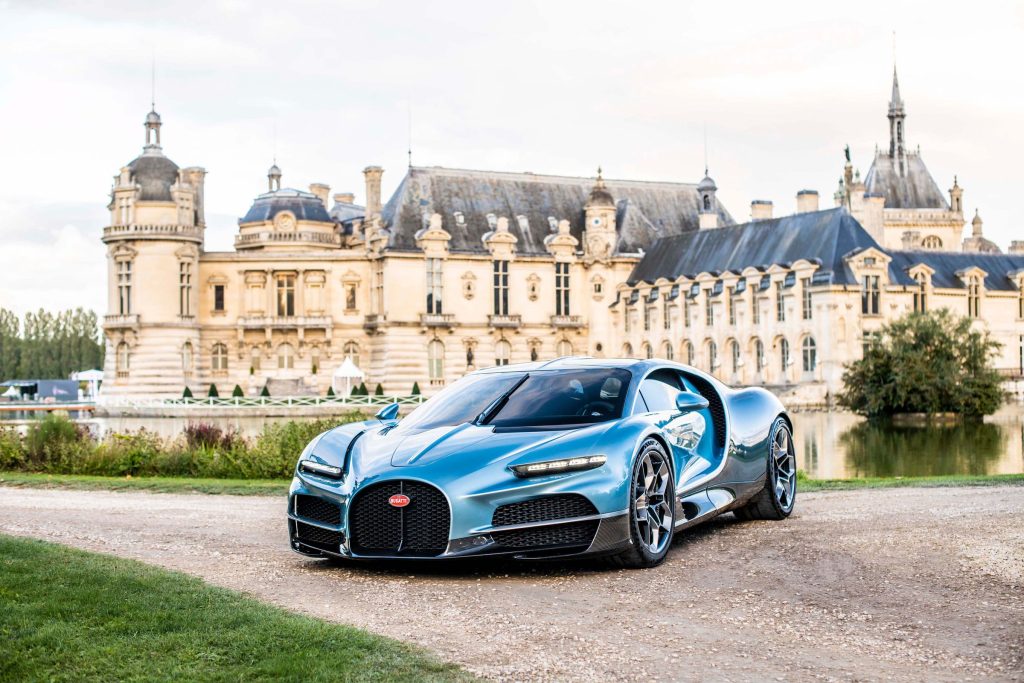
The V16 engine itself is a masterpiece of internal combustion, revving to a stratospheric 9,000 RPM and emitting a sonorous exhaust note that Bugatti claims has been meticulously tuned to evoke the mechanical symphony of a high-end mechanical watch. The inclusion of electric motors not only enhances performance but also aligns with increasingly stringent global emissions regulations, a pragmatic concession to modernity that does not dilute the car’s visceral appeal.
The Tourbillon’s chassis and aerodynamics further exemplify Bugatti’s holistic approach to design. Constructed from a combination of carbon fiber and advanced aluminum alloys, the monocoque is both lightweight and rigid, providing a foundation for the car’s staggering performance metrics. Active aerodynamics play a crucial role in maintaining stability at speeds exceeding 250 mph, with adaptive elements such as a rear wing and underbody diffuser adjusting dynamically to optimize downforce and reduce drag.
The suspension system, developed in collaboration with aerospace engineers, employs active hydraulic dampers that can alter ride height and stiffness in milliseconds, ensuring that the Tourbillon remains composed whether navigating a tight corner or devouring a straight stretch of autobahn. Every component, from the brake calipers machined from billet aluminum to the titanium exhaust system, has been subjected to relentless optimization, reflecting a philosophy where every gram saved and every watt harnessed contributes to the overarching goal of automotive transcendence.
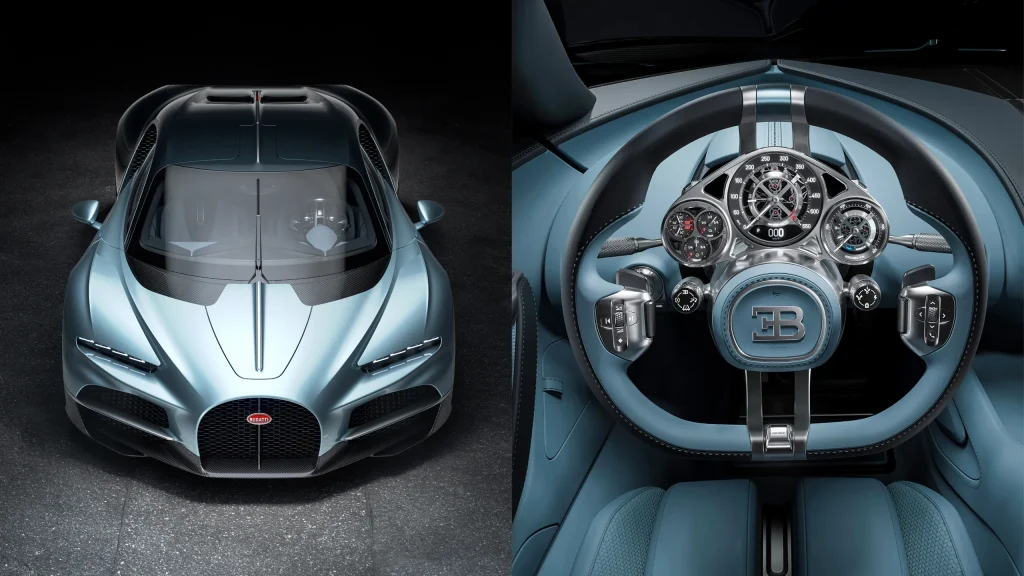
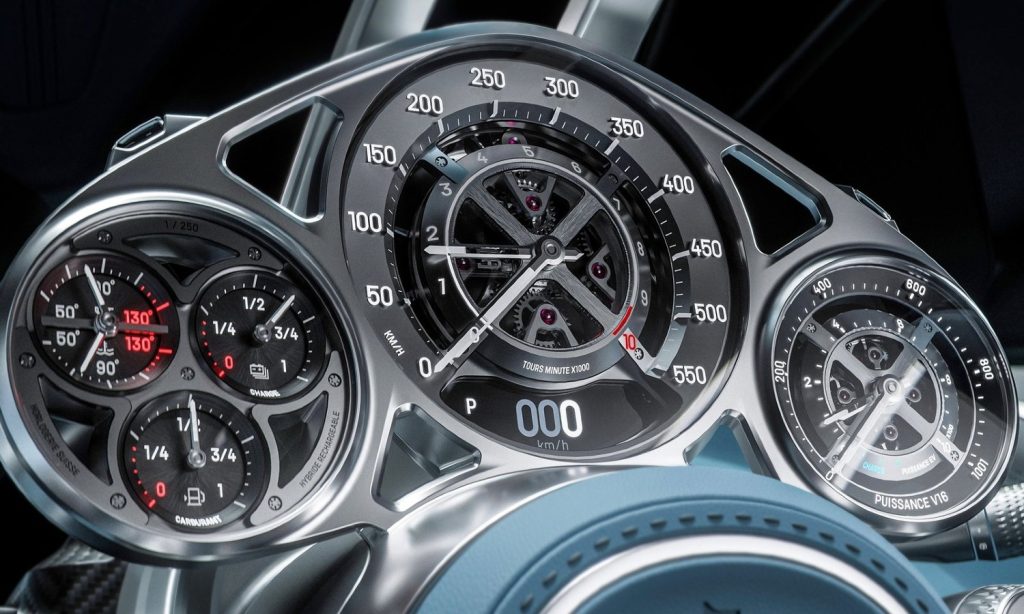
Inside the Tourbillon, the fusion of watchmaking and automotive design reaches its zenith. The dashboard is dominated by a trio of analog gauges inspired by the faces of luxury timepieces, crafted from sapphire crystal and featuring hand-polished titanium hands. These instruments are not merely decorative; they provide real-time data on vehicle performance, with a focus on clarity and legibility even at extreme speeds.
The center console, a minimalist expanse of carbon fiber and brushed aluminum, houses a retractable touchscreen that disappears at the touch of a button, allowing the driver to focus solely on the act of driving—a nod to Bugatti’s belief in the purity of the automotive experience. The seats, upholstered in a bespoke blend of leather and woven titanium thread, are ergonomically sculpted to provide support during high-G maneuvers while maintaining an aura of luxurious comfort. Even the steering wheel, with its exposed carbon fiber structure and integrated haptic feedback controls, reflects the marriage of form and function, offering tactile precision without sacrificing aesthetic refinement.
The $240,000 tailpipe package, while a headline-grabbing option, is just one facet of Bugatti’s broader customization program, known as Sur Mesure. This initiative allows clients to collaborate directly with the brand’s designers and engineers to create a vehicle that is truly one-of-a-kind, with choices ranging from custom paint finishes that incorporate precious metals to personalized interior trim featuring materials sourced from the client’s own collections.
The eight-tailpipe configuration, for instance, can be further customized with finishes such as ceramic coating or 24-karat gold plating, ensuring that no two Tourbillon models are alike. This level of personalization is not merely a luxury; it is a strategic differentiator in the hypercar market, where exclusivity often dictates desirability. Bugatti’s clientele, a rarefied group of collectors and enthusiasts, view their vehicles not as mere transportation but as rolling sculptures, investments in artistry and engineering that appreciate in value both financially and culturally.
The Tourbillon’s development process offers insight into the challenges of creating a hypercar in an era of increasing environmental scrutiny. While the hybrid powertrain represents a nod to sustainability, Bugatti has been careful to emphasize that the Tourbillon is not an electric vehicle. The V16 engine remains the centerpiece, a deliberate choice aimed at preserving the emotional connection between driver and machine—a connection that the brand believes is diluted in fully electric hypercars.
However, the integration of electrification allows Bugatti to explore new performance frontiers, such as torque vectoring and regenerative braking, technologies that enhance driving dynamics while offering a glimpse into a future where hybrid systems may become the norm even in the most exclusive automotive segments. This balancing act between tradition and innovation is emblematic of Bugatti’s broader strategy, one that honors its storied past while cautiously embracing the possibilities of tomorrow.
In the context of the broader hypercar market, the Tourbillon enters a landscape populated by formidable competitors such as Koenigsegg, Rimac, and Pagani. Each of these marques brings its own philosophy to the table: Koenigsegg with its focus on cutting-edge innovation, Rimac with its electric propulsion expertise, and Pagani with its artisanal approach to craftsmanship.
Bugatti’s differentiation lies in its ability to blend these elements—advanced engineering, artistic expression, and a deep respect for heritage—into a cohesive whole. The Tourbillon’s hybrid powertrain, for example, positions it as a bridge between the raw, mechanical intensity of Koenigsegg’s Jesko and the silent, instantaneous torque of Rimac’s Nevera. Yet, it is the car’s aesthetic and emotional appeal, epitomized by details like the eight-tailpipe package, that may ultimately secure its place in automotive history.
The cultural significance of the Tourbillon extends beyond its technical specifications. It arrives at a time when the automotive industry is grappling with existential questions about its future—questions of sustainability, autonomy, and relevance in a world increasingly shaped by digital experiences. In this context, the Tourbillon serves as a defiant celebration of analog excellence, a machine that prioritizes human engagement and sensory stimulation over algorithmic efficiency.
Its very existence is a statement, a declaration that there will always be a place for objects of desire that transcend practicality and speak to the soul. For Bugatti’s patrons, the Tourbillon is not merely a car; it is a wearable piece of engineering art, a symbol of achievement, and a conduit for experiences that defy quantification.
Looking ahead, the Tourbillon’s legacy will likely be measured not just by its performance accolades or sales figures but by its influence on the evolution of hypercar design. Its integration of watchmaking principles sets a precedent for future collaborations between industries, suggesting a world where automotive design draws inspiration from fields as diverse as architecture, aviation, and even haute couture.
The $240,000 tailpipe package, while a singular feature, hints at a broader trend toward hyper-personalization, where vehicles are tailored to the precise whims of their owners, blurring the line between mass production and bespoke craftsmanship. As Bugatti continues to push the boundaries of what is possible, the Tourbillon stands as a testament to the enduring allure of mechanical excellence, a reminder that even in an age of digital disruption, there remains an insatiable appetite for objects that embody the pinnacle of human ingenuity and passion.
In conclusion, the Bugatti Tourbillon is more than a hypercar; it is a cultural artifact, a convergence of art, science, and luxury that challenges the conventions of its genre. The optional eight-tailpipe package, with its horological inspiration and exorbitant price tag, encapsulates the essence of Bugatti’s philosophy—a relentless pursuit of perfection that transcends mere functionality.
As the automotive world navigates an uncertain future, the Tourbillon serves as both a celebration of past achievements and a bold vision of what lies ahead, a machine that embodies the timeless appeal of speed, beauty, and exclusivity. In this light, it is not merely a vehicle but a milestone in the ongoing narrative of human aspiration, a story written in titanium, horsepower, and the unyielding desire to reach beyond the horizon.
Need perfume? Buy erilavia